 Patio Cost Calculator
Introduction
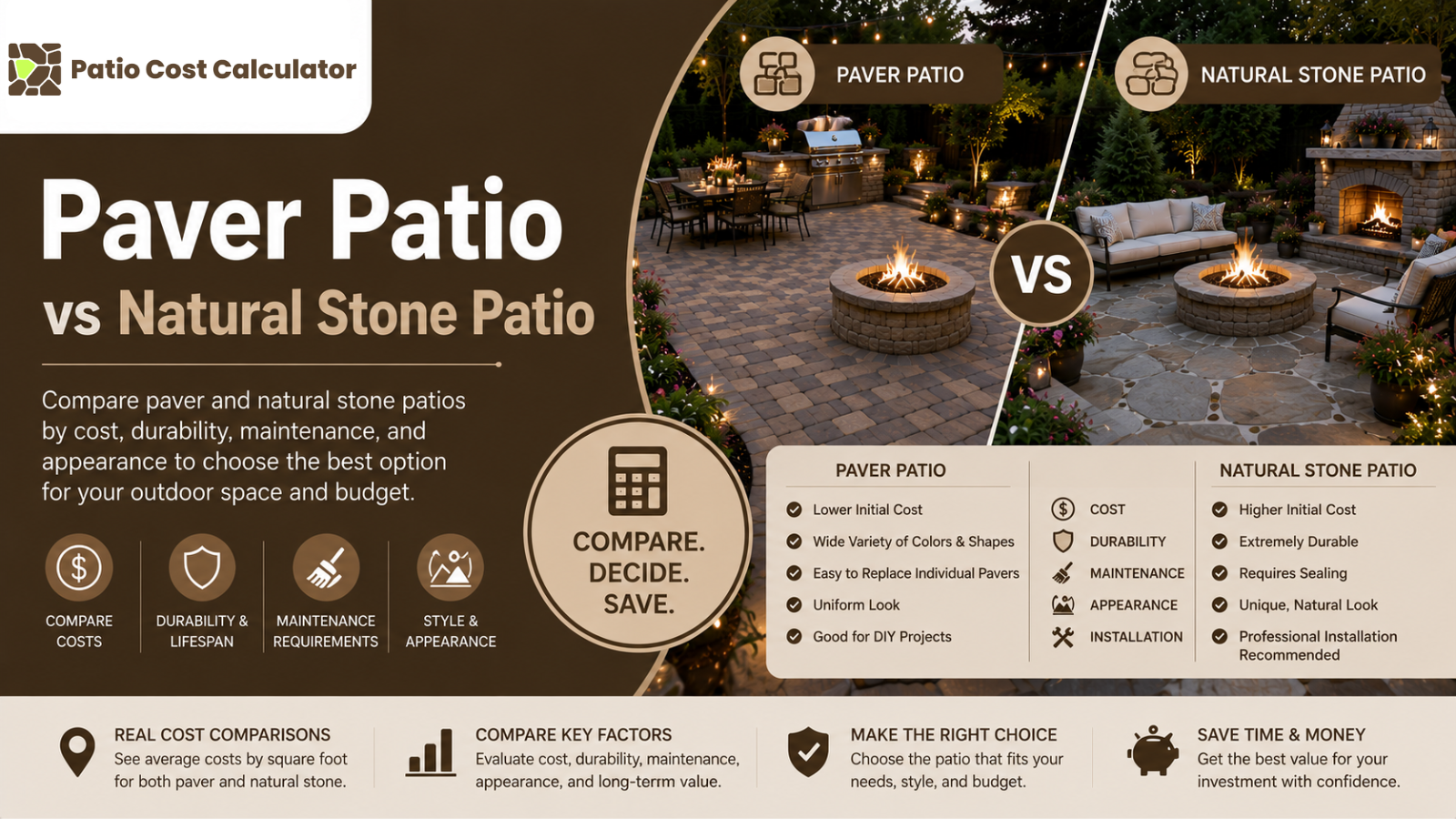
When designing a new patio, homeowners often narrow their choices to concrete pavers and natural stone. Both materials create beautiful outdoor living spaces that can last for decades, but they differ in installation cost, appearance, maintenance, durability, repairability, and overall value.
Pavers are one of the most popular patio materials because they combine attractive design options with excellent durability and relatively straightforward repairs. Natural stone, meanwhile, is considered the premium choice, offering unmatched beauty, unique character, and an exceptionally long lifespan.
The best material depends on your budget, preferred style, maintenance expectations, and long-term plans for your home.
This guide compares paver patios and natural stone patios side by side to help you choose the option that best fits your outdoor living project.
Quick Comparison
| Feature | Paver Patio | Natural Stone Patio |
|---|---|---|
| Initial Cost | ✅ Lower | Higher |
| Lifespan | 30–50+ years | 50–100+ years |
| Maintenance | Low | Low |
| Repairability | Excellent | Good |
| Design Options | Excellent | Outstanding |
| Installation Speed | Moderate | Slower |
| Curb Appeal | Excellent | Outstanding |
| Long-Term Value | Excellent | Excellent |
Initial Cost
Installation cost is one of the biggest differences between these two premium patio materials.
Paver Patio
Typical installed cost:
$12–$30 per square foot
Pricing depends on:
- Paver style
- Pattern complexity
- Patio size
- Border designs
- Site preparation
- Labor rates
Pavers provide a premium appearance while remaining more affordable than natural stone.
Natural Stone Patio
Typical installed cost:
$18–$45 per square foot
Pricing varies depending on:
- Stone type
- Material availability
- Thickness
- Project complexity
- Custom cutting
- Local labor costs
Because each stone requires careful placement and fitting, installation costs are generally higher.
Winner:
🟢 Paver Patio
Appearance
Appearance is often the deciding factor for homeowners choosing between these materials.
Paver Patio
Modern pavers are available in hundreds of combinations.
Homeowners can choose from:
- Numerous colors
- Various shapes
- Decorative borders
- Multiple laying patterns
- Contemporary finishes
- Traditional designs
Many pavers are manufactured to resemble natural stone while maintaining consistent dimensions.
Natural Stone Patio
Natural stone offers beauty that manufactured materials cannot fully duplicate.
Popular choices include:
- Flagstone
- Bluestone
- Slate
- Limestone
- Travertine
- Granite
Each stone has unique textures, colors, and natural variations, making every patio completely unique.
Winner:
🟢 Natural Stone Patio
Durability
Both materials are exceptionally durable and designed for decades of outdoor use.
Paver Patio
A professionally installed paver patio offers:
- Excellent structural strength
- Resistance to cracking
- Flexibility during ground movement
- Easy repairs
- Outstanding weather performance
Individual pavers distribute weight evenly, reducing stress on the overall surface.
Natural Stone Patio
Natural stone has been used in construction for centuries because of its remarkable durability.
Benefits include:
- Outstanding strength
- Excellent weather resistance
- Minimal long-term deterioration
- Exceptional longevity
- Natural resistance to UV exposure
Many natural stone patios remain in excellent condition for generations.
Winner:
🟢 Natural Stone Patio
Maintenance Requirements
Routine maintenance helps preserve both patio types.
Paver Patio
Typical maintenance includes:
- Sweeping debris
- Washing periodically
- Replenishing joint sand when necessary
- Removing weeds if they appear
- Replacing damaged pavers
Overall maintenance is simple and inexpensive.
Natural Stone Patio
Routine maintenance generally includes:
- Sweeping leaves
- Washing the surface
- Removing weeds from joints
- Inspecting for loose stones
- Sealing certain stone types when recommended
Both materials require relatively little maintenance when properly installed.
Winner:
🟢 Tie
Repairs
Eventually, any outdoor surface may require repairs.
Paver Patio
One of the greatest advantages of pavers is repairability.
Individual units can usually be:
- Removed
- Replaced
- Releveled
- Reinstalled
without disturbing the surrounding patio.
Repairs are often quick and nearly invisible.
Natural Stone Patio
Natural stone can also be repaired by replacing individual stones.
However:
- Stones are heavier.
- Cutting is more complex.
- Matching rare stone varieties may sometimes be difficult.
Repairs generally require more specialized craftsmanship than paver repairs.
Winner:
🟢 Paver Patio
Installation Time
Installation methods differ considerably.
Paver Patio
Installing pavers typically involves:
- Excavation
- Base preparation
- Gravel compaction
- Bedding sand
- Individual paver placement
- Joint sand installation
- Final compaction
Most residential projects are completed within several days.
Natural Stone Patio
Natural stone installation is more labor-intensive.
Each stone usually requires:
- Careful placement
- Custom fitting
- Individual cutting
- Leveling
- Joint finishing
Because no two stones are identical, installation generally takes longer than a comparable paver project.
Winner:
🟢 Paver Patio
Lifespan
Both paver patios and natural stone patios are designed to last for decades, making either one an excellent long-term investment.
Paver Patio
A professionally installed paver patio typically lasts:
30–50+ years
Its lifespan depends on:
- Quality of the pavers
- Proper base preparation
- Drainage
- Climate
- Routine maintenance
Because individual pavers can move slightly with the ground, they are less likely to develop large structural cracks.
Natural Stone Patio
Natural stone is among the longest-lasting hardscape materials available.
A professionally installed natural stone patio commonly lasts:
50–100+ years
Many stone patios remain functional for generations with minimal repairs.
Proper installation and routine maintenance help maximize this exceptional lifespan.
Winner:
🟢 Natural Stone Patio
Weather Resistance
Outdoor patios must withstand changing weather throughout the year.
Paver Patio
Pavers perform exceptionally well in a wide range of climates.
They resist:
- Freeze-thaw cycles
- Heavy rainfall
- Soil movement
- Seasonal expansion and contraction
Because the patio consists of individual units rather than one continuous slab, minor ground movement rarely causes major damage.
Natural Stone Patio
Natural stone is naturally resistant to harsh environmental conditions.
It performs extremely well against:
- Heavy rain
- Snow
- Intense sunlight
- Wind
- Temperature fluctuations
- UV exposure
High-quality stone retains its appearance for decades with relatively little deterioration.
Winner:
🟢 Tie
Best Climates
Both materials are suitable for homes throughout the United States.
Paver Patio
Pavers are especially well suited for:
- Northern states
- Freeze-thaw climates
- Areas with shifting soil
- Regions with frequent rainfall
- High-traffic outdoor living spaces
Their flexible installation system helps maintain a level surface over time.
Natural Stone Patio
Natural stone performs exceptionally well in:
- Warm southern climates
- Coastal communities
- Mountain regions
- Desert environments
- Areas with significant seasonal temperature changes
Selecting the appropriate type of stone for your local climate helps maximize long-term performance.
Winner:
🟢 Tie
Home Value
A professionally designed patio enhances both curb appeal and outdoor living space.
Paver Patio
Paver patios are widely recognized as premium outdoor features.
Benefits include:
- Attractive appearance
- Excellent durability
- Custom layouts
- Strong resale appeal
Many buyers appreciate the combination of beauty and easy maintenance.
Natural Stone Patio
Natural stone is often viewed as the highest-end patio material available.
It offers:
- Luxury appearance
- Timeless elegance
- Unique natural character
- Exceptional craftsmanship
- Outstanding curb appeal
Homes with professionally installed natural stone hardscaping often leave a strong first impression on prospective buyers.
Winner:
🟢 Natural Stone Patio
Environmental Impact
Many homeowners also consider sustainability when selecting patio materials.
Paver Patio
Modern pavers offer several environmental advantages.
Some products include recycled materials, and individual pavers can often be reused or replaced without removing the entire patio, helping reduce construction waste.
Permeable paver systems are also available and can improve stormwater drainage by allowing rainwater to filter into the ground.
Natural Stone Patio
Natural stone is a naturally occurring material that requires relatively little manufacturing compared with many building products.
Additional environmental advantages include:
- Extremely long lifespan
- Minimal replacement needs
- Reusable material
- Naturally weather resistant
Because stone patios often last for generations, they produce very little long-term construction waste.
Winner:
🟢 Natural Stone Patio
Which Patio Is Better for Different Homeowners?
Choose a Paver Patio If:
- You want a premium appearance at a lower cost than natural stone.
- Easy repairs are important.
- You enjoy decorative patterns and borders.
- You expect occasional ground movement.
- You want excellent long-term value.
- You're looking for a balance between beauty and affordability.
Pavers offer one of the best combinations of appearance, durability, and repairability available.
Choose a Natural Stone Patio If:
- You want the highest-end appearance.
- Every patio should be unique.
- You value exceptional longevity.
- You plan to stay in your home for many years.
- Maximum curb appeal is a priority.
- You're comfortable with a larger initial investment.
Natural stone is ideal for homeowners seeking a truly custom outdoor living space with timeless elegance.
Pros and Cons
Paver Patio
Pros
- Lower cost than natural stone
- Excellent durability
- Easy repairs
- Wide variety of colors and patterns
- Outstanding weather performance
- Long lifespan
- Minimal maintenance
Cons
- Higher installation cost than concrete
- Joint sand may require occasional replenishment
- Weeds may occasionally appear between joints
- Installation takes longer than poured concrete
Natural Stone Patio
Pros
- Unmatched natural beauty
- Every patio is unique
- Exceptional durability
- Extremely long lifespan
- Outstanding curb appeal
- Premium outdoor appearance
- Low maintenance
Cons
- Highest upfront cost
- Labor-intensive installation
- Longer construction time
- Some stone varieties benefit from periodic sealing
Long-Term Value
Both patio materials offer outstanding long-term value.
Pavers provide an excellent balance of cost, durability, repairability, and attractive design, making them one of the most popular choices for homeowners seeking premium results without the cost of natural stone.
Natural stone requires a larger initial investment, but its extraordinary lifespan, timeless beauty, and luxury appearance often make it a once-in-a-lifetime improvement that continues adding value for decades.
Cost Comparison at a Glance
The table below summarizes the major differences between paver patios and natural stone patios.
| Feature | Paver Patio | Natural Stone Patio |
|---|---|---|
| Typical Installed Cost | $12–$30/sq ft | $18–$45/sq ft |
| Lifespan | 30–50+ years | 50–100+ years |
| Maintenance | Low | Low |
| Repairability | Excellent | Good |
| Installation Speed | Moderate | Slower |
| Design Flexibility | Excellent | Outstanding |
| Weather Resistance | Excellent | Excellent |
| Curb Appeal | Excellent | Outstanding |
| Long-Term Value | Excellent | Excellent |
Both materials offer exceptional durability and beauty, making either one an excellent investment for outdoor living.
Frequently Asked Questions
Which patio material is less expensive?
Paver patios generally have the lower installation cost.
Most homeowners can expect to pay between $12 and $30 per square foot for pavers, while natural stone patios typically cost between $18 and $45 per square foot, depending on the type of stone and project complexity.
Which patio lasts longer?
Natural stone generally has the longest expected lifespan.
A professionally installed natural stone patio often lasts 50 to 100 years or more, while paver patios commonly provide 30 to 50+ years of service with proper maintenance.
Which patio is easier to repair?
Paver patios are usually easier to repair.
Individual pavers can be lifted, re-leveled, or replaced without disturbing the surrounding patio. Natural stone can also be repaired by replacing individual stones, but repairs are often more labor-intensive because of the size, weight, and unique shape of the material.
Does natural stone require sealing?
Some types of natural stone benefit from periodic sealing to reduce staining and moisture absorption, while others require little or no sealing. Your contractor can recommend the appropriate maintenance based on the stone you choose.
Can pavers look like natural stone?
Yes.
Many manufacturers produce pavers that closely resemble flagstone, slate, or other natural stones. While these products offer an attractive appearance at a lower cost, genuine natural stone provides unique color variations and textures that cannot be perfectly replicated.
Which patio adds more value to a home?
Both materials can increase curb appeal and improve outdoor living space.
Natural stone is generally regarded as the premium option because of its timeless beauty and exceptional longevity, while pavers also provide strong resale appeal thanks to their durability, versatility, and attractive appearance.
Which material is better for cold climates?
Both perform well in colder climates when installed correctly.
Pavers are particularly effective in areas with freeze-thaw cycles because the individual units can accommodate minor ground movement. Natural stone also performs exceptionally well, provided the proper stone type and installation method are selected.
Is natural stone worth the extra cost?
For many homeowners, yes.
Natural stone offers unmatched beauty, extraordinary longevity, and a unique appearance that can significantly enhance an outdoor living space. If you're planning to stay in your home for many years, many consider the additional investment worthwhile.
Final Verdict
Both pavers and natural stone are premium patio materials that deliver excellent long-term performance, but they appeal to different homeowner priorities.
Choose a paver patio if you want a beautiful outdoor space with outstanding durability, easy repairs, and extensive design flexibility while keeping installation costs below those of natural stone. Pavers provide one of the best balances between affordability, appearance, and long-term value.
Choose a natural stone patio if your priorities are timeless elegance, exceptional longevity, and a one-of-a-kind outdoor living space. Although the upfront investment is higher, natural stone remains one of the most prestigious and durable patio materials available.
There is no single "best" choice. The ideal patio depends on your budget, architectural style, maintenance preferences, and how long you plan to enjoy your home.
Final Thoughts
Paver patios and natural stone patios both offer exceptional beauty, durability, and long-term value. Pavers provide remarkable flexibility, easy maintenance, and a premium appearance at a more moderate price point, making them an excellent choice for many homeowners. Natural stone stands apart for its unique character, luxurious appearance, and extraordinary lifespan, making it a truly long-term investment.
Before requesting contractor estimates, use the Patio Cost Calculator on the homepage to estimate your project's cost based on your patio size, material choice, and state. A personalized estimate will help you establish a realistic budget, compare contractor quotes more confidently, and choose the patio material that best fits your home, lifestyle, and long-term goals.