 Patio Cost Calculator
Introduction
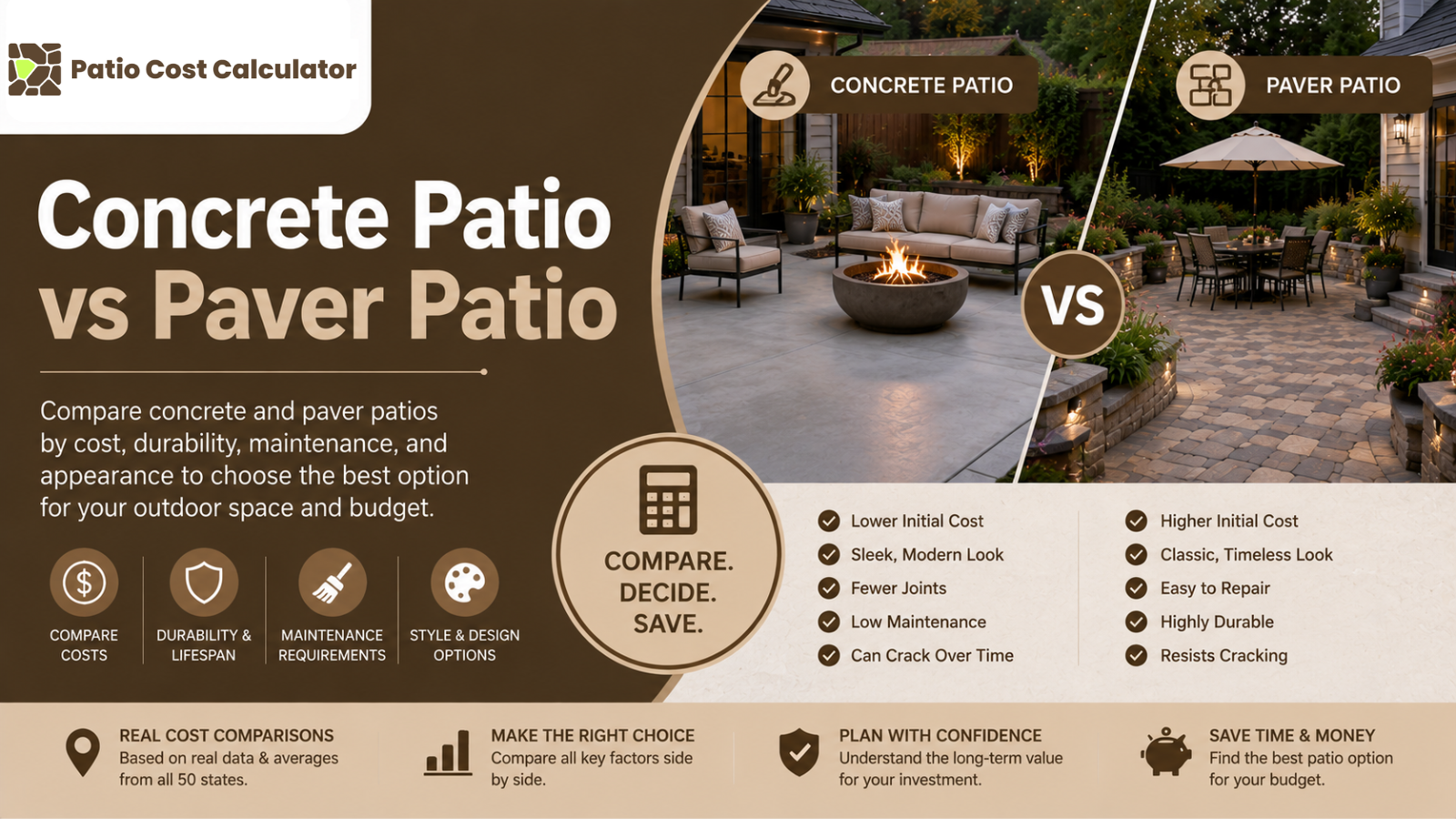
Choosing the right material is one of the most important decisions when planning a new patio. Two of the most popular options for homeowners are poured concrete and concrete pavers. Both create durable outdoor living spaces, but they differ significantly in installation cost, appearance, maintenance, longevity, repairability, and long-term value.
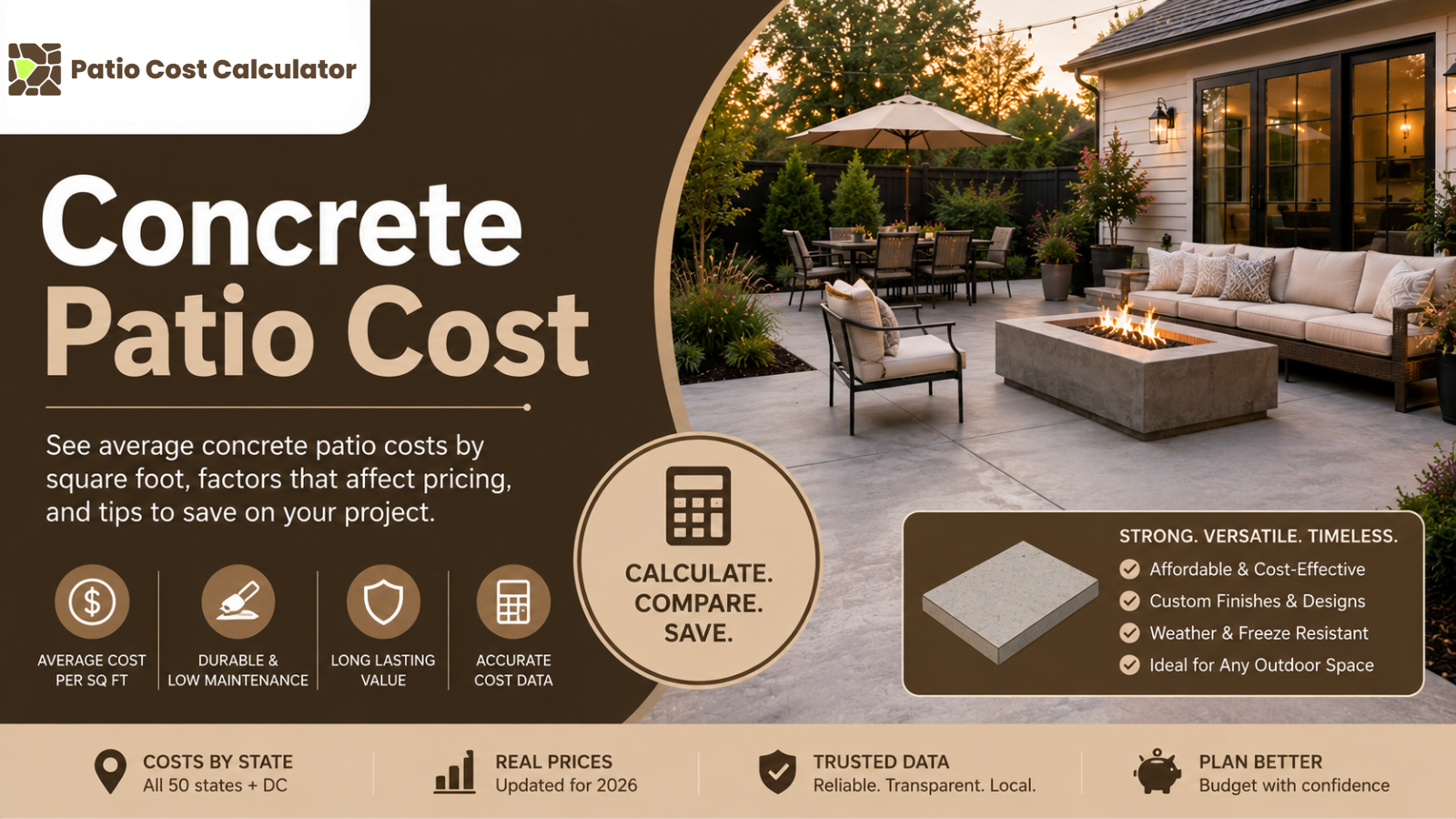
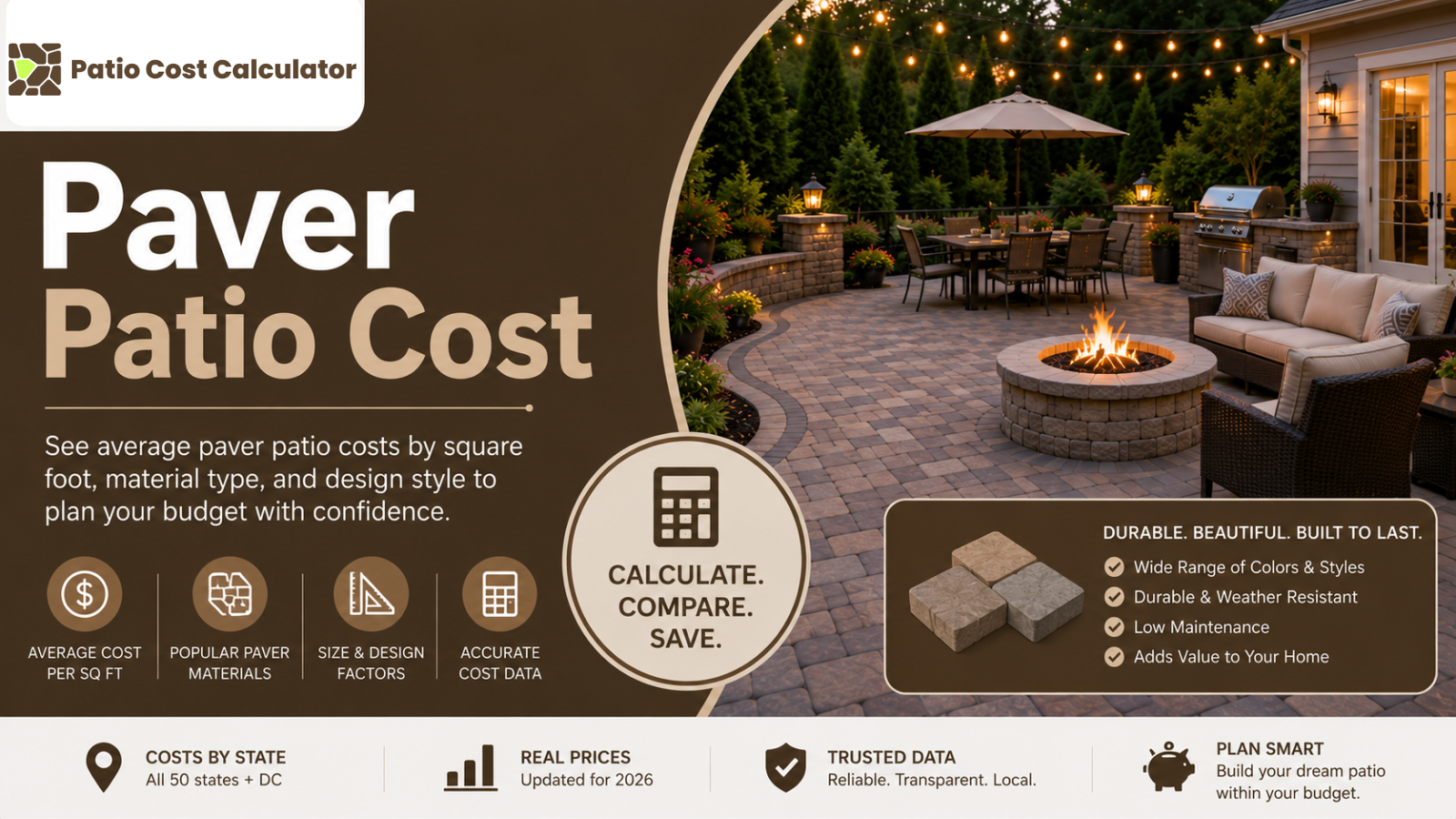
Concrete remains one of the most affordable patio materials available. It offers a clean appearance, fast installation, and relatively low maintenance. Pavers, on the other hand, cost more initially but provide greater design flexibility, easier repairs, and a premium look that many homeowners find worth the additional investment.
The best choice depends on your budget, design preferences, climate, and how long you plan to stay in your home.
This guide compares concrete patios and paver patios side by side to help you decide which material offers the best value for your outdoor living project.
Quick Comparison
| Feature | Concrete Patio | Paver Patio |
|---|---|---|
| Initial Cost | ✅ Lower | Higher |
| Lifespan | 25–40 years | 30–50+ years |
| Maintenance | Low | Low |
| Repairability | Moderate | Excellent |
| Design Options | Very Good | Excellent |
| Installation Speed | Faster | Slower |
| Crack Resistance | Fair | Excellent |
| Long-Term Value | Very Good | Excellent |
Initial Cost
For many homeowners, the biggest deciding factor is installation cost.
Concrete Patio
Typical installed cost:
$8–$22 per square foot
Pricing depends on:
- Thickness
- Reinforcement
- Decorative finishes
- Site preparation
- Local labor costs
Because installation is relatively straightforward, concrete remains one of the most economical patio materials.
Paver Patio
Typical installed cost:
$12–$30 per square foot
Costs vary depending on:
- Paver style
- Pattern
- Base preparation
- Border design
- Cutting requirements
- Labor rates
Paver installation requires more labor and precision, increasing the overall project cost.
Winner:
🟢 Concrete Patio
Appearance
Appearance is often where homeowners notice the biggest differences.
Concrete Patio
Modern concrete patios are available in numerous finishes, including:
- Smooth concrete
- Broom finish
- Stamped concrete
- Colored concrete
- Exposed aggregate
- Decorative scoring
These options allow homeowners to achieve a wide variety of looks at a relatively affordable price.
Paver Patio
Pavers offer nearly unlimited design possibilities.
Homeowners can choose from:
- Dozens of colors
- Various shapes
- Multiple laying patterns
- Decorative borders
- Mixed textures
- Contemporary and traditional styles
Because individual pavers create natural variation, they often provide a richer, more upscale appearance.
Winner:
🟢 Paver Patio
Durability
Both materials are designed to withstand years of outdoor use.
Concrete Patio
A properly installed concrete patio performs well under normal residential conditions.
It offers:
- Strong structural performance
- Good weather resistance
- Heavy load capacity
- Long service life
However, concrete can crack over time because of:
- Freeze-thaw cycles
- Soil movement
- Tree roots
- Ground settling
Paver Patio
Pavers are designed to flex slightly with ground movement.
This allows them to better tolerate:
- Soil expansion
- Freeze-thaw conditions
- Minor settling
- Heavy traffic
Individual units distribute weight effectively, reducing the likelihood of large visible cracks.
Winner:
🟢 Paver Patio
Maintenance Requirements
Routine maintenance helps maximize the lifespan of either patio.
Concrete Patio
Typical maintenance includes:
- Sweeping debris
- Washing the surface
- Sealing every few years (optional or recommended for decorative concrete)
- Repairing small cracks if they develop
Overall maintenance requirements are relatively low.
Paver Patio
Routine maintenance typically includes:
- Sweeping
- Occasional washing
- Replenishing joint sand when necessary
- Removing weeds if they appear
- Replacing individual damaged pavers
Although maintenance is slightly different, it is generally straightforward.
Winner:
🟢 Tie
Repairs
Eventually, every patio may require repairs.
Concrete Patio
Repairing concrete can be challenging.
Common repairs include:
- Crack filling
- Surface patching
- Resurfacing
Unfortunately, repaired areas often remain visible because matching existing concrete color and texture is difficult.
Paver Patio
One of the biggest advantages of pavers is repairability.
If damage occurs:
- Individual pavers can be removed.
- The base can be repaired.
- New pavers can be installed.
- The surrounding patio remains undisturbed.
Repairs are usually quicker and less noticeable than concrete repairs.
Winner:
🟢 Paver Patio
Installation Time
Installation speed may be important if you want to complete your outdoor project quickly.
Concrete Patio
Concrete installation is generally faster.
Typical steps include:
- Excavation
- Base preparation
- Form installation
- Pouring
- Finishing
- Curing
Most residential patios are completed within a few days, although curing continues after installation.
Paver Patio
Installing pavers requires additional steps:
- Excavation
- Gravel base installation
- Compaction
- Bedding sand
- Individual paver placement
- Cutting edge pieces
- Joint sand installation
- Final compaction
Because every paver is installed individually, projects typically take longer.
Winner:
🟢 Concrete Patio
Lifespan
A patio is a long-term investment, so understanding how long each material is expected to last is an important part of the decision.
Concrete Patio
A professionally installed concrete patio typically lasts:
25–40 years
Actual lifespan depends on:
- Installation quality
- Reinforcement
- Climate
- Drainage
- Maintenance
- Soil conditions
Minor cracks may develop over time, but many concrete patios remain structurally sound for decades.
Paver Patio
A professionally installed paver patio commonly lasts:
30–50+ years
Because pavers are individual units rather than a single slab, they are less likely to experience widespread cracking from normal ground movement.
With routine maintenance, many paver patios remain attractive for several decades.
Winner:
🟢 Paver Patio
Weather Resistance
Weather conditions can significantly affect patio performance.
Concrete Patio
Concrete performs well in most climates but may be affected by:
- Freeze-thaw cycles
- Soil movement
- Tree roots
- Ground settling
These conditions may eventually contribute to visible cracking.
Paver Patio
Pavers generally tolerate changing weather conditions exceptionally well.
Their flexible installation system helps accommodate:
- Ground movement
- Frost heave
- Temperature changes
- Heavy rainfall
Individual pavers can also be replaced if localized damage occurs.
Winner:
🟢 Paver Patio
Best Climates
Both patio materials perform well throughout much of the United States, although each has strengths in different environments.
Concrete Patio
Concrete works particularly well in:
- Moderate climates
- Dry regions
- Suburban neighborhoods
- Areas with stable soil conditions
Decorative finishes can also withstand years of outdoor exposure when properly maintained.
Paver Patio
Pavers are an excellent choice for:
- Northern states
- Freeze-thaw climates
- Areas with shifting soils
- Regions with heavy rainfall
- Homes experiencing seasonal ground movement
Their flexible construction helps reduce the likelihood of large structural cracks.
Winner:
🟢 Paver Patio
Home Value
A professionally installed patio can improve both outdoor living space and curb appeal.
Concrete Patio
A new concrete patio provides:
- Functional outdoor entertaining space
- Clean appearance
- Improved backyard usability
- Good return on investment
It remains one of the most practical improvements for homeowners seeking affordability.
Paver Patio
Paver patios are often viewed as premium outdoor features.
Many buyers appreciate:
- Decorative appearance
- High-quality craftsmanship
- Long lifespan
- Easy maintenance
- Custom design possibilities
Their upscale appearance may increase buyer interest when selling a home.
Winner:
🟢 Paver Patio
Environmental Impact
Concrete Patio
Concrete is durable and long-lasting, reducing replacement frequency.
However, cement production requires significant energy, making concrete less environmentally friendly than some alternative materials.
Paver Patio
Many modern concrete pavers are manufactured using recycled materials.
Individual pavers can also be reused or replaced without removing the entire patio, reducing waste during repairs.
Winner:
🟢 Paver Patio
Which Patio Is Better for Different Homeowners?
Choose a Concrete Patio If:
- You're working with a limited budget.
- You want the lowest installation cost.
- You prefer a simple, clean appearance.
- Fast installation is important.
- Your patio design is relatively straightforward.
Concrete remains one of the best values for homeowners seeking an attractive outdoor living space without a premium price tag.
Choose a Paver Patio If:
- You want maximum curb appeal.
- You prefer a premium appearance.
- You value long-term durability.
- Easy repairs are important.
- You expect to stay in your home for many years.
- You enjoy customized patio designs.
Although pavers cost more initially, many homeowners believe their beauty and longevity justify the additional investment.
Pros and Cons
Concrete Patio
Pros
- Lower installation cost
- Fast installation
- Low maintenance
- Durable surface
- Decorative finish options
- Suitable for most homes
Cons
- Can crack over time
- Repairs may remain visible
- Less design flexibility than pavers
- More difficult to repair after settling
Paver Patio
Pros
- Premium appearance
- Exceptional durability
- Easy individual repairs
- Outstanding design flexibility
- Long lifespan
- Excellent weather resistance
Cons
- Higher upfront cost
- Longer installation time
- More labor-intensive installation
- Joint sand may require occasional maintenance
Long-Term Value
While concrete has the lower initial cost, long-term ownership costs tell a different story.
Concrete may eventually require:
- Crack repairs
- Surface resurfacing
- Partial replacement
Pavers often require only localized repairs when needed, making maintenance simpler and less disruptive.
For homeowners planning to remain in their homes for many years, pavers frequently provide greater long-term value despite their higher installation cost.
Cost Comparison at a Glance
The table below summarizes the typical differences between concrete and paver patios.
| Feature | Concrete Patio | Paver Patio |
|---|---|---|
| Typical Installed Cost | $8–$22/sq ft | $12–$30/sq ft |
| Lifespan | 25–40 years | 30–50+ years |
| Maintenance | Low | Low |
| Repairability | Moderate | Excellent |
| Crack Resistance | Fair | Excellent |
| Installation Time | Faster | Slower |
| Design Flexibility | Very Good | Excellent |
| Weather Performance | Very Good | Excellent |
| Home Value | Good | Excellent |
| Overall Long-Term Value | Very Good | Excellent |
Both materials are excellent choices, but they appeal to different homeowner priorities.
Frequently Asked Questions
Which patio material is less expensive?
Concrete patios generally have a lower upfront installation cost. Most homeowners can expect to pay between $8 and $22 per square foot, while paver patios typically range from $12 to $30 per square foot.
Which patio lasts longer?
Paver patios generally have a longer expected lifespan.
A professionally installed paver patio often lasts 30 to 50 years or more, while concrete patios typically last 25 to 40 years, depending on maintenance, climate, and installation quality.
Which patio is easier to repair?
Paver patios are much easier to repair.
If an individual paver becomes damaged or settles, it can usually be removed and replaced without affecting the rest of the patio. Concrete repairs, by comparison, often remain visible even after patching.
Does concrete always crack?
Concrete has a natural tendency to develop small cracks over time because of:
- Ground movement
- Temperature changes
- Soil settlement
- Freeze-thaw cycles
Professional installation, proper reinforcement, and well-prepared foundations help minimize cracking, but no concrete slab is completely crack-proof.
Do weeds grow between pavers?
Occasionally.
Modern polymeric joint sand significantly reduces weed growth, but some maintenance may still be required over the years, particularly if joint sand erodes or organic debris accumulates.
Which patio adds more value to a home?
Both patios can improve curb appeal and outdoor living space.
However, many buyers perceive paver patios as a premium upgrade because of their attractive appearance, durability, and ease of repair. Depending on the neighborhood and local real estate market, a professionally installed paver patio may provide stronger resale appeal.
Which patio is better for cold climates?
Paver patios generally perform better in regions with frequent freeze-thaw cycles because the individual pavers can move slightly with the ground, reducing the likelihood of large structural cracks.
Is stamped concrete a good alternative to pavers?
Stamped concrete can imitate the appearance of pavers at a lower initial cost and is an excellent option for homeowners seeking decorative finishes on a budget.
However, it remains a continuous slab, meaning any future cracks may be more noticeable and repairs can be more difficult than with individual pavers.
Final Verdict
Both concrete patios and paver patios are outstanding choices, but the right material depends on your priorities.
Choose a concrete patio if your primary goals are affordability, quick installation, and a clean, attractive outdoor space. Modern decorative finishes offer numerous design options while keeping installation costs relatively low.
Choose a paver patio if you're looking for superior durability, outstanding curb appeal, exceptional design flexibility, and easier long-term repairs. Although the upfront investment is higher, many homeowners consider the additional cost worthwhile because of the patio's longevity and premium appearance.
There is no single "best" patio material for every homeowner. The ideal choice depends on your budget, local climate, maintenance expectations, and how long you plan to enjoy your outdoor living space.
Final Thoughts
Concrete and pavers remain two of the most popular patio materials in the United States because each offers an excellent combination of durability, functionality, and visual appeal. Concrete provides one of the best values for homeowners seeking an affordable patio, while pavers deliver greater customization, long-term flexibility, and a more upscale finish.
Before requesting contractor estimates, use the Patio Cost Calculator on the homepage to estimate your project's cost based on your patio size, material choice, and state. Having a realistic cost estimate before comparing quotes can help you budget more confidently and choose the patio solution that best fits your home and long-term goals.