 Patio Cost Calculator
Introduction
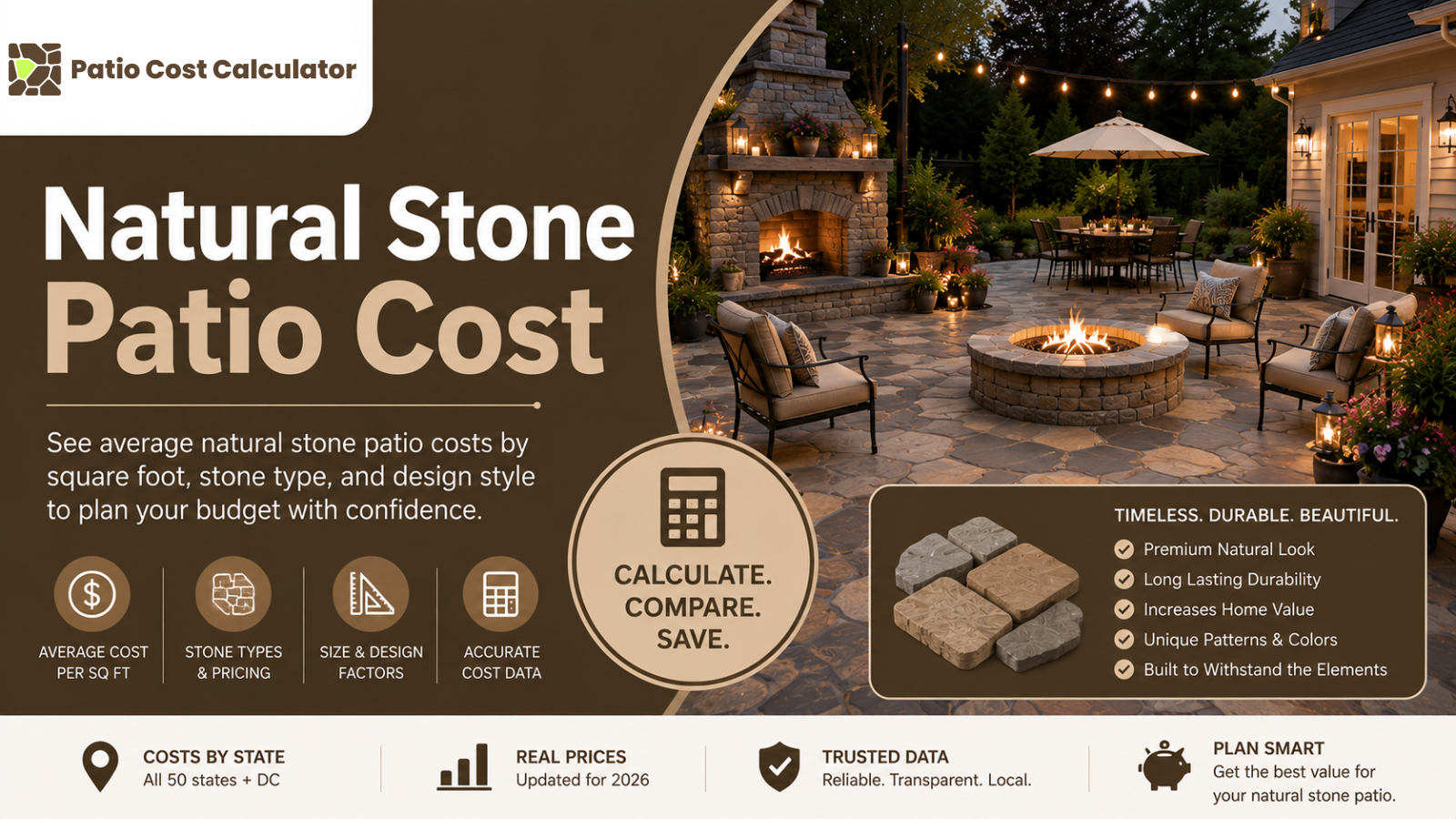
A natural stone patio is widely regarded as one of the most elegant and durable outdoor living investments a homeowner can make. Whether constructed with flagstone, bluestone, slate, limestone, travertine, or granite, natural stone creates a timeless appearance that can dramatically enhance curb appeal and increase the enjoyment of your outdoor space.
Unlike manufactured materials, every piece of natural stone is unique in color, texture, and pattern. This creates a patio that is truly one of a kind. While natural stone generally has the highest installation cost among common patio materials, many homeowners consider it a worthwhile investment because of its exceptional longevity, premium appearance, and ability to complement almost any architectural style.
Before requesting contractor estimates, it's important to understand the factors that influence natural stone patio costs. Material selection, project size, labor, site preparation, and local market conditions all affect the final price.
This guide explains average natural stone patio costs, different stone options, pricing factors, maintenance requirements, expected lifespan, and whether natural stone is the right choice for your home.
Quick Answer
In 2026, homeowners can typically expect to pay between $18 and $45 per square foot for a professionally installed natural stone patio.
Typical residential projects generally cost:
| Patio Size | Estimated Cost |
|---|---|
| 100 sq ft | $1,800–$4,500 |
| 200 sq ft | $3,600–$9,000 |
| 300 sq ft | $5,400–$13,500 |
| 400 sq ft | $7,200–$18,000 |
| 500 sq ft | $9,000–$22,500 |
Premium stones, intricate layouts, and difficult installation conditions can increase these costs.
Why Homeowners Choose Natural Stone
Natural stone has remained one of the most sought-after patio materials for generations because it offers unmatched beauty and exceptional durability.
Homeowners often choose natural stone because it provides:
- Luxurious appearance
- Unique patterns and textures
- Exceptional longevity
- Outstanding weather resistance
- Strong resale appeal
- Minimal maintenance
- Excellent durability
- Timeless architectural style
Unlike manufactured products, no two natural stone patios look exactly alike.
Average Natural Stone Patio Costs by Material
The type of stone selected has the greatest influence on the total project cost.
| Stone Type | Typical Installed Cost |
|---|---|
| Flagstone | $18–$30 / sq ft |
| Limestone | $20–$34 / sq ft |
| Bluestone | $22–$36 / sq ft |
| Slate | $24–$40 / sq ft |
| Travertine | $24–$42 / sq ft |
| Granite | $28–$45+ / sq ft |
Material availability, thickness, finish, and transportation costs all contribute to pricing differences.
What Is Included in the Installation Cost?
Installing a natural stone patio requires considerable preparation and skilled craftsmanship.
A professional estimate generally includes:
- Site preparation
- Excavation
- Base installation
- Compaction
- Bedding material
- Stone layout
- Cutting and fitting
- Joint filling
- Cleanup
Some contractors also include sealing certain types of stone, while others offer sealing as an optional service.
Review your written proposal carefully to understand exactly what is included.
What Affects Natural Stone Patio Cost?
Several factors determine the final project price.
Patio Size
Larger patios naturally require:
- More stone
- Additional base materials
- More labor
- Increased cutting and fitting
- Longer installation time
Although the total project cost increases with size, larger patios may sometimes have a slightly lower cost per square foot.
Type of Stone
Every natural stone has different characteristics.
For example:
- Flagstone is often one of the more affordable natural stone choices.
- Limestone offers a clean, elegant appearance.
- Bluestone is popular for its durability and rich blue-gray color.
- Slate provides dramatic color variation.
- Travertine remains cool underfoot in sunny climates.
- Granite is among the most durable—and expensive—options available.
Your material choice has a major impact on both appearance and cost.
Stone Thickness
Natural stone is available in different thicknesses depending on its intended use.
Thicker stone generally costs more because it requires additional material and is heavier to transport and install.
Contractors will recommend the appropriate thickness based on your patio's intended use and installation method.
Site Preparation
Proper preparation is critical for preventing settling and movement.
Preparation may include:
- Removing existing grass or landscaping
- Excavation
- Grading
- Installing a compacted gravel base
- Adding leveling material
- Improving drainage
Properties with steep slopes or poor soil conditions typically require additional work, increasing project costs.
Labor Costs
Natural stone installation is one of the most labor-intensive patio projects.
Each stone often requires:
- Individual placement
- Custom cutting
- Careful fitting
- Precise leveling
Because installation requires skilled craftsmanship, labor costs are generally higher than those for concrete or manufactured pavers.
Accessibility
Limited access can increase installation time.
Examples include:
- Narrow gates
- Hillsides
- Existing landscaping
- Limited equipment access
- Backyard-only installations
More manual handling typically results in higher labor costs.
Types of Natural Stone
One of the greatest advantages of natural stone is the wide variety of materials available. Each type offers its own appearance, durability, color variations, and price range, allowing homeowners to choose a patio that complements their home's architecture and landscape.
Flagstone
Flagstone is one of the most popular choices for residential patios.
It consists of flat, irregularly shaped pieces of sedimentary stone that create a natural, rustic appearance.
Benefits include:
- Timeless beauty
- Natural slip resistance
- Wide range of colors
- Excellent durability
- Flexible design layouts
Flagstone is commonly used for patios, walkways, garden paths, and pool surrounds.
Bluestone
Bluestone is a dense sandstone known for its elegant blue-gray tones.
It is especially popular in the northeastern United States.
Advantages include:
- Sophisticated appearance
- High durability
- Excellent weather resistance
- Consistent surface texture
- Long lifespan
Bluestone complements both traditional and modern home designs.
Limestone
Limestone offers a clean and refined appearance that works well with contemporary landscaping.
Homeowners often choose limestone because it provides:
- Light natural colors
- Smooth texture
- Elegant appearance
- Comfortable walking surface
- Excellent versatility
Because lighter-colored limestone reflects sunlight, it often stays cooler than darker stone during hot summer months.
Slate
Slate is prized for its dramatic natural color variations.
Depending on the quarry, slate may feature shades of:
- Gray
- Black
- Green
- Purple
- Rust
- Blue
Its unique texture gives every patio a distinctive appearance while offering outstanding durability.
Travertine
Travertine has become increasingly popular for luxury outdoor living spaces.
Its advantages include:
- Premium appearance
- Naturally cool surface
- Excellent slip resistance
- Wide variety of neutral colors
- Comfortable barefoot walking
Travertine is especially common around swimming pools because it remains cooler under direct sunlight than many other paving materials.
Granite
Granite is one of the hardest and most durable natural stones available.
Benefits include:
- Exceptional strength
- Outstanding longevity
- Scratch resistance
- Elegant appearance
- Minimal maintenance
Although granite generally has the highest installation cost, many homeowners appreciate its premium appearance and extremely long service life.
Advantages of Natural Stone Patios
Natural stone remains the premium choice for outdoor living spaces for many reasons.
Major advantages include:
- Luxurious appearance
- Unique natural colors and textures
- Exceptional durability
- Outstanding weather resistance
- Extremely long lifespan
- Excellent resale appeal
- Minimal maintenance
- Timeless architectural style
- Increased property value
Because every stone is naturally unique, each patio becomes a one-of-a-kind outdoor feature.
Disadvantages of Natural Stone Patios
Despite its many advantages, natural stone may not be the best choice for every homeowner.
Potential disadvantages include:
- Highest installation cost among common patio materials
- Labor-intensive installation
- Heavier materials requiring more handling
- Some stones benefit from periodic sealing
- Repairs can be more expensive than concrete or pavers
- Material availability varies by region
For homeowners with limited budgets, concrete or pavers may provide a more economical alternative.
Expected Lifespan
One of the biggest reasons homeowners choose natural stone is its incredible longevity.
A professionally installed natural stone patio commonly lasts:
50 to 100 years or more
Actual lifespan depends on:
- Stone type
- Installation quality
- Drainage
- Climate
- Routine maintenance
Many historic stone patios remain in excellent condition after several generations.
Maintenance Requirements
Natural stone patios require relatively little routine maintenance.
Recommended care includes:
- Sweep leaves and debris regularly.
- Wash the surface with water as needed.
- Remove weeds from joints if they appear.
- Reseal certain stone types when recommended.
- Replace damaged joint material if necessary.
- Clean spills promptly to reduce staining.
With routine maintenance, natural stone retains its beauty for decades.
Best Climates for Natural Stone Patios
Natural stone performs exceptionally well throughout much of the United States.
It is particularly suitable for:
- Warm southern climates
- Moderate regions
- Coastal communities
- Mountain homes
- Luxury landscapes
- Areas with significant temperature changes
Selecting a stone appropriate for your local climate helps maximize long-term performance and minimize maintenance.
Example Natural Stone Patio Projects
Small Patio
Patio Size: 150 sq ft
Material: Flagstone
Estimated Cost:
$2,700–$4,500
Ideal for:
- Backyard seating areas
- Garden patios
- Small outdoor retreats
Medium Patio
Patio Size: 300 sq ft
Material: Bluestone
Estimated Cost:
$6,600–$10,800
Perfect for:
- Outdoor dining
- Fire pit areas
- Family gathering spaces
Large Luxury Patio
Patio Size: 500 sq ft
Material: Travertine or Granite
Estimated Cost:
$12,000–$22,500
Popular additions include:
- Outdoor kitchens
- Covered patios
- Decorative retaining walls
- Water features
- Luxury landscape lighting
Is a Natural Stone Patio Worth It?
For homeowners seeking the highest-quality outdoor living space, the answer is often yes.
Although natural stone has the highest upfront cost, it also offers exceptional long-term value through its durability, timeless appearance, and extremely long lifespan.
A natural stone patio is an excellent choice if you:
- Plan to stay in your home for many years.
- Want a premium outdoor living space.
- Value unique natural beauty.
- Prioritize long-term durability.
- Want to maximize curb appeal and resale appeal.
Many homeowners view natural stone not simply as a patio, but as a permanent landscape feature that enhances their property for decades.
Ways to Save Money on a Natural Stone Patio
Natural stone is considered a premium patio material, but there are still several ways homeowners can reduce installation costs while maintaining excellent quality.
Consider these practical budgeting tips:
- Obtain at least three written estimates from experienced patio contractors.
- Compare different stone types, as some are more affordable than others.
- Choose locally available stone whenever possible to reduce transportation costs.
- Select standard stone sizes instead of highly customized cuts.
- Keep the patio shape simple to minimize cutting and installation labor.
- Plan the project during the contractor's slower season if scheduling is flexible.
- Ensure proper drainage before installation to help avoid future repairs.
- Maintain the patio regularly to preserve its appearance and extend its lifespan.
While it may be tempting to choose the lowest quote, workmanship is especially important with natural stone. Proper installation helps prevent uneven settling, loose stones, and drainage problems that can be expensive to correct later.
Natural Stone vs. Pavers vs. Concrete
Natural stone is often compared with concrete and pavers because all three materials are commonly used for residential patios.
| Feature | Concrete | Pavers | Natural Stone |
|---|---|---|---|
| Average Cost | $8–$22/sq ft | $12–$30/sq ft | $18–$45/sq ft |
| Installation Speed | Fast | Moderate | Slow |
| Durability | Excellent | Excellent | Outstanding |
| Repairability | Moderate | Excellent | Good |
| Design Options | Very Good | Excellent | Outstanding |
| Maintenance | Low | Low | Low |
| Lifespan | 25–40 years | 30–50+ years | 50–100+ years |
| Curb Appeal | Very Good | Excellent | Outstanding |
Each material serves different homeowner priorities.
- Concrete is ideal for homeowners seeking affordability and quick installation.
- Pavers provide excellent design flexibility, easy repairs, and outstanding long-term value.
- Natural Stone offers unmatched beauty, exceptional longevity, and a truly custom appearance that many homeowners consider the premium choice.
Your final decision should reflect your budget, preferred style, maintenance expectations, and how long you plan to enjoy your outdoor living space.
Frequently Asked Questions
How much does a natural stone patio cost?
Most professionally installed natural stone patios cost between $18 and $45 per square foot, depending on the type of stone, project complexity, labor rates, and geographic location.
What is the least expensive natural stone?
Flagstone is often one of the more affordable natural stone options, although pricing varies depending on local availability and the specific variety selected.
Which natural stone lasts the longest?
Granite, slate, bluestone, and many high-quality flagstones can last for several generations when properly installed and maintained. Many natural stone patios remain in excellent condition for 50 to 100 years or more.
Does natural stone require sealing?
Some stone types benefit from periodic sealing to help reduce staining and moisture absorption, while others require little or no sealing. Your contractor can recommend the appropriate maintenance based on the specific stone you choose.
Is natural stone slippery?
Many natural stones provide excellent traction because of their naturally textured surfaces. However, the slip resistance varies by stone type and finish, so it's important to choose a material appropriate for your climate and intended use.
Does a natural stone patio increase home value?
A professionally installed natural stone patio can significantly improve curb appeal and create a premium outdoor living space. While the exact return on investment varies by market, natural stone is widely regarded as one of the most desirable hardscape materials for residential properties.
Final Thoughts
A natural stone patio is one of the most luxurious and durable outdoor improvements a homeowner can make. Although it requires a larger initial investment than concrete or manufactured pavers, the combination of timeless beauty, exceptional longevity, and minimal maintenance makes natural stone an outstanding long-term investment.
Whether you choose flagstone, bluestone, limestone, slate, travertine, or granite, understanding the factors that influence installation costs will help you compare contractor estimates more effectively and plan your project with confidence.
Before requesting quotes, use the Patio Cost Calculator on the homepage to estimate your project's cost based on your patio size, selected material, and state. A personalized estimate provides a realistic starting point for budgeting and helps you make informed decisions before hiring a local patio contractor.