 Patio Cost Calculator
Introduction
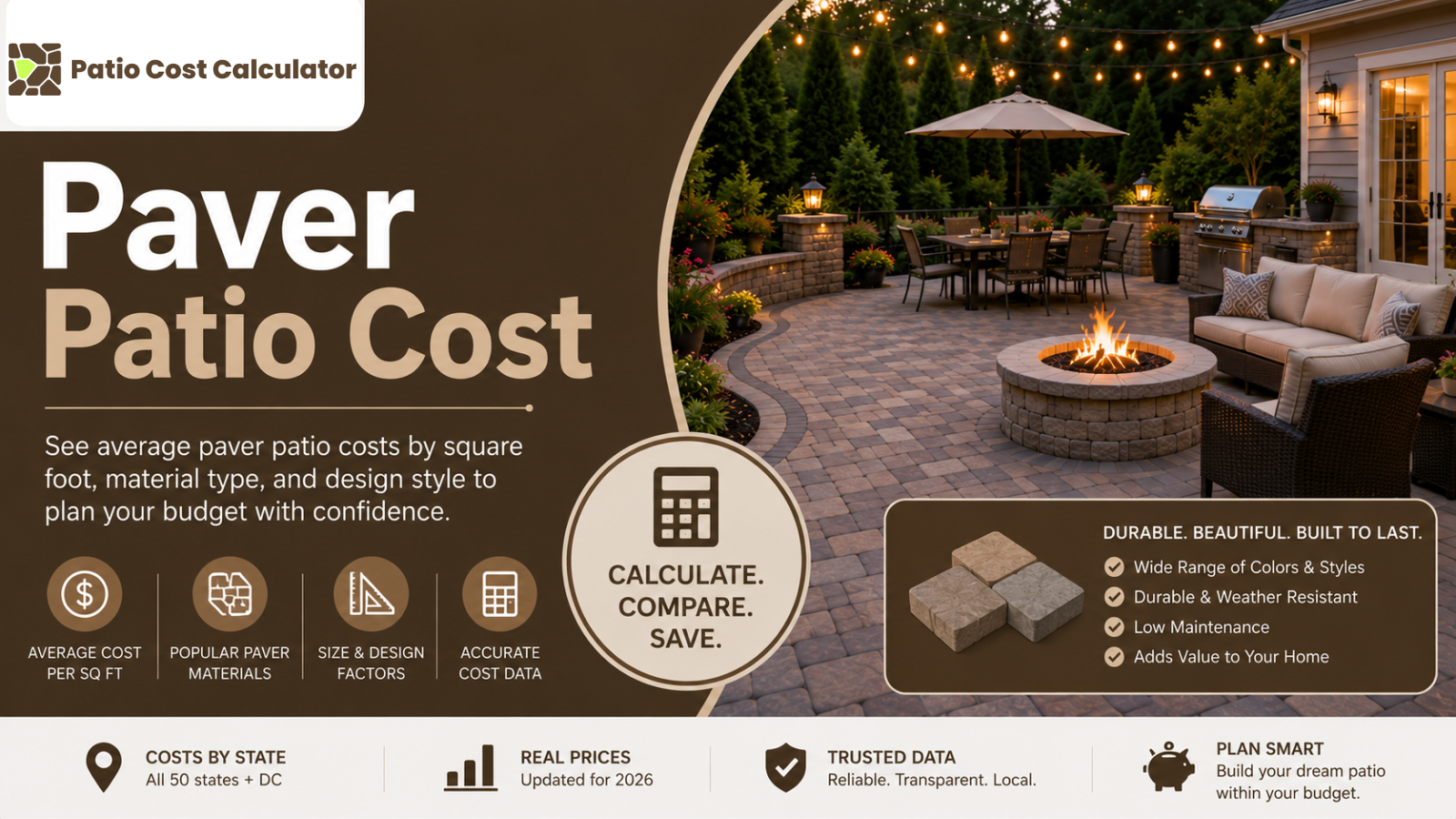
Paver patios have become one of the most desirable outdoor living upgrades for homeowners across the United States. Known for their durability, elegant appearance, and design flexibility, pavers can transform an ordinary backyard into an attractive space for relaxing, dining, and entertaining.
Although paver patios generally cost more than poured concrete, many homeowners consider the additional investment worthwhile because pavers are long-lasting, relatively easy to repair, and available in countless colors, shapes, textures, and laying patterns.
If you're planning a new patio, understanding installation costs before requesting contractor estimates can help you build a realistic budget and compare proposals more confidently.
This guide explains average paver patio costs, the factors that influence pricing, different types of pavers, expected lifespan, maintenance requirements, and practical budgeting tips for homeowners.
Quick Answer
In 2026, homeowners can typically expect to pay between $12 and $30 per square foot for a professionally installed paver patio.
Typical project costs include:
| Patio Size | Estimated Cost |
|---|---|
| 100 sq ft | $1,200–$3,000 |
| 200 sq ft | $2,400–$6,000 |
| 300 sq ft | $3,600–$9,000 |
| 400 sq ft | $4,800–$12,000 |
| 500 sq ft | $6,000–$15,000 |
Actual pricing depends on the type of pavers selected, labor costs, project complexity, and geographic location.
Why Homeowners Choose Pavers
Pavers have become increasingly popular because they offer an excellent combination of beauty and durability.
Many homeowners choose pavers because they provide:
- Premium curb appeal
- Long service life
- Excellent durability
- Countless design possibilities
- Easy repairs
- Slip-resistant surfaces
- Strong resale appeal
- Low maintenance requirements
Unlike poured concrete, which forms one continuous slab, pavers consist of individual units installed over a compacted base. This design allows the surface to flex slightly with ground movement, reducing the likelihood of large cracks.
Average Paver Patio Costs by Type
The type of paver has one of the biggest impacts on the total installation cost.
| Paver Type | Typical Installed Cost |
|---|---|
| Concrete Pavers | $12–$20 / sq ft |
| Brick Pavers | $14–$24 / sq ft |
| Porcelain Pavers | $16–$28 / sq ft |
| Premium Decorative Pavers | $18–$30 / sq ft |
Premium materials often offer unique colors, textures, and finishes that increase both appearance and cost.
What Is Included in the Installation Cost?
Professional paver installation involves much more than laying individual stones.
Most estimates include:
- Site preparation
- Excavation
- Gravel base installation
- Compaction
- Bedding sand
- Edge restraints
- Paver installation
- Joint sand
- Final compaction
- Cleanup
Some contractors may also include sealing the patio, while others offer it as an optional upgrade.
Always ask exactly what is included before comparing estimates.
What Affects Paver Patio Cost?
Several factors determine the final installation price.
Patio Size
Larger patios require:
- More pavers
- Additional base material
- More bedding sand
- Increased labor
- More edge restraints
Although larger projects cost more overall, contractors may occasionally offer slightly lower pricing per square foot for larger installations.
Type of Pavers
Material selection greatly influences pricing.
Concrete pavers are generally the most affordable option.
Brick pavers typically cost slightly more because of material costs and installation requirements.
Porcelain and premium decorative pavers usually represent the highest-priced manufactured options.
Installation Pattern
The complexity of the laying pattern affects labor costs.
Common patterns include:
- Running bond
- Basket weave
- Herringbone
- Stack bond
- Circular patterns
- Random layouts
Simple layouts generally require less cutting and installation time, while intricate patterns increase labor requirements.
Site Preparation
Proper preparation is essential for long-term durability.
Preparation may include:
- Removing grass
- Excavation
- Soil grading
- Installing compacted gravel
- Adding bedding sand
- Improving drainage
A properly prepared foundation helps prevent settling and uneven surfaces over time.
Borders and Decorative Features
Many homeowners enhance their patios with decorative details such as:
- Contrasting borders
- Curved edges
- Multiple colors
- Inlays
- Decorative bands
While these features improve appearance, they also require additional labor and materials.
Labor Costs
Labor is one of the largest expenses in any paver installation project.
Installation costs vary depending on:
- Geographic location
- Contractor experience
- Project complexity
- Seasonal demand
- Local cost of living
Projects in metropolitan areas generally cost more than similar patios in rural communities.
Accessibility
Limited access to the backyard can increase labor costs.
Examples include:
- Narrow gates
- Steep slopes
- Existing landscaping
- Fences
- Limited equipment access
These obstacles may require additional manual labor and increase installation time.
Types of Pavers
One of the biggest advantages of choosing a paver patio is the wide variety of materials and styles available. Whether you're looking for a traditional appearance or a modern outdoor living space, there's a paver option to suit almost every home.
Concrete Pavers
Concrete pavers are the most popular choice for residential patios.
Manufactured from cement, sand, aggregates, and pigments, they are available in numerous colors, shapes, and textures.
Benefits include:
- Affordable pricing
- Wide variety of styles
- Excellent durability
- Easy replacement
- Low maintenance
- Suitable for most climates
Concrete pavers provide one of the best balances between cost, appearance, and long-term performance.
Brick Pavers
Brick pavers offer a timeless appearance that complements both traditional and historic homes.
Advantages include:
- Classic appearance
- Rich natural color
- Excellent durability
- Fade resistance
- Strong resale appeal
Brick patios are especially popular for:
- Colonial homes
- Cottage-style homes
- Traditional landscaping
- Garden walkways
Although brick generally costs more than concrete pavers, many homeowners appreciate its distinctive character.
Porcelain Pavers
Porcelain pavers have become increasingly popular for contemporary outdoor spaces.
They offer:
- Modern appearance
- Large-format designs
- Exceptional stain resistance
- Low water absorption
- Easy cleaning
Porcelain is particularly attractive for outdoor kitchens, pool decks, and luxury patios.
Decorative and Premium Pavers
Premium pavers are manufactured with specialized textures, colors, and finishes.
Some products imitate:
- Natural stone
- Slate
- Travertine
- Flagstone
- Granite
These premium options provide a high-end appearance while often costing less than genuine natural stone.
Advantages of Paver Patios
Pavers offer numerous benefits that make them one of the most desirable patio materials available.
Advantages include:
- Excellent durability
- Attractive appearance
- Countless design options
- Easy repairs
- Long lifespan
- Slip-resistant surface
- Minimal cracking
- Strong curb appeal
- Excellent drainage
- Increased property value
Because individual pavers are installed separately, small sections can often be repaired without replacing the entire patio.
Disadvantages of Paver Patios
Although pavers offer many advantages, homeowners should also understand their limitations.
Potential disadvantages include:
- Higher installation cost than basic concrete
- Longer installation time
- Weed growth between joints if not maintained
- Possible settling if the base is poorly prepared
- Periodic joint sand replacement
- Sealing may be recommended for some products
Fortunately, proper installation greatly reduces the likelihood of these issues.
Expected Lifespan
A professionally installed paver patio commonly lasts:
30–50 years or more
Many installations remain in excellent condition for even longer when properly maintained.
Longevity depends on factors such as:
- Installation quality
- Base preparation
- Drainage
- Climate
- Maintenance
- Material quality
Unlike poured concrete, individual damaged pavers can usually be replaced without disturbing the rest of the patio.
Maintenance Requirements
Paver patios require relatively little maintenance.
Recommended care includes:
- Sweep away leaves and debris regularly.
- Remove weeds that appear between joints.
- Reapply polymeric sand when necessary.
- Wash the patio occasionally with water.
- Replace damaged pavers promptly.
- Reseal the surface if recommended by the manufacturer.
Routine maintenance helps preserve both appearance and structural integrity for many years.
Best Climates for Paver Patios
Pavers perform exceptionally well in a wide variety of climates.
They are especially well suited for:
- Cold northern states
- Warm southern climates
- Coastal regions
- Areas with frequent freeze-thaw cycles
- Regions with heavy rainfall
Because individual pavers can move slightly without cracking, they often perform better than poured concrete in areas where the ground experiences seasonal expansion and contraction.
Example Paver Patio Projects
Small Patio
Patio Size: 150 sq ft
Material: Concrete pavers
Estimated Cost:
$1,800–$3,000
Ideal for:
- Outdoor seating
- Small backyard patios
- Apartment courtyards
Medium Patio
Patio Size: 300 sq ft
Material: Brick pavers
Estimated Cost:
$4,200–$7,200
Perfect for:
- Outdoor dining
- Fire pit areas
- Family entertaining
Large Premium Patio
Patio Size: 500 sq ft
Material: Decorative porcelain pavers
Estimated Cost:
$9,000–$15,000
Common upgrades include:
- Curved borders
- Outdoor kitchens
- Seating walls
- Landscape lighting
- Built-in fire features
Is a Paver Patio Worth It?
For many homeowners, absolutely.
Although the upfront cost is higher than a standard concrete slab, pavers offer several long-term advantages that often justify the additional investment.
A paver patio is an excellent choice if you:
- Want a premium appearance.
- Plan to stay in your home for many years.
- Prefer easier long-term repairs.
- Want extensive design flexibility.
- Value durability and curb appeal.
The combination of longevity, attractive appearance, and repairability makes pavers one of the best long-term investments for outdoor living spaces.
Ways to Save Money on a Paver Patio
Although paver patios require a larger initial investment than basic concrete, there are several ways homeowners can keep costs under control without sacrificing quality.
Consider these practical budgeting tips:
- Obtain at least three written estimates from reputable patio contractors.
- Select standard-sized pavers instead of premium designer collections.
- Choose a simple laying pattern rather than intricate custom designs.
- Limit decorative borders and multiple color combinations.
- Install the patio during the contractor's slower season if scheduling allows.
- Design a simple square or rectangular patio to reduce cutting and labor.
- Plan for proper drainage from the beginning to avoid costly future repairs.
- Keep the patio well maintained to maximize its lifespan.
Remember that the lowest estimate is not always the best value. Experience, workmanship, materials, and warranty coverage should all be considered before choosing a contractor.
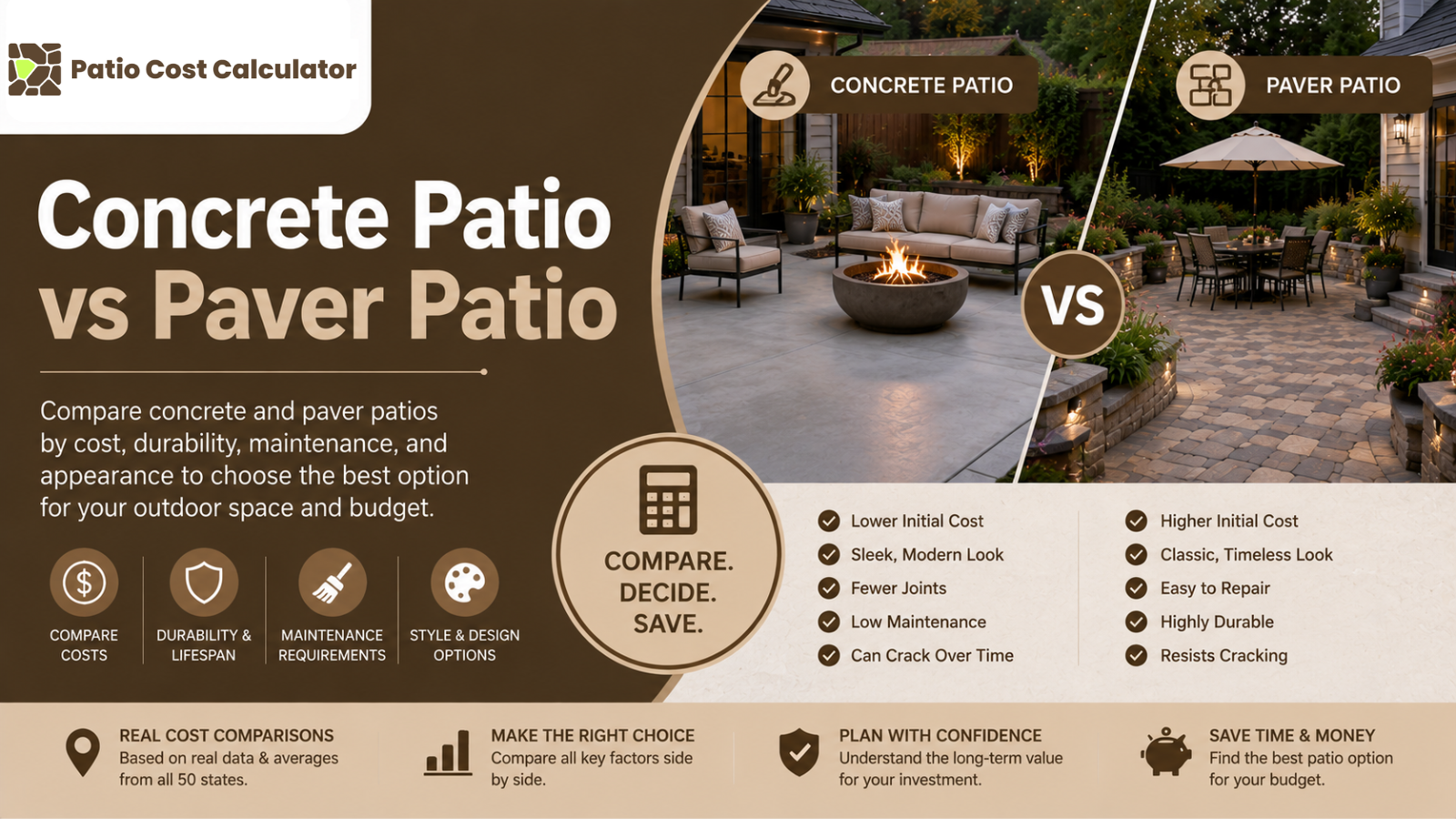
Pavers vs. Concrete vs. Natural Stone
Many homeowners compare all three popular patio materials before making a final decision.
| Feature | Concrete | Pavers | Natural Stone |
|---|---|---|---|
| Average Cost | $8–$22/sq ft | $12–$30/sq ft | $18–$45/sq ft |
| Installation Speed | Fast | Moderate | Slower |
| Durability | Excellent | Excellent | Outstanding |
| Repairability | Moderate | Excellent | Good |
| Design Options | Very Good | Excellent | Outstanding |
| Maintenance | Low | Low | Low |
| Lifespan | 25–40 years | 30–50+ years | 50–100+ years |
Each material offers different advantages.
- Concrete is ideal for homeowners seeking affordability and fast installation.
- Pavers provide one of the best combinations of beauty, durability, repairability, and long-term value.
- Natural Stone offers unmatched elegance and longevity but comes with the highest installation cost.
Your decision should depend on your budget, preferred appearance, maintenance expectations, and how long you plan to remain in your home.
Frequently Asked Questions
How much does a paver patio cost?
Most professionally installed paver patios cost between $12 and $30 per square foot, depending on the type of pavers, project complexity, labor rates, and your location.
Are pavers more expensive than concrete?
Yes. Pavers typically have a higher upfront installation cost because they require additional materials, base preparation, and labor. However, many homeowners believe the improved appearance, easier repairs, and longer service life justify the added expense.
How long does a paver patio last?
A properly installed paver patio commonly lasts 30 to 50 years or longer. High-quality materials, proper base preparation, and routine maintenance can extend its lifespan even further.
Do paver patios require maintenance?
Yes, but maintenance is generally minimal. Homeowners should sweep debris regularly, remove weeds if they appear between joints, replenish polymeric sand when necessary, and replace damaged pavers if needed.
Can individual pavers be replaced?
Yes. One of the biggest advantages of pavers is that damaged units can usually be removed and replaced individually without disturbing the surrounding patio. This makes repairs simpler and often less noticeable than repairing a concrete slab.
Do pavers increase home value?
A professionally installed paver patio can improve curb appeal, expand usable outdoor living space, and make a property more attractive to prospective buyers. While the exact return on investment varies by market, quality hardscaping is generally considered a desirable home improvement.
Final Thoughts
A paver patio is an outstanding investment for homeowners who want a durable, attractive, and highly customizable outdoor living space. Although the initial installation cost is higher than poured concrete, the combination of long lifespan, low maintenance, excellent repairability, and premium curb appeal makes pavers one of the most popular patio materials available today.
Whether you choose concrete pavers, brick, porcelain, or a premium decorative style, understanding the factors that influence pricing will help you compare contractor estimates more confidently and plan your project with realistic expectations.
Before requesting quotes, use the Patio Cost Calculator on the homepage to estimate your project based on your patio size, selected material, and state. A personalized estimate provides an excellent starting point for budgeting and helps you make informed decisions before hiring a local patio contractor.