 Patio Cost Calculator
Introduction
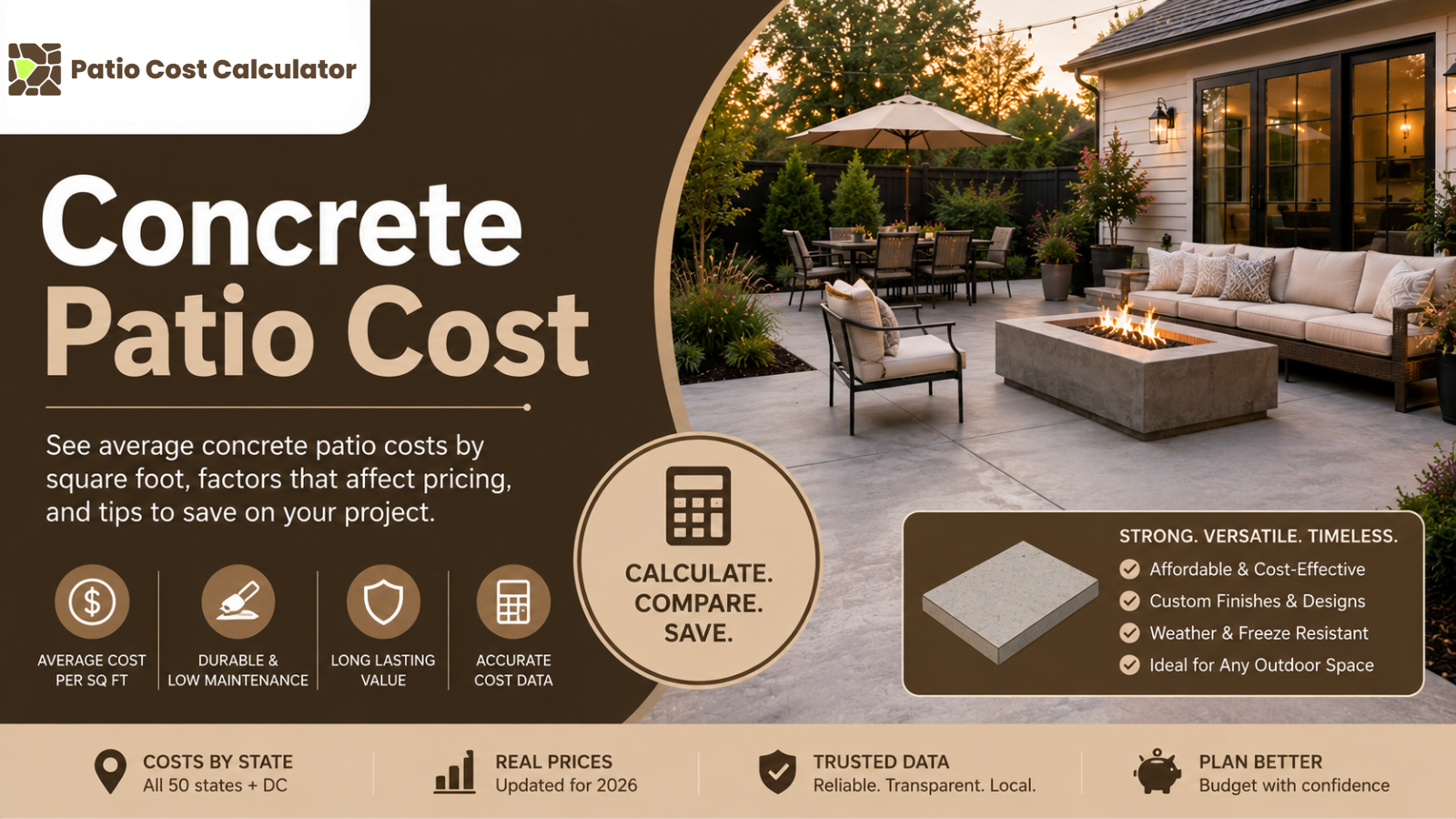
Concrete remains the most popular patio material in the United States—and for good reason. It offers an excellent combination of affordability, durability, and versatility, making it suitable for everything from small backyard seating areas to large outdoor entertainment spaces.
Whether you're installing a simple broom-finished slab, decorative stamped concrete, exposed aggregate, or colored concrete, understanding the total cost before starting your project is essential. While concrete patios are generally less expensive than pavers or natural stone, several factors can significantly influence the final price.
This guide explains average concrete patio costs, what affects pricing, the different types of concrete finishes, expected lifespan, maintenance requirements, and practical budgeting tips to help homeowners make informed decisions.
Quick Answer
In 2026, homeowners can expect to pay approximately $8 to $22 per square foot for a professionally installed concrete patio, depending on the finish, project complexity, labor rates, and geographic location.
Typical residential projects generally cost:
| Patio Size | Estimated Cost |
|---|---|
| 100 sq ft | $800–$2,200 |
| 200 sq ft | $1,600–$4,400 |
| 300 sq ft | $2,400–$6,600 |
| 400 sq ft | $3,200–$8,800 |
| 500 sq ft | $4,000–$11,000 |
These estimates include both materials and professional installation but may vary depending on local contractor pricing and optional upgrades.
Why Concrete Is So Popular
Concrete has remained the most commonly installed patio material for decades because it provides excellent value.
Homeowners often choose concrete because it offers:
- Lower installation costs than pavers or natural stone
- Excellent durability
- Long service life
- Low maintenance
- Countless decorative finish options
- Compatibility with almost every home style
- Fast installation
Modern concrete patios can closely resemble brick, slate, flagstone, wood planks, or even natural stone through decorative finishing techniques.
Average Concrete Patio Costs by Finish
Not all concrete patios cost the same.
The finish you select has one of the biggest impacts on the overall project price.
| Concrete Finish | Typical Installed Cost |
|---|---|
| Basic Broom Finish | $8–$12 / sq ft |
| Smooth Trowel Finish | $9–$13 / sq ft |
| Colored Concrete | $10–$15 / sq ft |
| Exposed Aggregate | $12–$18 / sq ft |
| Stamped Concrete | $14–$22 / sq ft |
Decorative finishes require additional materials, labor, and craftsmanship, increasing the total installation cost.
What Is Included in the Price?
A professional concrete patio installation generally includes much more than simply pouring concrete.
Most projects include:
- Site preparation
- Excavation
- Base material installation
- Compaction
- Concrete forms
- Reinforcement (when required)
- Concrete placement
- Finishing
- Expansion joints
- Cleanup
Some contractors may also include sealing the concrete after curing, while others offer it as an optional service.
Always review the written estimate carefully to understand exactly what is included.
What Affects Concrete Patio Cost?
Several variables determine the final project price.
Patio Size
The larger the patio, the higher the overall cost.
Larger patios require:
- More concrete
- Additional reinforcement
- More excavation
- More labor
- Longer finishing time
Although larger projects cost more overall, contractors may sometimes offer slightly lower pricing per square foot on larger installations.
Concrete Thickness
Most residential patios are approximately four inches thick.
However, thicker slabs may be recommended for:
- Outdoor kitchens
- Hot tubs
- Heavy furniture
- Vehicle access
- Future patio enclosures
Additional thickness increases both material usage and labor costs.
Decorative Finishes
Decorative concrete has become increasingly popular.
Popular options include:
- Stamped concrete
- Colored concrete
- Exposed aggregate
- Textured finishes
- Decorative borders
- Multiple color combinations
While these upgrades increase the initial investment, they can significantly improve curb appeal and create the appearance of premium materials at a lower cost.
Site Preparation
Every patio begins with preparing the site.
Preparation may include:
- Removing grass
- Excavation
- Leveling
- Soil compaction
- Gravel base installation
- Drainage improvements
Poor soil conditions or sloped yards typically require additional work, increasing installation costs.
Reinforcement
Depending on local building practices and expected loads, contractors may recommend reinforcement using:
- Steel rebar
- Wire mesh
- Fiber reinforcement
Although reinforcement increases upfront costs, it can improve long-term durability and reduce the likelihood of cracking.
Labor Costs
Labor represents one of the largest portions of any patio installation.
Labor rates vary based on:
- Geographic location
- Contractor experience
- Project complexity
- Local demand
- Seasonal workload
Projects in metropolitan areas generally cost more than similar installations in rural communities.
Accessibility
Easy access helps contractors complete work more efficiently.
Limited backyard access, narrow gates, steep slopes, or obstacles such as fences and landscaping may increase labor requirements and extend installation time.
Types of Concrete Patios
One of concrete's greatest advantages is its versatility. Today's homeowners can choose from a variety of finishes that range from simple and economical to decorative designs that closely resemble premium materials.
Broom Finish Concrete
A broom finish is the most common and affordable concrete patio option.
After the concrete is poured and partially cured, contractors drag a specialized broom across the surface to create a subtle textured finish.
Benefits include:
- Lowest installation cost
- Slip-resistant surface
- Durable finish
- Simple maintenance
- Suitable for most climates
Broom-finished patios are ideal for homeowners who prioritize functionality and affordability over decorative appearance.
Smooth Trowel Finish
A smooth trowel finish creates a sleek, modern appearance.
Although visually appealing, it may become slippery when wet, making it better suited for covered patios than pool decks or exposed outdoor areas.
Homeowners often choose this finish for contemporary home designs.
Colored Concrete
Concrete pigments can be mixed into the concrete or applied during finishing to produce a wide variety of colors.
Popular choices include:
- Tan
- Beige
- Charcoal
- Slate gray
- Terra cotta
- Brown
Colored concrete provides a customized appearance without the expense of installing natural stone or pavers.
Stamped Concrete
Stamped concrete has become one of the fastest-growing decorative patio options.
Before the concrete fully hardens, contractors press specialized molds into the surface to imitate materials such as:
- Flagstone
- Brick
- Slate
- Wood planks
- Cobblestone
- Natural stone
Stamped concrete offers the appearance of premium materials while typically costing much less than installing the real products.
Exposed Aggregate
Exposed aggregate is created by removing the top layer of cement paste to reveal decorative stones embedded within the concrete.
This finish offers:
- Excellent slip resistance
- Attractive texture
- Unique appearance
- Good durability
Because every batch of aggregate is different, no two patios look exactly alike.
Advantages of Concrete Patios
Concrete remains America's most popular patio material for several reasons.
Major advantages include:
- Affordable installation
- Excellent durability
- Low maintenance
- Long service life
- Wide variety of decorative finishes
- Suitable for most climates
- Fast installation
- Compatible with outdoor kitchens, fire pits, and pergolas
For homeowners looking for the best balance between price and performance, concrete is often the most practical choice.
Disadvantages of Concrete Patios
Although concrete performs well in many situations, it does have some limitations.
Potential disadvantages include:
- Can develop cracks over time
- Decorative finishes increase cost
- Repairs may be visible
- Surface may stain if not sealed
- Freeze-thaw cycles may cause damage in colder climates
- Less luxurious appearance than natural stone
Fortunately, proper installation and regular maintenance can minimize many of these issues.
Expected Lifespan
A professionally installed concrete patio typically lasts:
25–40 years
Several factors influence longevity, including:
- Installation quality
- Concrete mix design
- Climate
- Drainage
- Soil conditions
- Maintenance
Properly maintained patios frequently remain functional for several decades.
Maintenance Requirements
One reason homeowners choose concrete is its relatively low maintenance.
Recommended maintenance includes:
- Sweep away leaves and debris regularly.
- Wash the surface with water when necessary.
- Reseal decorative concrete every few years if recommended.
- Remove stains promptly.
- Inspect expansion joints periodically.
- Repair small cracks before they become larger.
Routine maintenance helps preserve both appearance and long-term durability.
Best Climates for Concrete Patios
Concrete performs well throughout much of the United States.
It is particularly suitable for:
- Moderate climates
- Warm southern states
- Dry western regions
- Urban neighborhoods
- Suburban homes
In colder climates, proper drainage and correctly installed expansion joints help reduce the effects of freeze-thaw cycles.
Example Concrete Patio Projects
Small Patio
Patio Size: 150 sq ft
Finish: Basic broom finish
Estimated Cost:
$1,200–$1,800
Ideal for:
- Small seating areas
- Apartment patios
- Backyard grilling spaces
Medium Patio
Patio Size: 300 sq ft
Finish: Colored concrete
Estimated Cost:
$3,000–$4,800
Suitable for:
- Outdoor dining
- Family gathering spaces
- Fire pit seating
Large Decorative Patio
Patio Size: 500 sq ft
Finish: Stamped concrete
Estimated Cost:
$7,000–$11,000
Common features include:
- Outdoor kitchens
- Covered patios
- Multiple seating areas
- Decorative borders
Is a Concrete Patio Worth It?
For many homeowners, the answer is yes.
Concrete offers one of the best values among patio materials because it combines affordability with durability and design flexibility.
It is especially attractive for homeowners who:
- Want the lowest installation cost.
- Need a durable outdoor living space.
- Prefer low maintenance.
- Want decorative options without paying for natural stone.
- Plan to remain in their home for many years.
While pavers and natural stone may provide a more premium appearance, concrete remains the benchmark against which most other patio materials are compared because of its overall value.
Ways to Save Money on a Concrete Patio
A concrete patio is already one of the most affordable outdoor living improvements, but there are several ways homeowners can further reduce costs without sacrificing quality.
Consider these money-saving tips:
- Compare at least three written estimates from reputable contractors.
- Install your patio during the contractor's slower season if possible.
- Keep the patio shape simple—rectangular or square layouts typically cost less than curved designs.
- Choose a broom finish instead of decorative stamping if you're working with a limited budget.
- Limit custom borders and multiple color treatments.
- Ensure proper drainage before installation to help prevent future repairs.
- Maintain your patio regularly by cleaning and sealing it when recommended.
Choosing the lowest estimate isn't always the best value. Consider the contractor's experience, workmanship, warranty, and customer reviews before making your decision.
Concrete vs. Pavers vs. Natural Stone
Homeowners often compare concrete with other popular patio materials before making a final decision.
| Feature | Concrete | Pavers | Natural Stone |
|---|---|---|---|
| Average Cost | $8–$22/sq ft | $12–$30/sq ft | $18–$45/sq ft |
| Durability | Excellent | Excellent | Outstanding |
| Maintenance | Low | Low | Low |
| Repairability | Moderate | Excellent | Good |
| Design Options | Very Good | Excellent | Outstanding |
| Installation Speed | Fast | Moderate | Slower |
| Lifespan | 25–40 years | 30–50+ years | 50–100+ years |
Each material has its strengths.
- Concrete is ideal for homeowners seeking affordability, durability, and fast installation.
- Pavers offer outstanding design flexibility and make repairs easier because individual pavers can be replaced.
- Natural Stone delivers premium aesthetics, exceptional longevity, and timeless curb appeal but comes with the highest installation cost.
The right choice depends on your budget, design preferences, and long-term goals.
Frequently Asked Questions
How much does a concrete patio cost?
Most professionally installed concrete patios cost between $8 and $22 per square foot, depending on the finish, project complexity, labor rates, and your location.
Is concrete cheaper than pavers?
Yes. In most cases, concrete has a lower upfront installation cost than pavers. However, pavers may offer easier repairs and greater design flexibility over the long term.
How long does a concrete patio last?
A properly installed and well-maintained concrete patio typically lasts 25 to 40 years or longer. Climate, drainage, soil conditions, and routine maintenance all influence its lifespan.
Does stamped concrete cost more?
Yes. Stamped concrete requires specialized tools, additional labor, and decorative coloring techniques, making it more expensive than a basic broom-finished slab.
Will a concrete patio crack?
Small cracks are common in concrete because it naturally expands and contracts with temperature changes. Proper site preparation, reinforcement, control joints, and professional installation help minimize cracking, although no concrete slab can be guaranteed to remain completely crack-free.
Does a concrete patio increase home value?
A professionally installed patio can improve outdoor living space, enhance curb appeal, and increase the overall appeal of your home to prospective buyers. While the exact return on investment varies by market, quality outdoor improvements are generally viewed as desirable features.
Final Thoughts
Concrete remains one of the best overall patio materials for homeowners seeking a combination of affordability, durability, and design flexibility. Whether you choose a simple broom finish or an elaborate stamped concrete design, a professionally installed patio can provide decades of reliable performance with relatively little maintenance.
Although project costs vary based on patio size, finish, site conditions, labor rates, and geographic location, understanding these factors before construction begins will help you compare contractor estimates more confidently and avoid unexpected expenses.
Before requesting quotes, use the Patio Cost Calculator on the homepage to estimate your project's cost based on your patio size, preferred material, and state. A personalized estimate provides an excellent starting point for planning your budget and making informed decisions before contacting local patio contractors.