 Patio Cost Calculator
Introduction
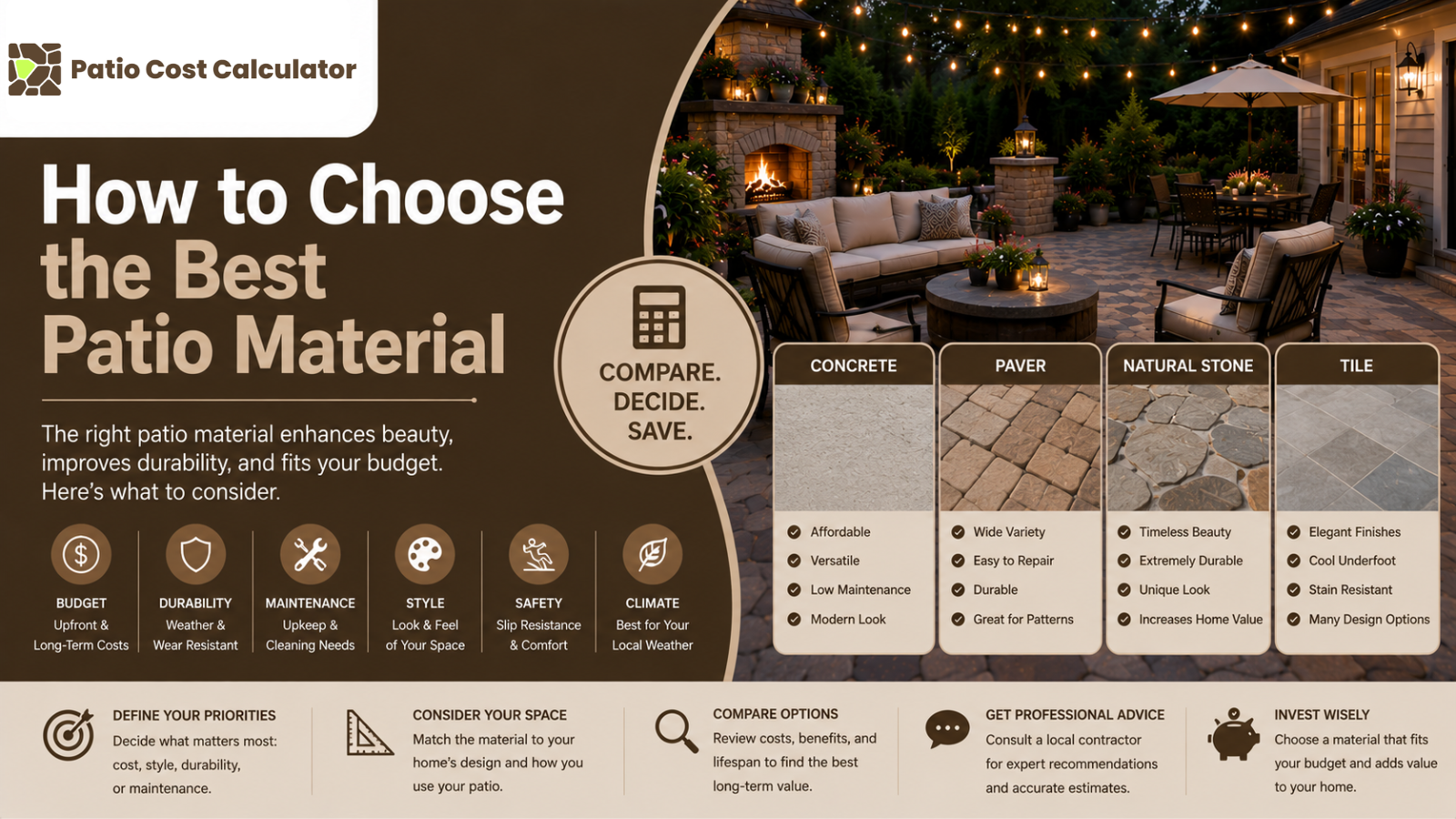
Choosing the right patio material is one of the most important decisions you'll make when planning a new outdoor living space. The material you select affects far more than just appearance—it also influences installation cost, maintenance requirements, durability, repairability, lifespan, and the long-term value of your investment.
Fortunately, there isn't a single "best" patio material for every homeowner. The ideal choice depends on your budget, how you plan to use your patio, your home's architectural style, your local climate, and how much maintenance you're willing to perform over the years.
Concrete, pavers, and natural stone are the three most common patio materials in the United States. Each offers unique advantages, and understanding their differences will help you make a confident decision before requesting contractor estimates.
This guide compares the most popular patio materials and explains which option may be the best fit for your home and lifestyle.
Quick Answer
For most homeowners:
- Concrete offers the lowest installation cost and the easiest maintenance.
- Pavers provide the best balance of appearance, durability, repairability, and long-term value.
- Natural stone delivers the most luxurious appearance and the longest expected lifespan.
The right material depends on your priorities rather than one option being universally better than the others.
Start With Your Budget
Budget is often the first factor homeowners consider.
Typical professionally installed costs include:
| Material | Typical Installed Cost |
|---|---|
| Concrete Patio | $8–$22/sq ft |
| Paver Patio | $12–$30/sq ft |
| Natural Stone Patio | $18–$45/sq ft |
Although installation cost is important, it should be considered alongside durability, maintenance, repair costs, and expected lifespan.
Sometimes spending more initially results in lower long-term ownership costs.
Concrete Patio
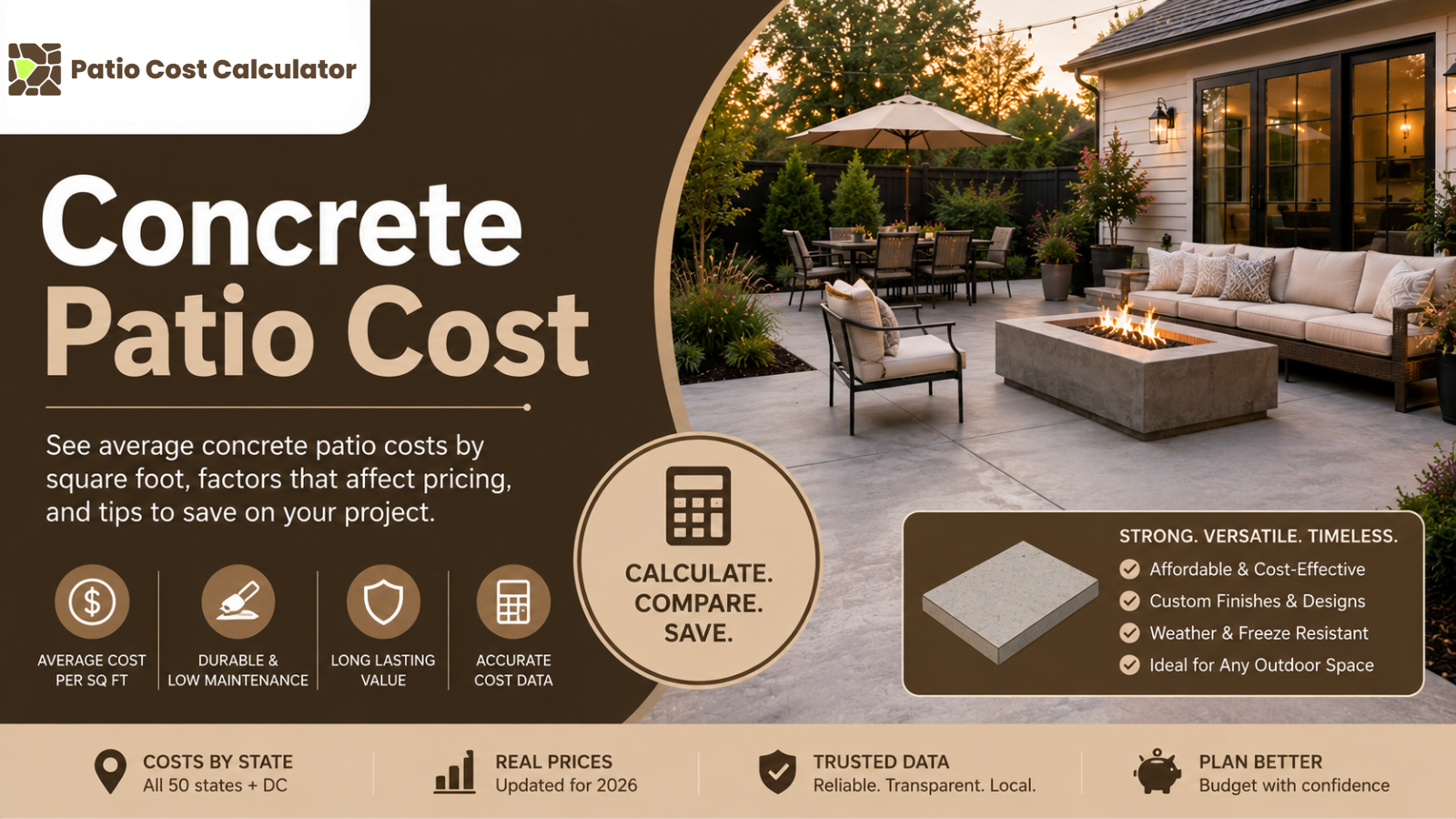
Concrete remains one of the most popular patio materials because it combines affordability with dependable performance.
Advantages
- Lowest installation cost
- Fast construction
- Minimal maintenance
- Excellent durability
- Modern appearance
Decorative finishes such as stamped or colored concrete can significantly improve visual appeal while remaining relatively affordable.
Concrete is an excellent choice for homeowners who want a practical patio without a premium price tag.
Paver Patio
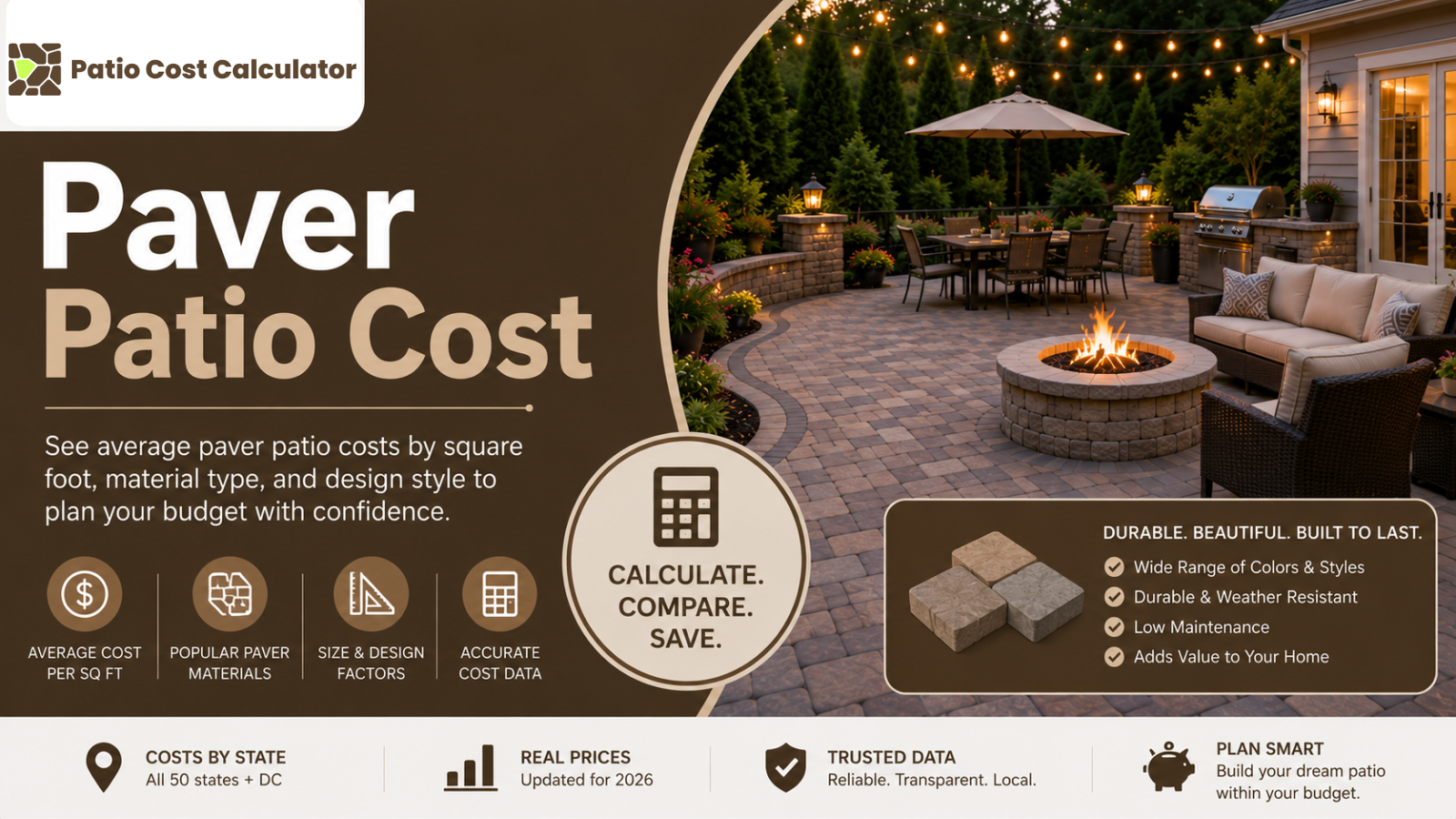
Pavers are often considered the middle ground between affordability and luxury.
Advantages
- Decorative patterns
- Wide range of colors
- Easy repairs
- Excellent durability
- Outstanding long-term value
Because individual pavers can be replaced separately, repairs are usually much easier than repairing large concrete slabs.
Many homeowners choose pavers because they combine premium appearance with practical long-term ownership.
Natural Stone Patio
Natural stone is widely regarded as the premium patio material.
Advantages
- Timeless beauty
- Unique natural textures
- Exceptional durability
- Outstanding curb appeal
- Extremely long lifespan
Every stone is naturally unique, creating a one-of-a-kind outdoor living space that manufactured materials cannot exactly duplicate.
Although natural stone has the highest installation cost, many homeowners consider it a lifetime investment.
Think About Maintenance
Maintenance requirements vary slightly between materials.
Concrete
Routine care generally includes:
- Sweeping
- Washing
- Repairing small cracks if necessary
- Periodic sealing for some finishes
Pavers
Routine care includes:
- Sweeping
- Washing
- Weed removal
- Replacing joint sand when necessary
Because damaged pavers can usually be replaced individually, maintenance remains relatively straightforward.
Natural Stone
Routine maintenance generally includes:
- Sweeping
- Gentle cleaning
- Prompt stain removal
- Occasional sealing for certain stone varieties
Overall, all three materials are considered relatively low maintenance when properly installed.
Compare Expected Lifespan
Long-term durability is another important consideration.
| Material | Typical Lifespan |
|---|---|
| Concrete | 25–40 years |
| Pavers | 30–50+ years |
| Natural Stone | 50–100+ years |
While natural stone generally lasts the longest, each material can provide decades of reliable performance with proper installation and routine maintenance.
Consider Your Home's Style
The appearance of your patio should complement your home's architecture.
Concrete
Works particularly well with:
- Contemporary homes
- Modern architecture
- Minimalist landscaping
Pavers
Complement:
- Traditional homes
- Craftsman homes
- Colonial architecture
- Transitional designs
Natural Stone
Pairs beautifully with:
- Luxury homes
- Rustic properties
- Mediterranean architecture
- Traditional estates
- Garden landscapes
Selecting a material that fits your home's overall design creates a more cohesive and attractive outdoor living space.
Think About Long-Term Ownership
If you expect to remain in your home for many years, consider factors beyond the initial installation cost.
Ask yourself:
- How important is easy repair?
- How much maintenance are you comfortable performing?
- Do you expect to expand the patio later?
- Are you planning additional landscaping?
- How important is long-term curb appeal?
Answering these questions helps narrow your choices before requesting contractor estimates.
Weather Performance
Your local climate plays an important role in determining which patio material is the best fit for your property.
Concrete
Concrete performs well in:
- Hot climates
- Dry regions
- Moderate rainfall
- Everyday residential use
In areas with repeated freeze-thaw cycles, proper installation and drainage are essential to help reduce the risk of cracking over time.
Pavers
Pavers perform exceptionally well in:
- Hot climates
- Cold climates
- Snow
- Heavy rainfall
- Freeze-thaw environments
Because the patio consists of individual units rather than one continuous slab, pavers can accommodate minor ground movement without developing large cracks.
Natural Stone
Natural stone offers excellent weather resistance in virtually every climate.
It performs well in:
- High temperatures
- Freezing winters
- Wet climates
- Coastal regions
- Mountain environments
Its natural durability makes it one of the most reliable patio materials available for long-term outdoor use.
Repairability Comparison
Every patio may eventually require repairs, whether due to weather, settling, or years of use.
How those repairs are handled varies by material.
Concrete
Concrete repairs may include:
- Crack filling
- Surface patching
- Section replacement
Although repairs are possible, matching the original finish and color can sometimes be difficult, especially on older patios.
Pavers
Pavers are among the easiest patio materials to repair.
Individual pavers can be:
- Removed
- Re-leveled
- Cleaned
- Replaced
without affecting the rest of the patio.
This makes repairs faster, less noticeable, and often less expensive.
Natural Stone
Natural stone also allows localized repairs.
Individual stones can usually be replaced if they become:
- Cracked
- Loose
- Damaged
- Stained
However, depending on the stone type, finding a replacement with similar color and texture may require additional effort.
Which Material Adds the Most Home Value?
A professionally installed patio of any material can improve outdoor living space and increase curb appeal.
The level of value depends on the home's style, neighborhood, and overall landscape design.
Concrete
Concrete offers:
- Affordable outdoor improvements
- Clean appearance
- Low maintenance
- Broad buyer appeal
Decorative concrete finishes can further increase visual appeal.
Pavers
Pavers are often viewed as an upscale upgrade.
Benefits include:
- Decorative layouts
- Premium appearance
- Excellent durability
- Easy repairs
- Strong curb appeal
Many buyers appreciate the polished appearance of professionally installed paver patios.
Natural Stone
Natural stone is generally considered the most luxurious option.
It provides:
- Timeless elegance
- Unique craftsmanship
- Exceptional longevity
- Premium outdoor living
- High-end visual appeal
For luxury homes, natural stone often complements the property's architecture and landscaping exceptionally well.
Match the Material to Your Lifestyle
Every homeowner has different priorities.
Choosing a material based on how you'll actually use the patio often leads to the best long-term results.
Concrete Is Best If You:
- Want the lowest installation cost.
- Prefer simple maintenance.
- Like clean, modern designs.
- Need a practical family patio.
- Want excellent durability at an affordable price.
Pavers Are Best If You:
- Enjoy decorative outdoor spaces.
- Want easy repairs.
- Appreciate design flexibility.
- Plan to stay in your home for many years.
- Want an excellent balance between cost and appearance.
Natural Stone Is Best If You:
- Want a premium outdoor retreat.
- Value natural materials.
- Prefer timeless elegance.
- Plan a luxury landscape design.
- Are comfortable making a larger initial investment.
Common Homeowner Mistakes
Many homeowners focus only on installation cost while overlooking other important factors.
Common mistakes include:
- Choosing the least expensive option without considering long-term value
- Ignoring maintenance requirements
- Selecting materials that don't complement the home's architecture
- Overlooking drainage
- Hiring inexperienced installers
- Choosing appearance over functionality
- Failing to plan for future landscaping or expansions
Careful planning helps prevent costly changes later.
Budget Planning Tips
When creating your patio budget, consider more than just material costs.
Your budget should also account for:
- Site preparation
- Excavation
- Base installation
- Drainage improvements
- Labor
- Permits (if required)
- Landscaping
- Outdoor lighting
- Furniture
- Future maintenance
A complete budget provides a more accurate picture of the total project investment.
Questions to Ask Before Choosing
Before making a final decision, ask yourself:
- How much am I comfortable spending?
- How long do I plan to stay in this home?
- How much maintenance am I willing to perform?
- Do I prefer modern or traditional designs?
- Will I entertain guests frequently?
- Could I expand the patio in the future?
- Which material best matches my home's architecture?
Answering these questions often makes the decision much easier.
Professional Installation Matters
Regardless of the material you choose, proper installation has a major impact on the patio's long-term performance.
A professionally installed patio is more likely to provide:
- Proper drainage
- Stable foundation
- Even surface
- Longer lifespan
- Fewer repairs
- Better overall appearance
Quality workmanship is just as important as selecting the right material.
Patio Material Comparison at a Glance
The table below summarizes the three most popular patio materials to help you compare cost, durability, maintenance, and long-term value.
| Feature | Concrete Patio | Paver Patio | Natural Stone Patio |
|---|---|---|---|
| Typical Installed Cost | $8–$22/sq ft | $12–$30/sq ft | $18–$45/sq ft |
| Lifespan | 25–40 years | 30–50+ years | 50–100+ years |
| Maintenance | Low | Low | Low |
| Repairability | Moderate | Excellent | Good |
| Installation Speed | Fast | Moderate | Slower |
| Design Flexibility | Very Good | Excellent | Excellent |
| Weather Performance | Excellent | Excellent | Outstanding |
| Curb Appeal | Very Good | Excellent | Outstanding |
| Best For | Budget-conscious homeowners | Balance of value and appearance | Luxury outdoor living |
| Long-Term Value | Very Good | Excellent | Excellent |
Each material has its own strengths. The right choice depends on your budget, design preferences, maintenance expectations, and how long you plan to own your home.
Frequently Asked Questions
What is the best patio material overall?
There is no single best material for every homeowner.
- Concrete is ideal for affordability and simplicity.
- Pavers provide an excellent balance of appearance, durability, and repairability.
- Natural stone offers the highest level of luxury, uniqueness, and longevity.
The best choice depends on your priorities and budget.
Which patio material is the least expensive?
Concrete is generally the most affordable option.
Professionally installed concrete patios typically cost between $8 and $22 per square foot, making them an excellent choice for homeowners looking to maximize value while controlling installation costs.
Which patio material lasts the longest?
Natural stone offers the greatest longevity.
Typical lifespans include:
- Concrete Patio: approximately 25–40 years
- Paver Patio: approximately 30–50+ years
- Natural Stone Patio: approximately 50–100+ years
With proper installation and maintenance, all three materials can provide decades of reliable performance.
Which patio material requires the least maintenance?
All three materials are considered relatively low maintenance.
Routine care generally includes:
- Sweeping
- Occasional washing
- Prompt spill cleanup
- Seasonal inspections
Pavers may occasionally require replacement of joint sand, while certain decorative concrete finishes and some natural stone varieties benefit from periodic sealing.
Which material is easiest to repair?
Pavers are generally the easiest to repair.
If an individual paver becomes cracked, stained, or uneven, it can usually be replaced without disturbing the surrounding patio.
Natural stone also allows localized repairs, while concrete repairs may be more noticeable because matching the original finish can be challenging.
Which patio material adds the most home value?
A professionally installed patio of any material can improve curb appeal and outdoor living space.
Natural stone is often viewed as the most luxurious option.
Pavers are frequently associated with premium quality and excellent long-term value.
Concrete remains popular because it provides an attractive, durable outdoor space at a more affordable cost.
The greatest return usually comes from selecting a material that complements your home and neighborhood.
Which material performs best in cold climates?
All three materials perform well when installed correctly.
Pavers often have an advantage in freeze-thaw climates because individual units can accommodate minor ground movement.
Natural stone is exceptionally durable in harsh weather conditions.
Regardless of the material, proper drainage and a well-prepared foundation are critical for long-term performance.
Can I upgrade my patio later?
Yes.
Many homeowners begin with a basic patio and add features over time, such as:
- Pergolas
- Fire pits
- Outdoor kitchens
- Landscape lighting
- Additional seating
- Decorative landscaping
Planning for future improvements during the initial design phase can make later upgrades easier and more cost-effective.
Final Verdict
Choosing the best patio material is about balancing cost, appearance, maintenance, durability, and long-term value.
A concrete patio is an excellent option for homeowners seeking affordability, dependable performance, and straightforward maintenance. Decorative finishes can also provide an attractive appearance without significantly increasing project costs.
A paver patio offers perhaps the best balance between beauty and practicality. Its decorative flexibility, ease of repair, and long lifespan make it one of the most popular choices for homeowners planning a long-term investment.
A natural stone patio is the premium choice for those who value timeless beauty, unique natural character, exceptional durability, and one of the longest lifespans available in residential hardscaping.
Ultimately, there is no universal "best" material. The right choice is the one that fits your home, your budget, your maintenance preferences, and the way you plan to enjoy your outdoor living space for years to come.
Final Thoughts
A new patio is a significant investment that can transform your backyard into a comfortable, functional extension of your home. By comparing materials carefully and considering not only installation costs but also maintenance, durability, repairability, and long-term value, you can make an informed decision that you'll appreciate for many years. Whether you choose the affordability of concrete, the versatility of pavers, or the timeless elegance of natural stone, a professionally installed patio can enhance both your lifestyle and your property's appeal.
Before requesting contractor estimates, use the Patio Cost Calculator on the homepage to estimate your project's cost based on your patio size, chosen material, and state. A personalized estimate will help you compare material options, establish a realistic budget, and confidently select the patio solution that best matches your home, your outdoor living goals, and your long-term investment plans.