 Patio Cost Calculator
Introduction
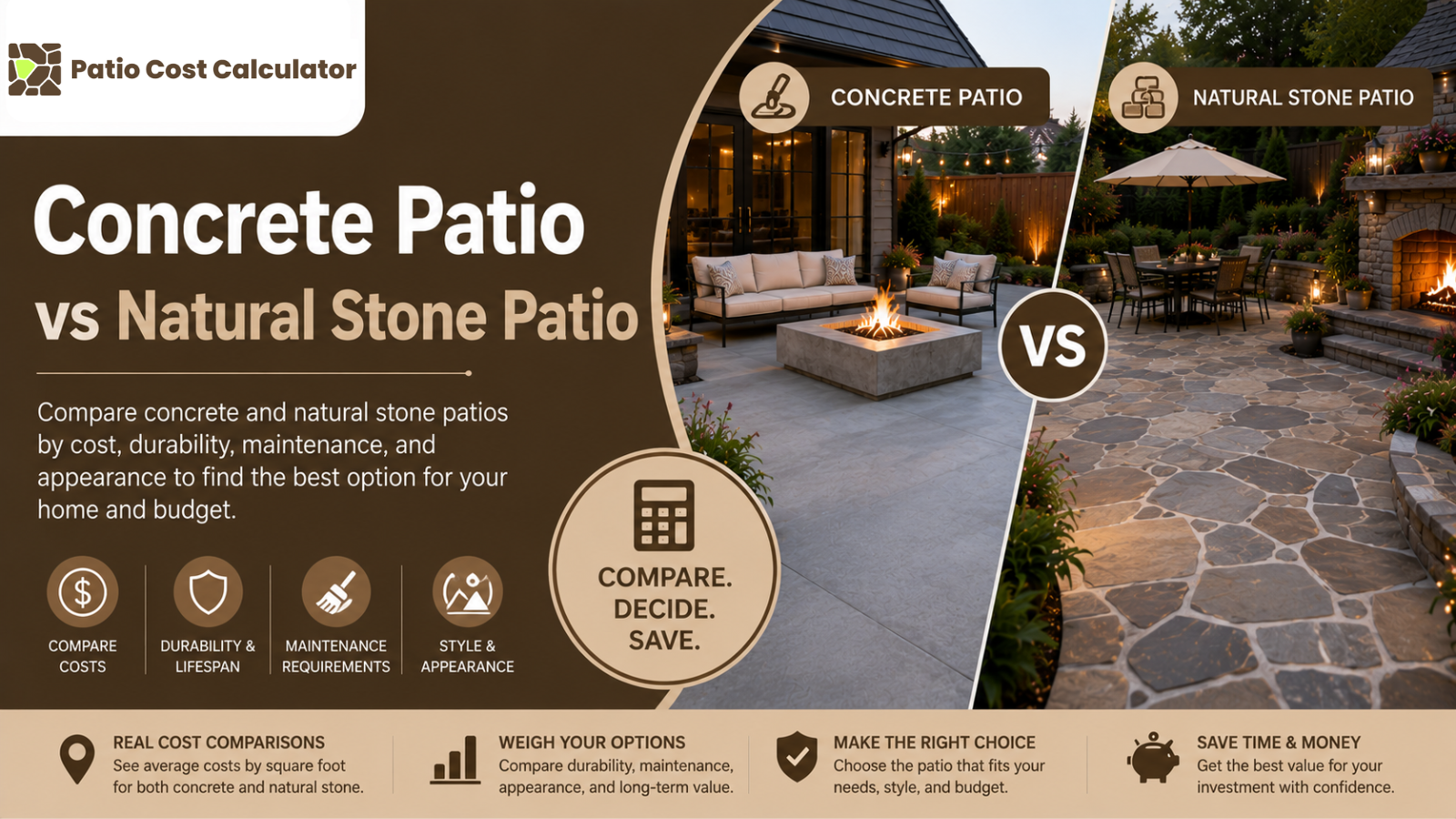
Choosing the right patio material is one of the most important decisions you'll make when creating an outdoor living space. Two popular options are poured concrete and natural stone. While both provide durable, attractive surfaces for relaxing and entertaining, they differ significantly in cost, appearance, maintenance, longevity, and long-term value.
Concrete is one of the most affordable patio materials available, making it a practical choice for homeowners seeking durability without a premium price tag. Natural stone, on the other hand, is considered a luxury material that offers unmatched beauty, unique character, and an exceptionally long lifespan.
Understanding the differences between these materials can help you choose the patio that best fits your budget, lifestyle, and long-term plans.
This guide compares concrete patios and natural stone patios side by side, helping homeowners make an informed decision before requesting contractor estimates.
Quick Comparison
| Feature | Concrete Patio | Natural Stone Patio |
|---|---|---|
| Initial Cost | ✅ Lower | Higher |
| Lifespan | 25–40 years | 50–100+ years |
| Maintenance | Low | Low |
| Repairability | Moderate | Good |
| Design Options | Very Good | Outstanding |
| Installation Speed | Faster | Slower |
| Curb Appeal | Very Good | Excellent |
| Long-Term Value | Very Good | Excellent |
Initial Cost
For many homeowners, installation cost is the biggest deciding factor.
Concrete Patio
Typical installed cost:
$8–$22 per square foot
Pricing depends on:
- Patio size
- Concrete thickness
- Decorative finishes
- Reinforcement
- Site preparation
- Local labor costs
Concrete remains one of the most economical ways to create a durable outdoor living area.
Natural Stone Patio
Typical installed cost:
$18–$45 per square foot
Pricing varies based on:
- Stone type
- Material availability
- Stone thickness
- Project complexity
- Custom cutting
- Labor rates
Because natural stone requires skilled installation and premium materials, it represents the highest-cost patio option for most homeowners.
Winner:
🟢 Concrete Patio
Appearance
Visual appeal is one of the biggest differences between these two materials.
Concrete Patio
Modern concrete offers numerous decorative possibilities.
Popular finishes include:
- Smooth concrete
- Broom finish
- Stamped concrete
- Colored concrete
- Exposed aggregate
- Decorative scoring
These options allow homeowners to create an attractive patio at a relatively affordable price.
Natural Stone Patio
Natural stone provides a level of beauty that manufactured materials cannot fully duplicate.
Popular choices include:
- Flagstone
- Bluestone
- Slate
- Limestone
- Travertine
- Granite
Every stone has unique colors, textures, and natural variations, creating a truly one-of-a-kind patio.
Winner:
🟢 Natural Stone Patio
Durability
Both materials are highly durable, but their expected service lives differ considerably.
Concrete Patio
A professionally installed concrete patio withstands normal residential use very well.
It provides:
- Excellent strength
- Good weather resistance
- Heavy load capacity
- Decades of dependable service
However, concrete slabs may develop cracks over time due to:
- Freeze-thaw cycles
- Soil settlement
- Tree roots
- Ground movement
Natural Stone Patio
Natural stone has been used in construction for centuries because of its incredible durability.
Many stone patios remain functional for generations when properly installed.
Benefits include:
- Outstanding weather resistance
- Excellent structural strength
- Resistance to UV exposure
- Exceptional longevity
- Minimal long-term deterioration
Winner:
🟢 Natural Stone Patio
Maintenance Requirements
Both materials require relatively little maintenance.
Concrete Patio
Routine maintenance typically includes:
- Sweeping debris
- Washing occasionally
- Sealing decorative concrete when recommended
- Repairing cracks if necessary
Overall maintenance requirements are modest.
Natural Stone Patio
Natural stone maintenance generally includes:
- Sweeping leaves and debris
- Occasional washing
- Removing weeds from joints if necessary
- Sealing certain stone types when recommended
- Inspecting joints periodically
Because stone naturally resists weathering, ongoing maintenance is usually minimal.
Winner:
🟢 Tie
Repairs
Eventually, any patio may require repairs.
Concrete Patio
Concrete repairs may involve:
- Crack filling
- Surface patching
- Resurfacing
Matching the original color and texture can be difficult, making repairs more noticeable.
Natural Stone Patio
Natural stone repairs are usually localized.
Individual stones can often be lifted and replaced without affecting the surrounding patio.
However, matching certain rare stone varieties may occasionally be more difficult if the original material is no longer available.
Winner:
🟢 Natural Stone Patio
Installation Time
Installation time also differs considerably.
Concrete Patio
Concrete installation is relatively efficient.
Typical steps include:
- Excavation
- Base preparation
- Form installation
- Pouring
- Finishing
- Curing
Most residential patios can be completed within several days.
Natural Stone Patio
Natural stone installation is considerably more labor-intensive.
Each stone often requires:
- Careful placement
- Individual fitting
- Custom cutting
- Leveling
- Joint finishing
Projects generally require more time because every piece is unique.
Winner:
🟢 Concrete Patio
Lifespan
When investing in a new patio, longevity is often just as important as the initial installation cost.
Concrete Patio
A professionally installed concrete patio typically lasts:
25–40 years
Its lifespan depends on factors such as:
- Installation quality
- Proper reinforcement
- Climate
- Soil conditions
- Drainage
- Routine maintenance
Although concrete is extremely durable, small cracks may develop over time due to natural ground movement and weather conditions.
Natural Stone Patio
Natural stone is one of the longest-lasting patio materials available.
A professionally installed natural stone patio commonly lasts:
50–100+ years
Many historic stone patios remain in excellent condition after decades—or even centuries—of use.
Proper installation and drainage are key to maximizing its lifespan.
Winner:
🟢 Natural Stone Patio
Weather Resistance
Outdoor patios must withstand changing weather throughout the year.
Concrete Patio
Concrete performs well in most climates but may be affected by:
- Freeze-thaw cycles
- Heavy tree roots
- Soil movement
- Ground settlement
While these conditions don't necessarily damage the patio immediately, they may contribute to cracking over time.
Natural Stone Patio
Natural stone is exceptionally resistant to environmental conditions.
It performs extremely well against:
- Heavy rain
- Snow
- Intense sunlight
- Freeze-thaw cycles
- Wind
- Temperature fluctuations
Many stone varieties naturally resist fading and weathering for decades.
Winner:
🟢 Natural Stone Patio
Best Climates
Both materials perform well throughout much of the United States, but certain climates may favor one over the other.
Concrete Patio
Concrete is an excellent choice for:
- Moderate climates
- Dry regions
- Urban and suburban homes
- Areas with relatively stable soil
Proper expansion joints and reinforcement help improve long-term performance.
Natural Stone Patio
Natural stone is suitable for nearly every climate, including:
- Hot southern states
- Coastal regions
- Mountain communities
- Northern climates
- Areas with frequent freeze-thaw cycles
Its natural durability makes it an outstanding choice for demanding weather conditions.
Winner:
🟢 Natural Stone Patio
Home Value
A professionally designed patio can significantly improve outdoor living space and curb appeal.
Concrete Patio
Concrete patios add value by providing:
- Functional outdoor entertainment space
- Attractive landscaping
- Increased backyard usability
- Affordable home improvement
Stamped or decorative concrete can further enhance visual appeal.
Natural Stone Patio
Natural stone patios are often viewed as luxury outdoor features.
Homeowners appreciate:
- Premium appearance
- Timeless elegance
- High-end craftsmanship
- Exceptional durability
- Strong curb appeal
Because natural stone is considered a premium building material, it may create a stronger impression with prospective buyers.
Winner:
🟢 Natural Stone Patio
Environmental Impact
Many homeowners also consider sustainability when selecting patio materials.
Concrete Patio
Concrete is highly durable, reducing replacement frequency.
However, cement manufacturing requires significant energy, resulting in a relatively high environmental footprint.
Natural Stone Patio
Natural stone is a naturally occurring material that requires relatively little processing compared with manufactured products.
Additional environmental advantages include:
- Extremely long lifespan
- Minimal replacement needs
- Natural appearance
- Potential for reuse in future landscape projects
Winner:
🟢 Natural Stone Patio
Which Patio Is Better for Different Homeowners?
Choose a Concrete Patio If:
- You're working within a limited budget.
- You want lower installation costs.
- You need a patio completed quickly.
- You prefer a clean, modern appearance.
- Decorative stamped concrete meets your design goals.
Concrete remains one of the best overall values for homeowners seeking affordability and durability.
Choose a Natural Stone Patio If:
- You want a luxury outdoor living space.
- You value timeless architectural beauty.
- Long-term durability is a priority.
- You plan to stay in your home for many years.
- You want maximum curb appeal.
- You're comfortable making a larger initial investment.
Natural stone is often chosen by homeowners seeking a truly premium patio that may last for generations.
Pros and Cons
Concrete Patio
Pros
- Lower installation cost
- Faster installation
- Durable surface
- Decorative finish options
- Low maintenance
- Suitable for most homes
Cons
- May crack over time
- Repairs can remain visible
- Less unique appearance
- Shorter lifespan than natural stone
Natural Stone Patio
Pros
- Exceptional beauty
- One-of-a-kind appearance
- Outstanding durability
- Extremely long lifespan
- Excellent weather resistance
- Premium curb appeal
- Minimal maintenance
Cons
- Highest upfront cost
- Labor-intensive installation
- Longer installation timeline
- Some stone types benefit from periodic sealing
Long-Term Value
Although natural stone requires a significantly higher initial investment, many homeowners believe it offers exceptional long-term value.
Its combination of:
- Outstanding longevity
- Minimal maintenance
- Premium appearance
- Exceptional durability
often means the patio can remain attractive and functional for decades with relatively little upkeep.
Concrete also delivers excellent value, particularly for homeowners prioritizing affordability. However, those planning to remain in their homes long-term may find the additional investment in natural stone worthwhile because of its superior lifespan and timeless appearance.
Cost Comparison at a Glance
The table below summarizes the key differences between concrete patios and natural stone patios.
| Feature | Concrete Patio | Natural Stone Patio |
|---|---|---|
| Typical Installed Cost | $8–$22/sq ft | $18–$45/sq ft |
| Lifespan | 25–40 years | 50–100+ years |
| Maintenance | Low | Low |
| Repairability | Moderate | Good |
| Installation Speed | Faster | Slower |
| Design Flexibility | Very Good | Outstanding |
| Weather Resistance | Very Good | Excellent |
| Curb Appeal | Very Good | Outstanding |
| Long-Term Value | Very Good | Excellent |
Both materials are excellent choices, but they appeal to different homeowner priorities and budgets.
Frequently Asked Questions
Which patio material is less expensive?
Concrete patios generally have the lower upfront installation cost. Most homeowners spend between $8 and $22 per square foot, while natural stone patios typically range from $18 to $45 per square foot, depending on the type of stone and project complexity.
Which patio lasts longer?
Natural stone is one of the longest-lasting patio materials available.
A professionally installed natural stone patio often lasts 50 to 100 years or more, while a concrete patio typically lasts 25 to 40 years with proper maintenance.
Which patio requires less maintenance?
Both materials are considered relatively low maintenance.
Concrete may occasionally require crack repairs or resealing, while natural stone may benefit from periodic cleaning and, depending on the stone type, occasional sealing to help protect against stains and moisture.
Is natural stone worth the higher cost?
For many homeowners, yes.
Natural stone offers exceptional durability, timeless beauty, premium curb appeal, and an extremely long service life. If you plan to remain in your home for many years, the higher initial investment may provide excellent long-term value.
Can a concrete patio look like natural stone?
Yes.
Stamped concrete can imitate the appearance of flagstone, slate, or other natural materials at a much lower cost. While decorative concrete can be very attractive, it generally cannot replicate the unique textures, color variations, and character of genuine natural stone.
Which patio adds more value to a home?
Both materials can improve property value by creating attractive outdoor living space.
However, natural stone is widely regarded as a premium hardscape material and may provide greater curb appeal and stronger buyer interest, particularly in higher-end neighborhoods.
Which patio performs better in cold climates?
Both materials perform well when properly installed.
Concrete may be more susceptible to cracking caused by freeze-thaw cycles, while natural stone generally handles seasonal temperature changes exceptionally well because individual stones naturally accommodate minor ground movement.
Is natural stone slippery when wet?
It depends on the stone and surface finish.
Many natural stones provide excellent traction because of their textured surfaces, making them suitable for patios, walkways, and pool areas. Your contractor can recommend the most appropriate finish for your climate and intended use.
Final Verdict
Both concrete and natural stone patios are outstanding outdoor improvements, but they serve different homeowner priorities.
Choose a concrete patio if your primary goals are affordability, quick installation, and a durable outdoor space with attractive decorative options. Concrete continues to offer one of the best values for homeowners looking to maximize functionality while keeping project costs under control.
Choose a natural stone patio if you're looking for a luxury outdoor living area with exceptional durability, timeless beauty, and an incredibly long lifespan. Although the upfront investment is significantly higher, many homeowners consider natural stone one of the most rewarding long-term home improvements available.
There is no universal "best" material. The right choice depends on your budget, design preferences, maintenance expectations, and how long you plan to enjoy your outdoor space.