 Patio Cost Calculator
Introduction
If you've started researching the cost of building a new patio, you've probably noticed that prices can vary dramatically from one project to another. Two patios of the same size may differ by several thousand dollars, even when they're located in the same city.
That's because patio installation costs depend on much more than the square footage alone. The material you choose, the condition of your property, labor rates, drainage requirements, project complexity, and optional upgrades all influence the final price.
Understanding these cost factors before requesting contractor estimates allows homeowners to build a realistic budget, compare proposals more effectively, and avoid unexpected expenses during construction.
This guide explains the biggest factors that affect patio installation costs and offers practical advice for planning your project.
Quick Answer
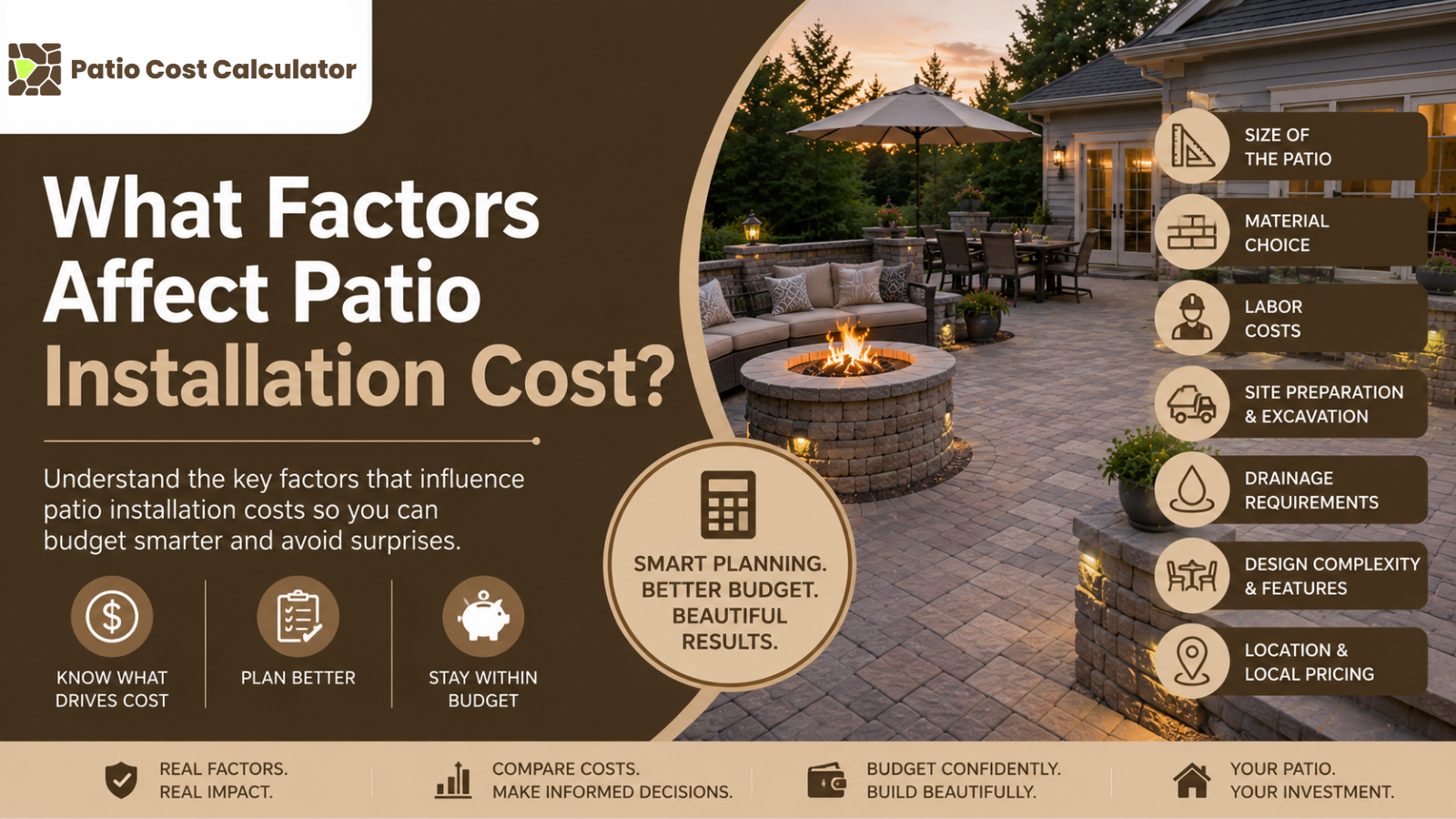
Several factors determine the final cost of a new patio, but the most significant include:
- Patio size
- Material selection
- Site preparation
- Labor costs
- Patio design
- Drainage requirements
- Accessibility
- Optional features and upgrades
- Geographic location
Understanding how each factor influences pricing will help you estimate your project more accurately.
Patio Size
The size of your patio is usually the single largest factor affecting the overall project cost.
A larger patio requires:
- More materials
- More excavation
- More base preparation
- Additional labor
- Longer installation time
Typical patio sizes include:
| Patio Size | Common Use |
|---|---|
| 100 sq ft | Small seating area |
| 200 sq ft | Dining patio |
| 300 sq ft | Family entertainment area |
| 400 sq ft | Large outdoor living space |
| 500+ sq ft | Luxury backyard design |
While larger patios increase the total project cost, they sometimes offer a slightly lower average cost per square foot because fixed expenses are spread across a larger area.
Material Selection
The material you choose has one of the greatest impacts on your budget.
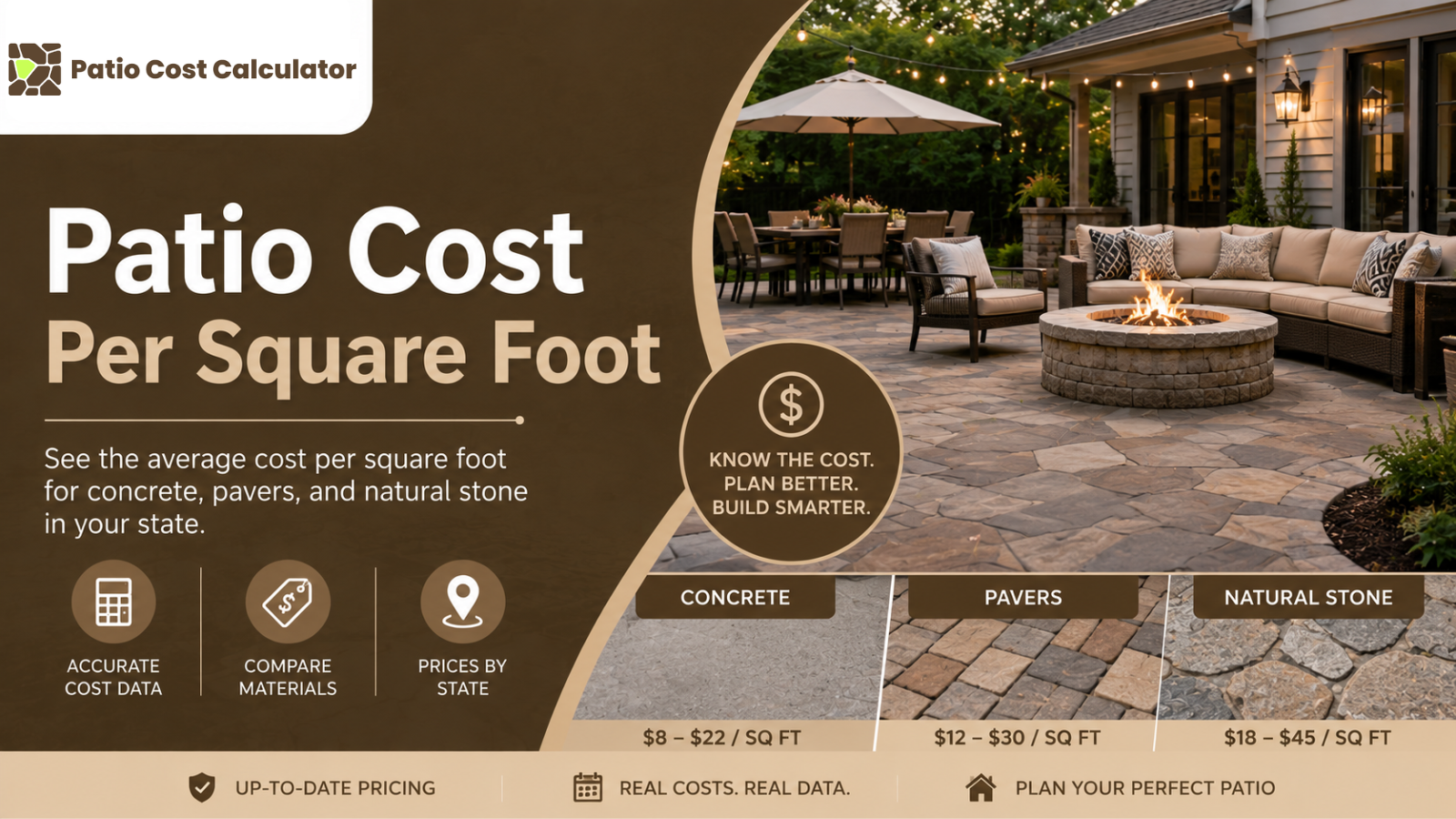
Typical installed costs include:
| Material | Typical Cost |
|---|---|
| Concrete | $8–$22/sq ft |
| Pavers | $12–$30/sq ft |
| Natural Stone | $18–$45/sq ft |
Each material offers different advantages.
Concrete
Best for homeowners seeking:
- Lower installation costs
- Fast construction
- Minimal maintenance
- Excellent durability
Pavers
Ideal for homeowners wanting:
- Decorative patterns
- Easy repairs
- Long lifespan
- Premium appearance
Natural Stone
Perfect for those seeking:
- Luxury appearance
- Exceptional longevity
- Timeless beauty
- Premium curb appeal
Site Preparation
Before installation begins, contractors must prepare the area properly.
Preparation often includes:
- Removing grass
- Excavation
- Soil grading
- Gravel installation
- Compaction
- Leveling
Properties requiring extensive grading or excavation generally cost more than flat, easily accessible sites.
Drainage
Proper drainage is essential for every patio.
Without effective water management, problems such as standing water, erosion, settling, and frost damage may develop over time.
Depending on your property, your contractor may recommend:
- Regrading
- Drainage channels
- French drains
- Additional gravel
- Drainage pipe installation
Although these improvements increase the initial cost, they help protect your patio for decades.
Labor Costs
Labor is a significant portion of any patio installation project.
Rates vary depending on:
- Geographic location
- Local demand
- Contractor experience
- Material type
- Project complexity
Installing natural stone generally requires more skilled labor than pouring a standard concrete patio, which is one reason natural stone projects typically cost more.
Patio Shape and Design
Simple patios are generally the most economical.
Costs increase when projects include:
- Curved borders
- Circular patios
- Multiple elevations
- Decorative inlays
- Custom patterns
- Built-in steps
Custom designs require additional cutting, layout work, and installation time.
Accessibility
The easier it is for contractors to reach the work area, the lower labor costs are likely to be.
Difficult access may include:
- Narrow gates
- Fenced backyards
- Steep slopes
- Limited equipment access
- Existing landscaping
If materials must be transported manually instead of by machinery, installation costs typically increase.
Existing Patio Removal
If you're replacing an old patio, demolition and disposal may add to the overall cost.
Removal may involve:
- Concrete slabs
- Old pavers
- Brick patios
- Stone surfaces
- Gravel bases
Disposal fees vary depending on local regulations and the amount of material being removed.
Permits
Some municipalities require permits for certain patio projects, particularly those involving:
- Large retaining walls
- Significant grading
- Drainage modifications
- Covered patio structures
Permit requirements and associated fees vary by location, so it's important to check local building regulations before construction begins.
Optional Features That Increase Patio Costs
Many homeowners choose to add features that transform a simple patio into a complete outdoor living space. While these upgrades increase the overall project budget, they can also improve functionality, comfort, and resale appeal.
Popular upgrades include:
- Built-in fire pits
- Outdoor fireplaces
- Seating walls
- Decorative retaining walls
- Outdoor kitchens
- Landscape lighting
- Pergolas
- Covered patio structures
- Walkways
- Built-in planters
- Water features
- Privacy walls
Each addition requires extra materials, labor, and planning, so it's important to decide which features are essential before construction begins.
Geographic Location
Where you live plays a major role in patio installation costs.
Projects often cost more in areas with:
- Higher labor rates
- Higher costs of living
- Greater contractor demand
- More expensive building materials
For example, homeowners in large metropolitan areas or coastal regions may pay considerably more than homeowners in smaller cities or rural communities for the same patio design.
Material Availability
Not every patio material is readily available everywhere.
Locally sourced materials are often less expensive because transportation costs are lower.
Premium products that must be shipped from distant suppliers may increase:
- Material costs
- Delivery fees
- Project timelines
If you're considering natural stone, ask your contractor whether locally available stone options could provide similar results at a lower price.
Soil Conditions
The condition of the ground beneath your patio has a direct impact on installation costs.
Contractors may encounter:
- Clay soil
- Loose sand
- Rocky ground
- Poor drainage
- Existing tree roots
These conditions often require additional excavation, gravel, compaction, or soil stabilization before construction can begin.
Proper preparation helps prevent future settling and extends the life of your patio.
Drainage Challenges
One of the most overlooked cost factors is drainage.
If rainwater cannot flow away from the patio properly, your contractor may recommend improvements such as:
- French drains
- Surface drains
- Additional grading
- Drainage channels
- Retaining walls
Although these upgrades increase the initial investment, they help protect your patio from erosion, standing water, and long-term structural problems.
Hidden Costs Homeowners Often Overlook
When comparing estimates, homeowners sometimes focus only on the patio surface itself.
Other expenses may include:
- Demolition of an existing patio
- Disposal fees
- Permit costs
- Utility locating services
- Landscape restoration
- Irrigation adjustments
- Fence removal or temporary access
- Cleanup after construction
Requesting a detailed written proposal helps reduce the risk of unexpected costs later in the project.
Ways to Reduce Patio Installation Costs
A beautiful patio doesn't always require the largest budget.
Homeowners can often save money by:
- Choosing a simple rectangular layout.
- Limiting decorative borders.
- Selecting locally available materials.
- Installing only the features they'll regularly use.
- Scheduling work during slower seasons, if possible.
- Comparing multiple contractor estimates.
- Planning the entire project before construction begins.
Making design decisions early also helps prevent costly changes after work has started.
Are Premium Materials Worth the Extra Cost?
For many homeowners, the answer depends on their long-term plans.
Concrete
Provides excellent value for homeowners seeking affordability and durability.
Pavers
Offer a premium appearance, excellent repairability, and a longer expected lifespan than many concrete installations.
Natural Stone
Represents the highest initial investment but also provides unmatched beauty, exceptional longevity, and timeless curb appeal.
Instead of focusing only on upfront cost, consider:
- Expected lifespan
- Maintenance requirements
- Repair costs
- Appearance
- Long-term value
The least expensive option isn't always the most economical over several decades.
Planning Your Patio Budget
Before contacting contractors, it's helpful to establish a realistic budget.
Consider:
- Patio size
- Preferred material
- Site preparation
- Drainage improvements
- Optional upgrades
- Landscaping
- Contingency funds for unexpected conditions
Many homeowners also reserve an additional 5% to 10% of their project budget for unforeseen expenses that may arise during construction.
Planning ahead reduces stress and helps prevent difficult decisions once work begins.
Getting Accurate Estimates
Once you have a preliminary budget, request at least three written estimates from experienced contractors.
Compare more than just the total price.
Review each proposal for:
- Materials included
- Patio dimensions
- Base preparation
- Drainage work
- Warranty coverage
- Cleanup
- Estimated timeline
- Payment schedule
A detailed proposal often provides much greater value than simply accepting the lowest bid.
Patio Installation Cost Factors at a Glance
The table below summarizes the most important factors that influence the cost of installing a new patio.
| Cost Factor | Impact on Project Cost |
|---|---|
| Patio Size | High |
| Material Selection | High |
| Labor Rates | High |
| Site Preparation | High |
| Drainage Requirements | Moderate to High |
| Patio Shape & Design | Moderate |
| Accessibility | Moderate |
| Existing Patio Removal | Moderate |
| Optional Features | Moderate to High |
| Geographic Location | High |
| Permit Requirements | Low to Moderate |
While every project is unique, these factors account for the majority of the differences homeowners see in contractor estimates.
Frequently Asked Questions
What has the biggest impact on patio installation cost?
The largest cost factors are usually:
- Patio size
- Material selection
- Labor costs
- Site preparation
- Geographic location
These variables generally influence the final project price more than any other factors.
Does a larger patio always cost more?
Yes.
A larger patio requires more materials and labor, increasing the total project cost.
However, larger projects may have a slightly lower average cost per square foot because certain fixed expenses—such as equipment setup and material delivery—are spread across a larger area.
Which patio material is the least expensive?
Concrete is generally the most affordable option.
Most professionally installed concrete patios cost between $8 and $22 per square foot, making them an excellent choice for homeowners working with a limited budget.
Why do labor costs vary so much?
Labor rates differ because of:
- Local wage levels
- Contractor demand
- Material complexity
- Cost of living
- Regional construction markets
Projects involving natural stone typically require more skilled labor than standard concrete installations, increasing overall costs.
Can Poor Drainage Increase Patio Costs?
Yes.
If your property has drainage problems, your contractor may recommend grading improvements, drainage channels, French drains, or additional base preparation. While these upgrades increase the initial investment, they help prevent future settling, erosion, and water damage.
Are Optional Patio Features Worth the Cost?
That depends on how you plan to use your outdoor space.
Features such as fire pits, pergolas, lighting, outdoor kitchens, and seating walls improve functionality and create a more enjoyable backyard. While they increase the project budget, many homeowners find they add significant value and enjoyment.
Should I Get Multiple Contractor Estimates?
Absolutely.
Obtaining at least three written estimates allows you to compare:
- Pricing
- Materials
- Scope of work
- Warranties
- Project timelines
- Contractor experience
Comparing proposals carefully often leads to better long-term value than simply selecting the lowest price.
Can I Reduce Patio Installation Costs Without Sacrificing Quality?
Yes.
Homeowners can often lower costs by:
- Choosing a simple patio layout
- Using locally available materials
- Limiting decorative upgrades
- Planning the entire project before construction begins
- Comparing multiple estimates
Careful planning helps control costs while still achieving an attractive, durable patio.
Final Verdict
Patio installation costs depend on much more than square footage alone. Factors such as material selection, site preparation, labor rates, drainage, accessibility, and optional features all influence the final project price.
If keeping costs low is your highest priority, a concrete patio offers excellent durability and value.
If you want a balance of beauty, repairability, and long-term performance, pavers remain one of the most popular choices.
If your goal is a luxury outdoor living space with exceptional longevity and timeless curb appeal, natural stone provides unmatched elegance and durability.
Understanding these cost factors before requesting estimates allows you to budget more accurately, compare contractor proposals with confidence, and make informed decisions throughout the planning process.
Final Thoughts
Installing a patio is a significant investment that can enhance your home's appearance, functionality, and outdoor living experience for many years. By understanding the factors that influence installation costs—including material choice, labor, drainage, site conditions, and project complexity—you'll be better prepared to plan your budget and avoid unexpected expenses.
Before requesting contractor estimates, use the Patio Cost Calculator on the homepage to estimate your project's cost based on your patio size, chosen material, and state. Starting with a personalized estimate gives you a realistic budget, makes it easier to compare contractor quotes, and helps you confidently choose the patio design that best fits your home and long-term goals.