 Patio Cost Calculator
Introduction
When planning a new patio, one of the first numbers you'll likely encounter is the cost per square foot. Contractors commonly estimate patio projects using square footage because it provides a straightforward way to calculate material quantities, labor requirements, and the overall cost of installation.
However, there isn't a single price that applies to every patio. The cost per square foot varies depending on the material you choose, the size and shape of the patio, labor rates in your area, site preparation requirements, drainage conditions, and optional upgrades.
Understanding how contractors calculate patio pricing can help you compare estimates more confidently, set a realistic budget, and choose the material that best fits your home and lifestyle.
This guide explains average patio costs per square foot in 2026, compares the most common patio materials, discusses the biggest factors that influence pricing, and shows homeowners how to estimate the cost of their own patio project.
Quick Answer
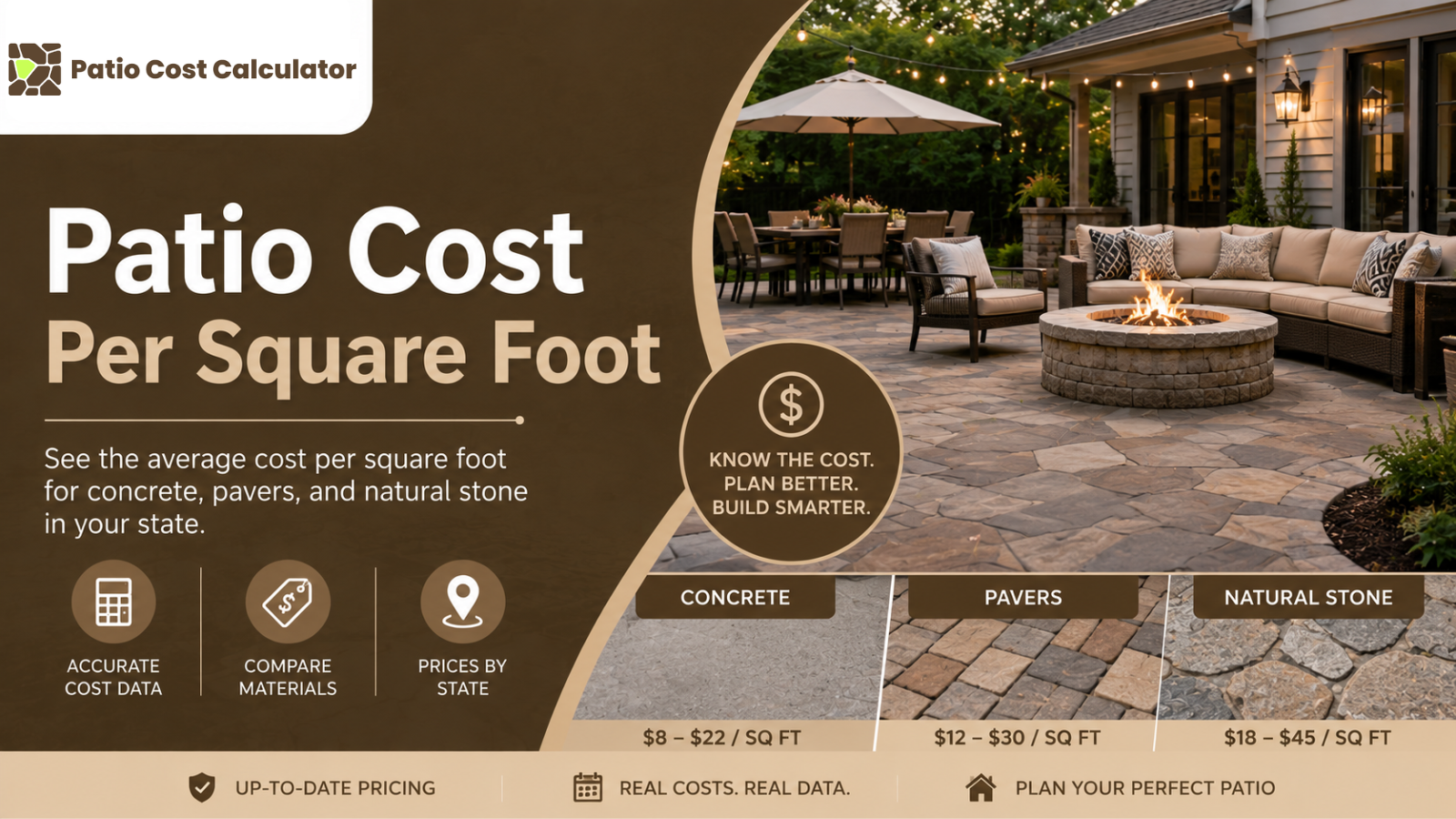
In 2026, professionally installed patios typically cost between $10 and $35 per square foot, depending on the material, project complexity, and local labor rates.
Typical installed costs include:
| Patio Material | Installed Cost per Sq Ft |
|---|---|
| Concrete Patio | $10–$18 |
| Paver Patio | $15–$30 |
| Natural Stone Patio | $20–$35+ |
These estimates generally include both materials and professional installation.
What Does "Cost Per Square Foot" Mean?
Contractors usually estimate patio installation based on the total square footage of the finished patio.
Square footage simply measures the amount of surface area being installed.
For example:
- A 10×10 patio equals 100 square feet.
- A 12×12 patio equals 144 square feet.
- A 15×20 patio equals 300 square feet.
- A 20×20 patio equals 400 square feet.
Because materials, labor, excavation, and base preparation are all directly related to the patio's size, square footage provides the simplest pricing method.
Average Patio Cost by Size
The table below shows typical installed costs using current national averages.
| Patio Size | Estimated Cost |
|---|---|
| 100 sq ft | $1,000–$3,500 |
| 150 sq ft | $1,500–$5,250 |
| 200 sq ft | $2,000–$7,000 |
| 250 sq ft | $2,500–$8,750 |
| 300 sq ft | $3,000–$10,500 |
| 400 sq ft | $4,000–$14,000 |
| 500 sq ft | $5,000–$17,500 |
Actual costs vary depending on the patio material, contractor rates, and project conditions.
Patio Cost Per Square Foot by Material
The material you choose has the biggest impact on your project's total cost.
Concrete Patio
Concrete remains one of the most affordable patio materials available.
Most concrete patios cost:
$10–$18 per square foot installed
Concrete offers:
- Affordable pricing
- Long lifespan
- Low maintenance
- Modern appearance
- Decorative finish options
Stamped, stained, or colored concrete typically increases installation costs.
Paver Patio
Pavers provide greater design flexibility than poured concrete.
Typical installed cost:
$15–$30 per square foot
Advantages include:
- Numerous colors
- Various patterns
- Easy repairs
- Excellent durability
- Strong curb appeal
Although pavers cost more initially, many homeowners appreciate their premium appearance.
Natural Stone Patio
Natural stone is generally considered the highest-end patio material.
Typical installed cost:
$20–$35+ per square foot
Popular stone options include:
- Flagstone
- Bluestone
- Slate
- Limestone
- Travertine
Natural stone requires specialized installation, contributing to its higher price.
Why Patio Costs Vary
Even patios built with the same material can have significantly different costs.
Several factors influence the final price.
Patio Size
Larger patios require:
- More materials
- Additional excavation
- More base material
- Longer installation time
Although the cost per square foot often remains similar, the total project cost increases as the patio becomes larger.
Material Selection
Each material has different costs for:
- Raw materials
- Installation
- Cutting
- Transportation
- Repairs
- Maintenance
Concrete is generally the least expensive, while natural stone is usually the most expensive.
Site Preparation
Before construction begins, contractors often need to prepare the site.
Preparation may include:
- Removing grass
- Excavation
- Leveling
- Soil compaction
- Drainage improvements
Poor soil conditions usually increase installation costs.
Patio Shape
Simple rectangular patios cost less than custom layouts.
Features that increase costs include:
- Curved edges
- Circular designs
- Multiple levels
- Decorative borders
- Built-in seating
More intricate layouts require additional labor and material cutting.
Drainage Requirements
Water management is essential for a long-lasting patio.
Depending on your property, contractors may recommend:
- Grading
- Drainage channels
- French drains
- Retaining walls
Although these improvements increase the initial investment, they help prevent settling and water damage later.
Labor Costs
Labor costs vary widely throughout the United States.
Factors include:
- Regional wage rates
- Contractor experience
- Seasonal demand
- Project complexity
Labor often represents one of the largest portions of the overall budget.
What's Usually Included in the Price?
Most contractor estimates include:
- Patio materials
- Excavation
- Base preparation
- Compaction
- Bedding material
- Installation labor
- Joint material (where applicable)
- Cleanup
- Basic grading
Always review your written estimate carefully to understand exactly what is included.
Costs That May Not Be Included
Some projects require additional work beyond a standard installation.
Examples include:
- Demolition of an existing patio
- Tree or root removal
- Drainage improvements
- Permit fees
- Retaining walls
- Decorative borders
- Outdoor lighting
- Fire pits
- Seating walls
- Landscaping restoration
These items can noticeably increase the total project cost.
Estimating Your Patio Cost
A simple estimate starts with four steps.
Step 1
Measure your patio's length and width.
Example:
15 × 20 feet
Step 2
Calculate square footage.
15 × 20 = 300 square feet
Step 3
Choose a material.
Example:
Pavers
Average installed cost:
Approximately $15–$30 per square foot.
Step 4
Multiply.
300 sq ft × $15–$30
Estimated project cost:
$4,500–$9,000
This provides a useful starting point before requesting contractor estimates.
How Contractors Measure Patio Projects
Professional installers typically calculate patio size using:
- Tape measurements
- Laser measuring tools
- Site plans
- Property surveys
- Digital estimating software
They also evaluate:
- Slope
- Drainage
- Soil conditions
- Accessibility
- Existing landscaping
These site conditions influence both labor and material requirements.
Ways to Reduce Patio Installation Costs
Homeowners can often lower costs without sacrificing quality.
Helpful strategies include:
- Compare multiple contractor estimates.
- Keep the patio shape simple.
- Build only the space you currently need.
- Select materials appropriate for your budget.
- Plan the project before peak construction season.
- Prepare the site beforehand when practical.
- Avoid unnecessary custom features.
Remember that the lowest estimate isn't always the best value. Quality workmanship and proper base preparation are essential for a patio that lasts for decades.
Does Paying More Always Mean Better Quality?
Not necessarily.
Higher-priced patios often include:
- Premium materials
- More complex designs
- Decorative finishes
- Better warranties
- Experienced installers
However, homeowners should compare proposals carefully rather than choosing solely based on price.
The best value usually combines:
- Quality materials
- Skilled installation
- Fair pricing
- Positive contractor reputation
Frequently Asked Questions
How much does a patio cost per square foot?
Most professionally installed patios cost between $10 and $35 per square foot, depending on the material, labor rates, and project complexity.
What is the cheapest patio material?
Concrete is generally the least expensive patio material while still providing excellent durability and low maintenance.
Which patio material is the most expensive?
Natural stone patios typically have the highest installation costs because of premium materials and specialized labor requirements.
Does patio size affect the price per square foot?
The total project cost increases with patio size. While the cost per square foot often remains similar, some larger projects may benefit from slight economies of scale depending on the contractor and design.
Does patio shape affect installation cost?
Yes. Curves, decorative borders, multiple elevations, and custom layouts require more labor and additional material cutting, increasing the overall cost.
Can I estimate my patio cost before contacting a contractor?
Yes. Measuring your patio's square footage and applying average installed costs per square foot provides a practical preliminary estimate before requesting professional quotes.
Final Thoughts
Understanding patio costs per square foot makes it easier to compare contractor estimates, establish a realistic budget, and choose the material that best fits your property. While national averages provide a helpful starting point, the final price of your patio will depend on factors such as material selection, site preparation, labor rates, drainage requirements, and project complexity.
Before contacting contractors, use our Patio Cost Calculator to generate a personalized estimate based on your patio size and preferred material. It's a fast and convenient way to understand your expected project cost and plan your outdoor living space with greater confidence.