 Patio Cost Calculator
Introduction
Adding a new patio is one of the most popular outdoor home improvement projects in the United States. Whether you're creating a space for family gatherings, outdoor dining, relaxing by a fire pit, or increasing your home's curb appeal, a well-built patio can transform your backyard while adding long-term value to your property.
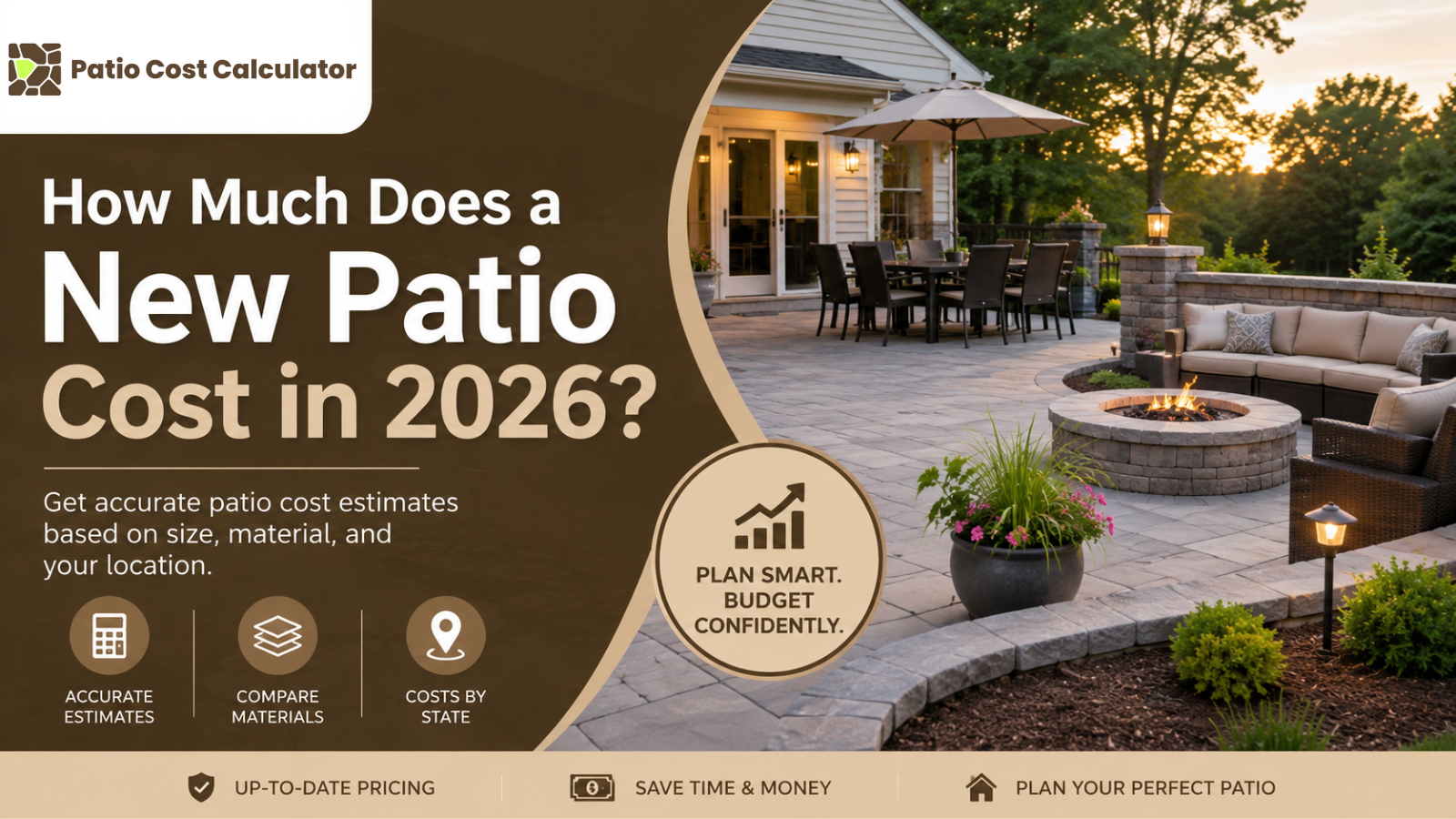
One of the first questions homeowners ask is simple: How much does a new patio cost?
The answer depends on several factors, including the patio's size, the material you choose, labor rates in your area, site preparation requirements, and the overall complexity of the installation. A small concrete patio may cost only a few thousand dollars, while a large natural stone patio with custom features can cost several times more.
Understanding these cost factors before requesting contractor estimates will help you set a realistic budget and make informed decisions throughout your project.
This guide explains average patio installation costs in 2026, compares the most common patio materials, outlines the biggest pricing factors, and answers the questions homeowners most frequently ask before beginning a patio installation.
Quick Answer
In 2026, most homeowners can expect to pay between $10 and $35 per square foot for a professionally installed patio, depending on the material selected, project complexity, and local labor rates.
Typical installed costs include:
| Patio Material | Typical Installed Cost |
|---|---|
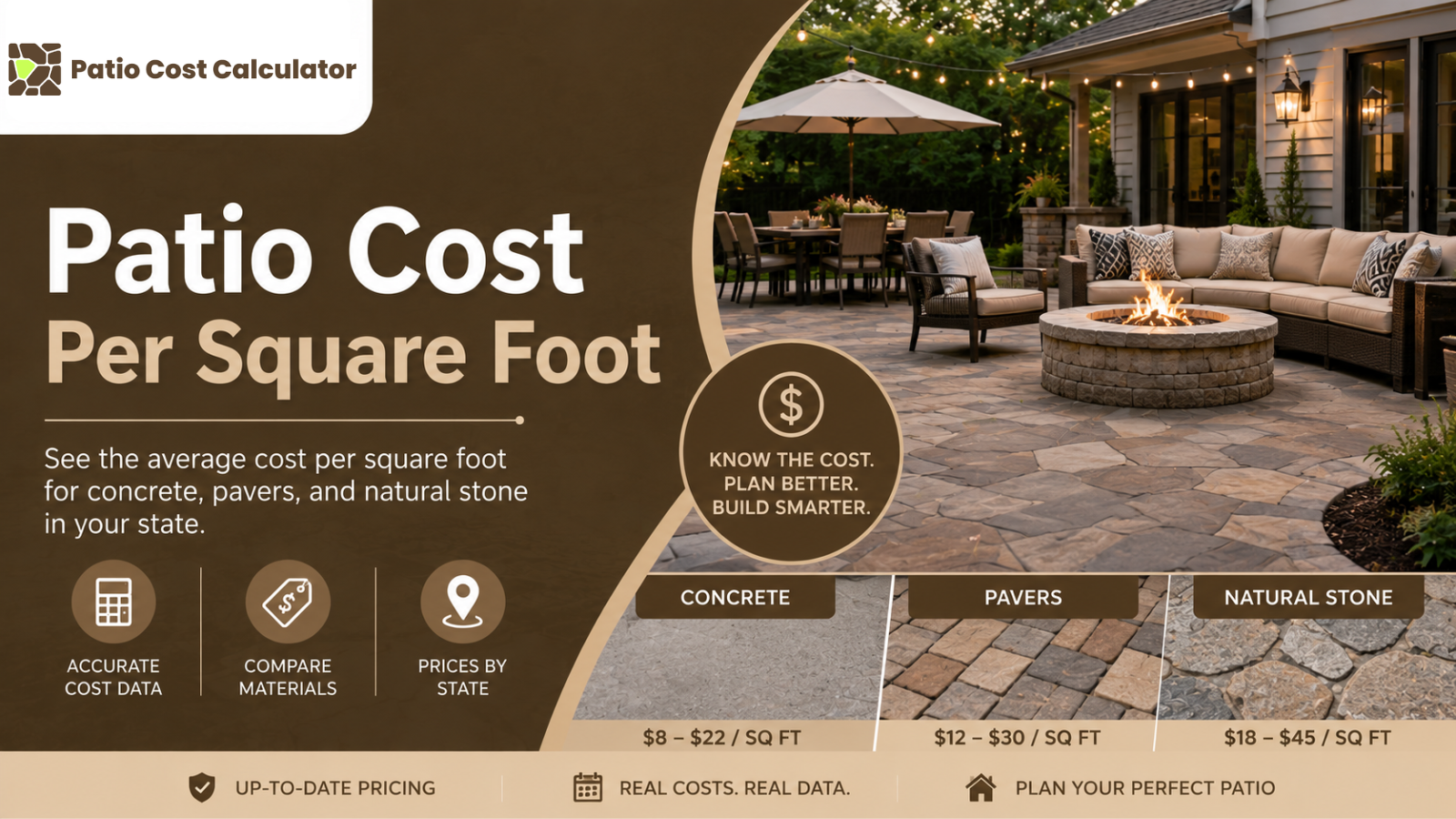
| Concrete | $10–$18 per sq ft |
| Pavers | $15–$30 per sq ft |
| Natural Stone | $20–$35+ per sq ft |
Most residential patio projects cost between $3,000 and $12,000, although larger patios or premium materials may exceed these ranges.
Average Patio Installation Cost by Size
Patio size is one of the biggest factors affecting the overall project cost. Larger patios require more materials, more labor, additional base preparation, and often longer installation times.
The table below shows typical installation costs for common patio sizes.
| Patio Size | Estimated Cost |
|---|---|
| 100 sq ft | $1,000–$3,500 |
| 150 sq ft | $1,500–$5,250 |
| 200 sq ft | $2,000–$7,000 |
| 300 sq ft | $3,000–$10,500 |
| 400 sq ft | $4,000–$14,000 |
| 500 sq ft | $5,000–$17,500 |
Actual costs vary depending on material selection and project conditions.
Patio Cost by Material
The material you choose has a greater impact on your budget than almost any other decision.
Concrete Patios
Concrete remains one of the most affordable patio materials available. It provides a clean appearance, requires relatively little maintenance, and can be finished in several ways, including broom finishes, exposed aggregate, and decorative stamping.
Typical installed cost:
$10–$18 per square foot
Concrete is an excellent option for homeowners seeking durability while keeping installation costs under control.
Paver Patios
Pavers offer outstanding design flexibility because they are available in numerous colors, shapes, textures, and patterns.
Individual pavers can usually be replaced if damaged, making repairs relatively straightforward.
Typical installed cost:
$15–$30 per square foot
Although pavers cost more than concrete initially, many homeowners appreciate their appearance and long-term durability.
Natural Stone Patios
Natural stone is widely considered one of the most premium patio materials available.
Popular choices include:
- Bluestone
- Flagstone
- Limestone
- Slate
- Travertine
Each piece of stone is unique, giving every patio a distinctive appearance.
Typical installed cost:
$20–$35+ per square foot
Natural stone generally has the highest installation cost because of both material prices and the specialized labor required.
What Factors Affect Patio Cost?
No two patio projects are exactly alike.
Several important factors influence the final price.
Patio Size
Larger patios require:
- More materials
- More excavation
- Additional base material
- More labor
- Longer installation times
Because of this, size is usually the single largest pricing factor.
Material Selection
Material choice significantly affects cost.
In general:
- Concrete is the most economical.
- Pavers provide an excellent balance of beauty and durability.
- Natural stone offers a premium appearance at a higher price.
Site Preparation
Before installation begins, the work area often requires preparation.
This may include:
- Removing grass
- Excavation
- Leveling the ground
- Improving drainage
- Compacting the soil
Poor site conditions typically increase project costs.
Base Installation
Every quality patio requires a properly prepared foundation.
Depending on the material, contractors may install:
- Crushed stone
- Gravel
- Sand
- Geotextile fabric
A properly constructed base helps prevent settling and improves the patio's lifespan.
Labor Costs
Labor often represents a significant portion of the overall budget.
Rates vary according to:
- Geographic location
- Contractor experience
- Local demand
- Project complexity
Urban areas generally experience higher labor costs than rural communities.
Patio Shape
Simple rectangular patios are usually less expensive than complex custom designs.
Features that increase installation costs include:
- Curved edges
- Multiple elevations
- Built-in seating
- Decorative borders
- Circular layouts
Drainage Requirements
Proper drainage protects both the patio and the surrounding landscape.
Some projects require:
- Grading
- Drainage channels
- French drains
- Retaining walls
These improvements can increase the overall project cost but help prevent future problems.
Additional Costs to Consider
Beyond the patio itself, homeowners should budget for additional project expenses.
These may include:
- Excavation
- Demolition of an existing patio
- Permit fees (where required)
- Delivery charges
- Edging materials
- Sealers
- Decorative borders
- Lighting
- Steps
- Fire pits
- Seating walls
Including these costs in your budget helps avoid unexpected surprises.
DIY vs. Professional Installation
Some homeowners consider building a patio themselves.
DIY installation may reduce labor costs, but it also requires:
- Proper excavation
- Accurate grading
- Base preparation
- Compaction equipment
- Material cutting
- Drainage planning
Mistakes made during installation may lead to settling, uneven surfaces, poor drainage, or premature failure.
For larger patios or premium materials, professional installation often provides better long-term value.
How Long Does a Patio Last?
A properly installed patio can provide decades of reliable use.
Typical lifespans include:
| Material | Expected Lifespan |
|---|---|
| Concrete | 25–40 years |
| Pavers | 30–50+ years |
| Natural Stone | 50+ years |
Routine maintenance and proper drainage can significantly extend these service lives.
Ways to Save Money on a New Patio
Although patios represent a significant investment, homeowners can often reduce costs without sacrificing quality.
Helpful strategies include:
- Compare multiple contractor estimates.
- Choose a simple patio shape.
- Plan the project before peak construction season.
- Select materials that fit both your budget and climate.
- Build only the space you currently need rather than oversizing the patio.
- Complete landscaping after the patio installation rather than during the project.
- Maintain your patio regularly to maximize its lifespan.
Choosing the lowest estimate isn't always the best decision. Installation quality, workmanship, and contractor experience should also be considered.
Is a New Patio Worth the Investment?
For many homeowners, the answer is yes.
A patio creates additional outdoor living space while improving both functionality and curb appeal.
Common benefits include:
- Outdoor entertaining
- Increased usable backyard space
- Improved appearance
- Easier outdoor dining
- Lower maintenance than many decks
- Long service life
- Potential increase in property value
Although every home is different, patios remain one of the most popular exterior improvement projects because they combine everyday enjoyment with long-term durability.
Frequently Asked Questions
How much does a new patio cost?
Most professionally installed patios cost between $10 and $35 per square foot, depending on the material, project size, and local labor rates.
What is the least expensive patio material?
Concrete is generally the most affordable patio material while still offering excellent durability and relatively low maintenance.
Which patio material lasts the longest?
Natural stone patios can last for many decades when properly installed and maintained. Pavers also offer an exceptionally long service life.
Does patio size significantly affect cost?
Yes. Larger patios require more materials, additional labor, and more extensive site preparation, making size one of the biggest cost factors.
Can I build a patio myself?
Small patios may be suitable for experienced DIY homeowners. However, proper excavation, grading, drainage, and base preparation are critical to achieving long-term performance.
Does a patio increase home value?
A well-designed patio can improve outdoor living space and enhance curb appeal, making a home more attractive to potential buyers.
Final Thoughts
Installing a new patio is an excellent way to enhance your outdoor living space while improving the appearance and functionality of your home. Although costs vary based on size, material selection, labor rates, and site conditions, understanding these factors before beginning your project makes it easier to establish a realistic budget and compare contractor estimates.
Whether you're considering an affordable concrete patio, a versatile paver design, or a premium natural stone installation, careful planning can help ensure your investment provides years of enjoyment.
Before requesting contractor estimates, use our Patio Cost Calculator to generate a personalized cost estimate based on your patio size and preferred material. It provides a practical starting point for planning your project and understanding your expected budget before construction begins.