 Patio Cost Calculator
Introduction
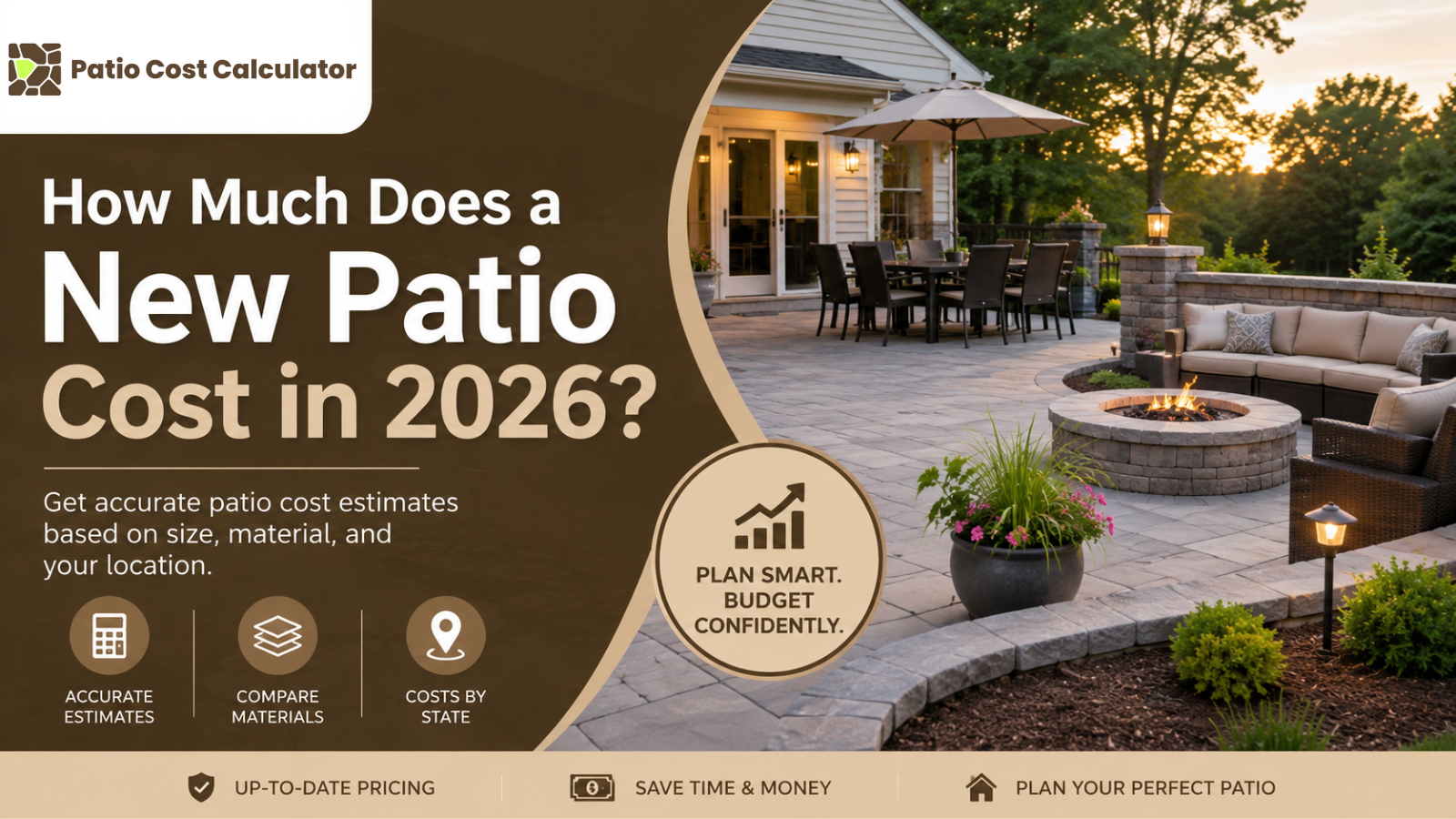
Planning a new patio is exciting, but one of the first questions most homeowners ask is, "How much will my patio cost?" While every project is unique, estimating your patio installation cost before requesting contractor quotes can help you establish a realistic budget, compare different materials, and make informed decisions throughout the planning process.
Fortunately, estimating patio costs is easier than many homeowners realize. By understanding your patio's size, choosing a material, and considering factors such as labor, site preparation, and optional features, you can develop a reliable estimate long before construction begins.
This guide explains how patio costs are calculated, the variables that influence pricing, and a simple step-by-step method for estimating your own project.
Quick Answer
Most homeowners can estimate patio installation costs using three basic pieces of information:
- Patio dimensions
- Patio material
- Average installed cost per square foot
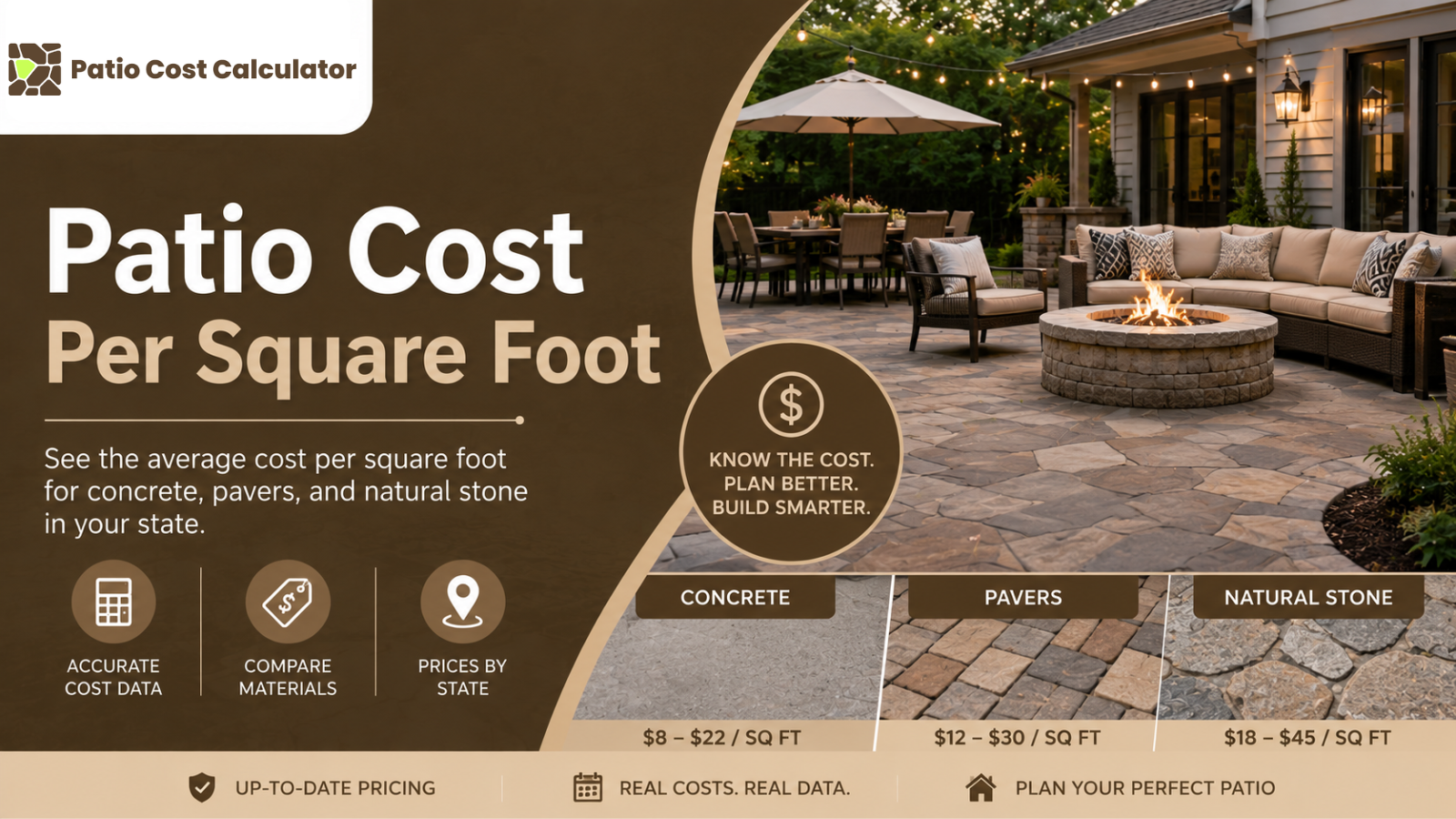
Typical installed costs include:
| Material | Average Cost Per Sq Ft |
|---|---|
| Concrete Patio | $8–$22 |
| Paver Patio | $12–$30 |
| Natural Stone Patio | $18–$45 |
Once you know your patio's square footage, multiplying it by the estimated cost per square foot provides a useful starting estimate.
Step 1: Measure Your Patio
The first step is determining the size of your planned patio.
For rectangular patios, use the simple formula:
Length × Width = Square Feet
Example
Length:
20 feet
Width:
15 feet
Calculation:
20 × 15 = 300 square feet
Your estimated patio size is 300 sq ft.
If your patio has an irregular shape, divide it into smaller rectangles or squares, calculate each section individually, and then add them together.
Step 2: Choose Your Patio Material
The material you select has the biggest impact on the overall project cost.
Concrete Patio
Typical installed cost:
$8–$22 per square foot
Best for homeowners seeking:
- Lower installation costs
- Fast construction
- Minimal maintenance
- Long-lasting performance
Paver Patio
Typical installed cost:
$12–$30 per square foot
Popular because they offer:
- Decorative patterns
- Easy repairs
- Excellent durability
- Premium appearance
Natural Stone Patio
Typical installed cost:
$18–$45 per square foot
Often selected for:
- Luxury outdoor spaces
- Timeless beauty
- Exceptional longevity
- Unique natural appearance
Step 3: Multiply by the Cost Per Square Foot
Once you've selected your material, estimating the base installation cost becomes straightforward.
Example 1
300 sq ft concrete patio
Average installed price:
$15 per sq ft
Estimated cost:
300 × $15 = $4,500
Example 2
300 sq ft paver patio
Average installed price:
$22 per sq ft
Estimated cost:
300 × $22 = $6,600
Example 3
300 sq ft natural stone patio
Average installed price:
$32 per sq ft
Estimated cost:
300 × $32 = $9,600
These examples provide a helpful starting point before obtaining contractor estimates.
Step 4: Consider Site Preparation
Many homeowners overlook preparation costs.
Before installation begins, contractors may need to:
- Remove grass
- Excavate soil
- Grade the site
- Install a compacted gravel base
- Improve drainage
- Level uneven ground
Properties with challenging conditions generally cost more than flat, easily accessible yards.
Step 5: Factor in Labor Costs
Labor is one of the largest components of patio installation.
The amount you pay depends on:
- Your location
- Local labor rates
- Material complexity
- Patio size
- Project difficulty
For example, installing natural stone usually requires more skilled labor than pouring a standard concrete patio, increasing the overall project cost.
Step 6: Think About Optional Features
Many patios include additional features that increase the overall budget.
Common upgrades include:
- Fire pits
- Outdoor fireplaces
- Seating walls
- Landscape lighting
- Pergolas
- Outdoor kitchens
- Decorative borders
- Walkways
- Built-in planters
Although optional, these features can significantly improve the functionality and enjoyment of your outdoor living space.
Example Patio Estimates
The following examples illustrate how project size and material selection affect pricing.
| Patio Size | Concrete | Pavers | Natural Stone |
|---|---|---|---|
| 150 sq ft | $1,200–$3,300 | $1,800–$4,500 | $2,700–$6,750 |
| 250 sq ft | $2,000–$5,500 | $3,000–$7,500 | $4,500–$11,250 |
| 350 sq ft | $2,800–$7,700 | $4,200–$10,500 | $6,300–$15,750 |
| 500 sq ft | $4,000–$11,000 | $6,000–$15,000 | $9,000–$22,500 |
These figures are nationwide estimates and may vary depending on labor rates and site conditions.
Hidden Costs Homeowners Often Forget
Many homeowners estimate only the patio surface itself and overlook additional expenses that may affect the total project budget.
Common overlooked costs include:
- Demolition of an existing patio
- Removal and disposal of old materials
- Permit fees (where required)
- Drainage improvements
- Retaining walls
- Landscape restoration
- Irrigation system adjustments
- Delivery charges
- Cleanup after construction
- Sealing certain patio materials
Reviewing these items before requesting estimates helps prevent unexpected costs later.
Common Patio Estimating Mistakes
Accurate estimates depend on using realistic assumptions.
Avoid these common mistakes:
Measuring Incorrectly
Even small measurement errors can significantly affect your estimate.
Always double-check:
- Length
- Width
- Irregular sections
- Curved areas
If your patio has an unusual shape, divide it into smaller rectangles, calculate each section separately, and combine the totals.
Forgetting Site Preparation
The patio itself is only one part of the project.
Ignoring excavation, grading, and base preparation often leads to estimates that are far lower than the actual installation cost.
Using Material Prices Instead of Installed Prices
Some homeowners mistakenly estimate costs using only the price of materials purchased from a home improvement store.
Professional installation also includes:
- Labor
- Equipment
- Excavation
- Base materials
- Transportation
- Cleanup
For the most accurate estimate, always use installed cost per square foot, not material-only pricing.
Ignoring Drainage
Poor drainage can shorten the lifespan of a patio.
If water tends to collect in your yard, your contractor may recommend:
- Additional grading
- Drainage channels
- French drains
- Gravel improvements
Including these items in your preliminary budget provides a more realistic estimate.
How Contractors Estimate Patio Costs
Professional contractors evaluate much more than square footage.
They typically consider:
- Patio dimensions
- Material selection
- Soil conditions
- Drainage
- Accessibility
- Existing landscaping
- Demolition requirements
- Design complexity
- Local labor rates
- Permit requirements
After evaluating these factors, contractors calculate both labor and material requirements before preparing a written proposal.
Budget Planning Tips
A little planning before requesting estimates can make the entire project much easier.
Consider the following:
- Decide on your preferred patio material.
- Measure the planned patio area carefully.
- Prioritize must-have features.
- Separate optional upgrades from essential work.
- Compare several contractor estimates.
- Set aside additional funds for unexpected site conditions.
Many homeowners reserve an extra 5% to 10% of the project budget as a contingency for unforeseen expenses discovered during construction.
Estimating Different Patio Shapes
Rectangular Patio
The easiest shape to estimate.
Formula:
Length × Width
L-Shaped Patio
Divide the patio into two rectangles.
Calculate each separately, then combine the totals.
Circular Patio
Use the formula:
π × Radius²
Although contractors handle exact measurements, this provides homeowners with a reasonable estimate during the planning stage.
Curved or Irregular Patios
Complex layouts usually require:
- Additional cutting
- More labor
- Increased waste
- Longer installation time
As a result, irregular designs often have a higher installation cost than similarly sized rectangular patios.
Improving Estimate Accuracy
Measure Carefully
Double-check every dimension before calculating square footage.
Choose Materials Early
Material selection has the largest impact on pricing.
Knowing whether you prefer concrete, pavers, or natural stone immediately narrows your estimated budget.
Research Local Costs
Labor rates vary considerably across the United States.
Using estimates that reflect your state or region provides a much more realistic budget than relying on national averages alone.
Include Optional Features
If you know you'll eventually want a fire pit, seating wall, pergola, lighting, or outdoor kitchen, include those items in your planning from the beginning.
Adding major features later is often more expensive than incorporating them during the initial installation.
Should You Estimate High or Low?
When budgeting, it's generally safer to estimate toward the middle or upper end of the expected price range.
For example:
Instead of assuming a 300 sq ft concrete patio will cost the minimum possible amount, use an average installed price that reflects both materials and labor in your area.
This approach reduces the likelihood of budget surprises once contractor estimates arrive.
Why Use an Online Patio Cost Calculator?
While manual calculations provide a useful starting point, an online calculator can simplify the process.
A patio cost calculator allows homeowners to:
- Estimate costs within minutes
- Compare multiple materials
- Adjust patio dimensions
- Explore different budget scenarios
- Plan before contacting contractors
It's an excellent planning tool for narrowing down options before requesting professional estimates.
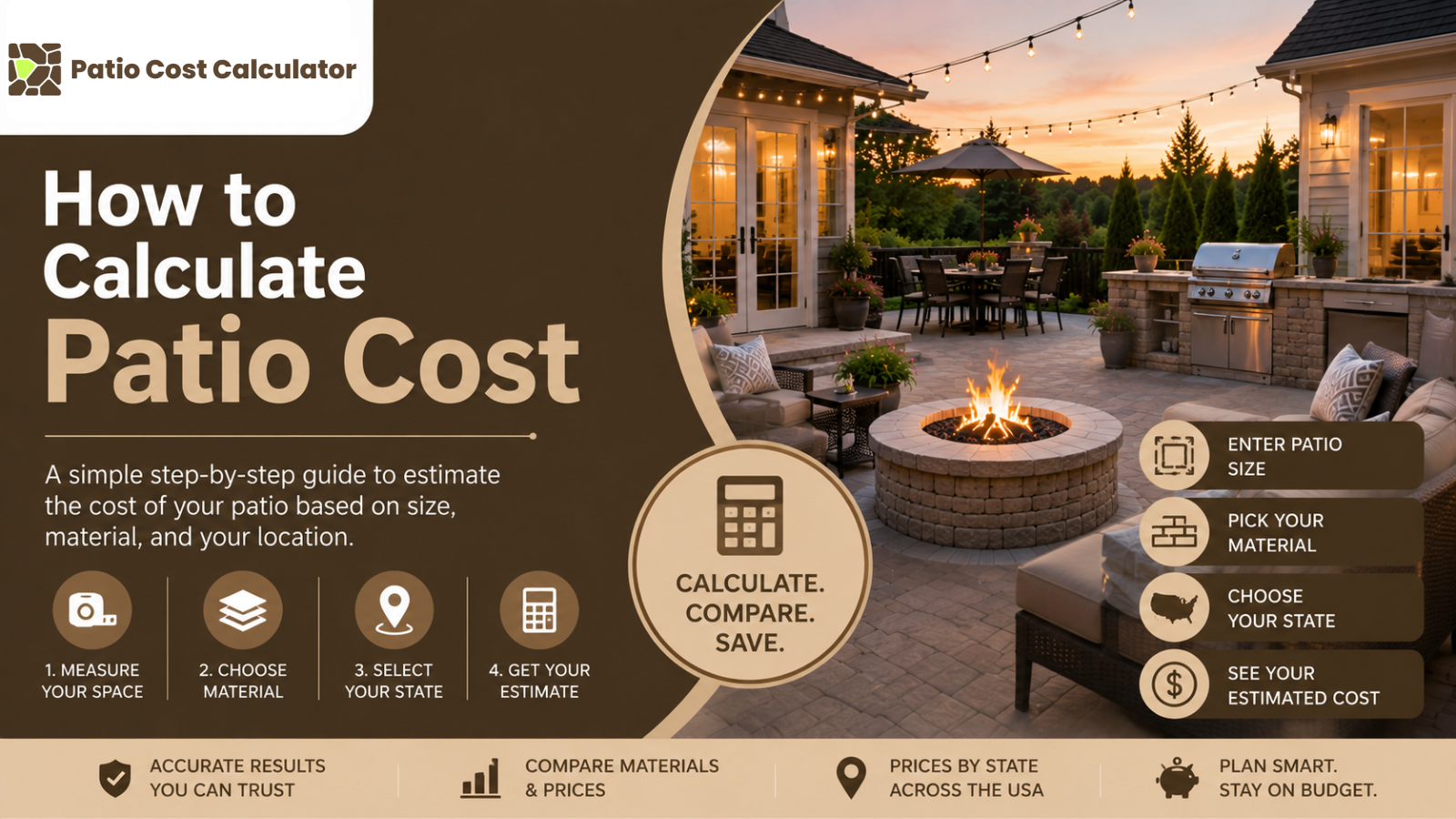
Step-by-Step Patio Cost Estimation Summary
The table below summarizes the basic process homeowners can use to estimate the cost of a new patio.
| Step | What to Do |
|---|---|
| 1. Measure the Patio | Calculate the total square footage (Length × Width). |
| 2. Choose a Material | Select concrete, pavers, or natural stone based on your budget and preferences. |
| 3. Apply the Average Cost per Sq Ft | Multiply your square footage by the estimated installed cost per square foot. |
| 4. Add Site Preparation | Consider excavation, grading, drainage, and base installation if needed. |
| 5. Include Optional Features | Fire pits, pergolas, lighting, outdoor kitchens, and seating walls increase the total budget. |
| 6. Compare Contractor Estimates | Request multiple written quotes and compare scope of work, materials, warranties, and pricing. |
Following these steps provides a realistic starting point before contacting contractors.
Frequently Asked Questions
How can I estimate patio installation cost?
The simplest method is to:
- Measure the patio area.
- Calculate the square footage.
- Choose your preferred material.
- Multiply the square footage by the average installed cost per square foot.
Afterward, add estimated costs for site preparation, drainage improvements, and optional features if applicable.
What is the easiest way to calculate square footage?
For rectangular patios:
Length × Width = Square Feet
For example:
20 ft × 15 ft = 300 square feet
For irregular layouts, divide the patio into smaller sections, calculate each section separately, and add the totals together.
Which patio material is the most affordable?
Concrete is generally the least expensive option.
Professionally installed concrete patios typically cost between $8 and $22 per square foot, making them an excellent choice for homeowners seeking durability while keeping installation costs manageable.
Why are contractor estimates sometimes very different?
Several factors influence pricing, including:
- Labor rates
- Material quality
- Site preparation
- Drainage requirements
- Patio design
- Accessibility
- Warranty coverage
- Contractor experience
Two estimates may differ significantly even when the patios are the same size, so it's important to compare the complete scope of work—not just the total price.
Should I include optional features in my estimate?
Yes.
If you plan to add items such as:
- Fire pits
- Pergolas
- Seating walls
- Outdoor kitchens
- Landscape lighting
- Walkways
It's generally more economical to include them in your initial project budget than to add them after the patio has already been completed.
How accurate are online patio cost estimates?
Online calculators provide useful planning estimates based on average installation costs.
Although they cannot replace a contractor's on-site inspection, they help homeowners:
- Build a realistic budget
- Compare materials
- Evaluate different patio sizes
- Understand potential project costs before requesting quotes
Should I request more than one contractor estimate?
Absolutely.
Most homeowners benefit from comparing at least three written estimates before making a decision.
Review each proposal carefully for:
- Materials included
- Base preparation
- Drainage work
- Warranty coverage
- Cleanup
- Project timeline
- Overall scope of work
Choosing the lowest price isn't always the best long-term value.
What if my actual cost is higher than my estimate?
Minor differences are normal.
Unexpected conditions such as poor soil, drainage problems, hidden obstacles, or additional excavation can increase the final cost. Setting aside a contingency fund of 5% to 10% of your planned budget helps prepare for unforeseen expenses.
Final Verdict
Estimating patio installation costs before requesting contractor quotes gives homeowners a significant advantage during the planning process. By measuring your patio, selecting a material, applying average installed costs per square foot, and accounting for preparation work and optional upgrades, you can develop a realistic budget and compare estimates with greater confidence.
Whether you're planning a budget-friendly concrete patio, a decorative paver patio, or a luxury natural stone outdoor living space, understanding how costs are calculated makes it easier to choose the solution that best fits your property and long-term goals.
Final Thoughts
Estimating the cost of a new patio doesn't have to be complicated. Breaking the project into simple steps—measuring the area, selecting a material, considering site conditions, and planning for optional features—helps eliminate guesswork and reduces the risk of unexpected expenses. A well-prepared budget also makes it easier to compare contractor proposals and make informed decisions throughout the installation process.
Before requesting contractor estimates, use the Patio Cost Calculator on the homepage to estimate your project's cost based on your patio size, chosen material, and state. Starting with a personalized estimate gives you a solid budgeting foundation, helps you evaluate different design options, and allows you to move forward with confidence when planning your new outdoor living space.