 Patio Cost Calculator
Introduction
A beautiful outdoor living space doesn't require a huge backyard or an unlimited budget. Even a small patio can become a comfortable place to relax, entertain guests, enjoy family meals, or simply spend time outdoors.
Many homeowners assume that creating an attractive patio requires a large investment, but careful planning, smart material choices, and simple design ideas can produce impressive results without overspending.
Whether you're building a brand-new patio or replacing an aging one, understanding how to maximize both your available space and your budget can help you create an outdoor area that feels much larger than its actual size.
This guide explores affordable small patio ideas, compares material options, and shares practical design tips to help you get the most value from your project.
Quick Answer
A small patio can be both affordable and functional.
To keep costs under control:
- Choose a practical patio size.
- Select materials that fit your budget.
- Keep the design simple.
- Focus on features you'll actually use.
- Plan for future upgrades rather than installing everything at once.
Even a patio measuring 150–250 square feet can provide plenty of usable outdoor living space.
What Is Considered a Small Patio?
While every property is different, most homeowners consider patios within these size ranges to be small:
| Patio Size | Typical Use |
|---|---|
| 80–120 sq ft | Bistro seating for two |
| 120–180 sq ft | Small conversation area |
| 180–250 sq ft | Outdoor dining set |
| 250–300 sq ft | Dining and lounge combination |
A thoughtfully designed small patio often feels larger than a poorly planned oversized one.
Why Small Patios Are Popular
Smaller patios offer several advantages beyond their lower installation cost.
Benefits include:
- Lower material costs
- Reduced labor expenses
- Faster installation
- Easier maintenance
- Less yard disruption
- Lower long-term upkeep
They're also an excellent choice for homeowners with compact backyards, townhomes, or homes where preserving lawn and landscaping is important.
Choosing the Right Material
Material selection has the biggest influence on both your budget and the final appearance of your patio.
Concrete Patio
Typical installed cost:
$8–$22 per square foot
Advantages:
- Lowest installation cost
- Durable surface
- Minimal maintenance
- Fast installation
- Modern appearance
Concrete is often the most economical option for homeowners seeking maximum value.
Paver Patio
Typical installed cost:
$12–$30 per square foot
Advantages:
- Decorative appearance
- Easy repairs
- Numerous color options
- Wide variety of patterns
- Excellent long-term value
Pavers offer a premium look without reaching the price of natural stone.
Natural Stone Patio
Typical installed cost:
$18–$45 per square foot
Advantages:
- Luxury appearance
- Unique natural textures
- Exceptional durability
- Long lifespan
- Timeless beauty
Although natural stone has the highest upfront cost, its visual appeal makes it a favorite for upscale outdoor spaces.
Keep the Design Simple
One of the easiest ways to save money is to avoid unnecessary complexity.
Simple patio layouts generally require:
- Less cutting
- Less labor
- Less material waste
- Faster installation
Rectangular and square patios are usually the most cost-effective shapes.
Use Multi-Purpose Furniture
On a small patio, every square foot matters.
Choose furniture that serves multiple purposes, such as:
- Benches with built-in storage
- Foldable dining tables
- Stackable chairs
- Storage ottomans
- Nesting side tables
Flexible furniture helps maximize usable space without making the patio feel crowded.
Create Defined Activity Zones
Even a compact patio can feel organized by dividing it into functional areas.
Examples include:
- Dining corner
- Conversation area
- Reading space
- Grill station
- Container garden
Using rugs, planters, or furniture placement to define these spaces makes the patio feel larger and more inviting.
Add Landscaping Strategically
Thoughtful landscaping can dramatically improve the appearance of a small patio without significantly increasing the budget.
Affordable options include:
- Container plants
- Decorative grasses
- Raised planters
- Flower beds
- Small shrubs
- Climbing vines
Limiting the number of plant varieties often creates a cleaner, more cohesive design.
Prioritize Features You'll Use Most
It's easy to be inspired by elaborate outdoor living spaces, but not every feature is necessary.
Before finalizing your design, ask yourself:
- Will you regularly entertain large groups?
- Do you need a dining area?
- Will you use a fire pit frequently?
- Is an outdoor kitchen realistic for your budget?
- Would additional landscaping provide more value?
Focusing on the features you will actually enjoy helps prevent overspending.
Budget-Friendly Patio Upgrades
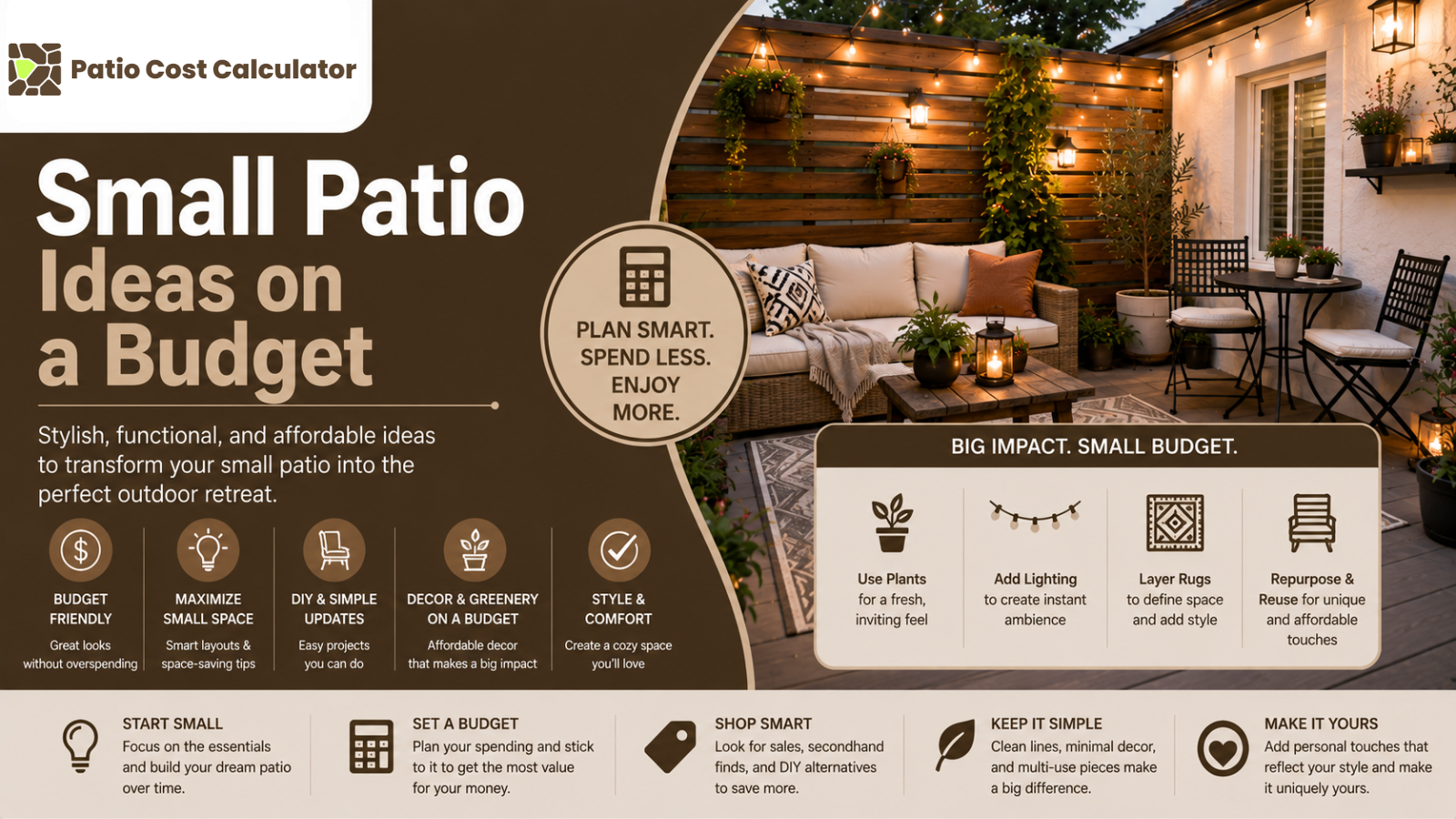
A small patio doesn't need expensive additions to feel inviting. A few carefully chosen upgrades can dramatically improve comfort and appearance while keeping costs under control.
Affordable upgrades include:
- Decorative outdoor cushions
- String lights
- Solar pathway lights
- Outdoor rugs
- Container gardens
- Hanging planters
- Decorative pots
- Small water features
- Privacy screens
- Shade umbrellas
Rather than adding everything at once, consider upgrading your patio over time as your budget allows.
Space-Saving Design Ideas
Limited space requires thoughtful planning.
These ideas can help maximize every square foot.
Built-In Seating
Instead of several individual chairs, consider built-in benches.
Benefits include:
- More seating
- Better use of space
- Cleaner appearance
- Reduced furniture clutter
Built-in seating can also include hidden storage beneath the bench.
Vertical Landscaping
When ground space is limited, think vertically.
Options include:
- Trellises
- Climbing plants
- Wall planters
- Vertical gardens
- Hanging baskets
Vertical landscaping adds greenery without reducing valuable floor space.
Folding Furniture
Foldable furniture provides flexibility.
Examples include:
- Folding dining tables
- Folding chairs
- Bistro sets
Furniture can be stored when not in use, making the patio feel larger.
Light Colors
Lighter patio materials and furniture often make small spaces appear more open.
Popular choices include:
- Light gray concrete
- Beige pavers
- Cream-colored stone
- Neutral outdoor cushions
These colors also reflect more sunlight, helping create a bright, welcoming atmosphere.
Add Lighting
Outdoor lighting improves both appearance and functionality.
Budget-friendly lighting options include:
- Solar stake lights
- LED string lights
- Wall-mounted lights
- Lanterns
- Battery-powered table lamps
Lighting extends the amount of time you can comfortably enjoy the patio during evenings while creating a warm, inviting atmosphere.
Keep Landscaping Simple
Small patios usually look better when landscaping remains uncluttered.
Instead of planting many different species, choose a consistent design.
For example:
- One ornamental grass variety
- Two flowering plants
- Several matching containers
Repeating similar plants often creates a more polished appearance than using many unrelated varieties.
Sample Patio Budgets
The following examples illustrate how different budgets can create attractive outdoor spaces.
Budget Patio
Size: 120 sq ft
Material: Concrete
Estimated installation:
$960–$2,640
Features:
- Bistro table
- Two chairs
- Container plants
- Solar lights
Mid-Range Patio
Size: 200 sq ft
Material: Pavers
Estimated installation:
$2,400–$6,000
Features:
- Dining table
- Outdoor rug
- Decorative planters
- String lighting
Premium Small Patio
Size: 250 sq ft
Material: Natural Stone
Estimated installation:
$4,500–$11,250
Features:
- Lounge seating
- Fire pit
- Landscape lighting
- Premium container garden
Even relatively small patios can create impressive outdoor living spaces when designed carefully.
Common Mistakes to Avoid
Avoiding a few common design mistakes can help maximize both your budget and your available space.
Common mistakes include:
- Choosing oversized furniture
- Installing a patio larger than necessary
- Ignoring drainage
- Using too many decorative elements
- Blocking natural walking paths
- Neglecting shade
- Forgetting outdoor lighting
Simple, uncluttered layouts usually make small patios feel larger and more comfortable.
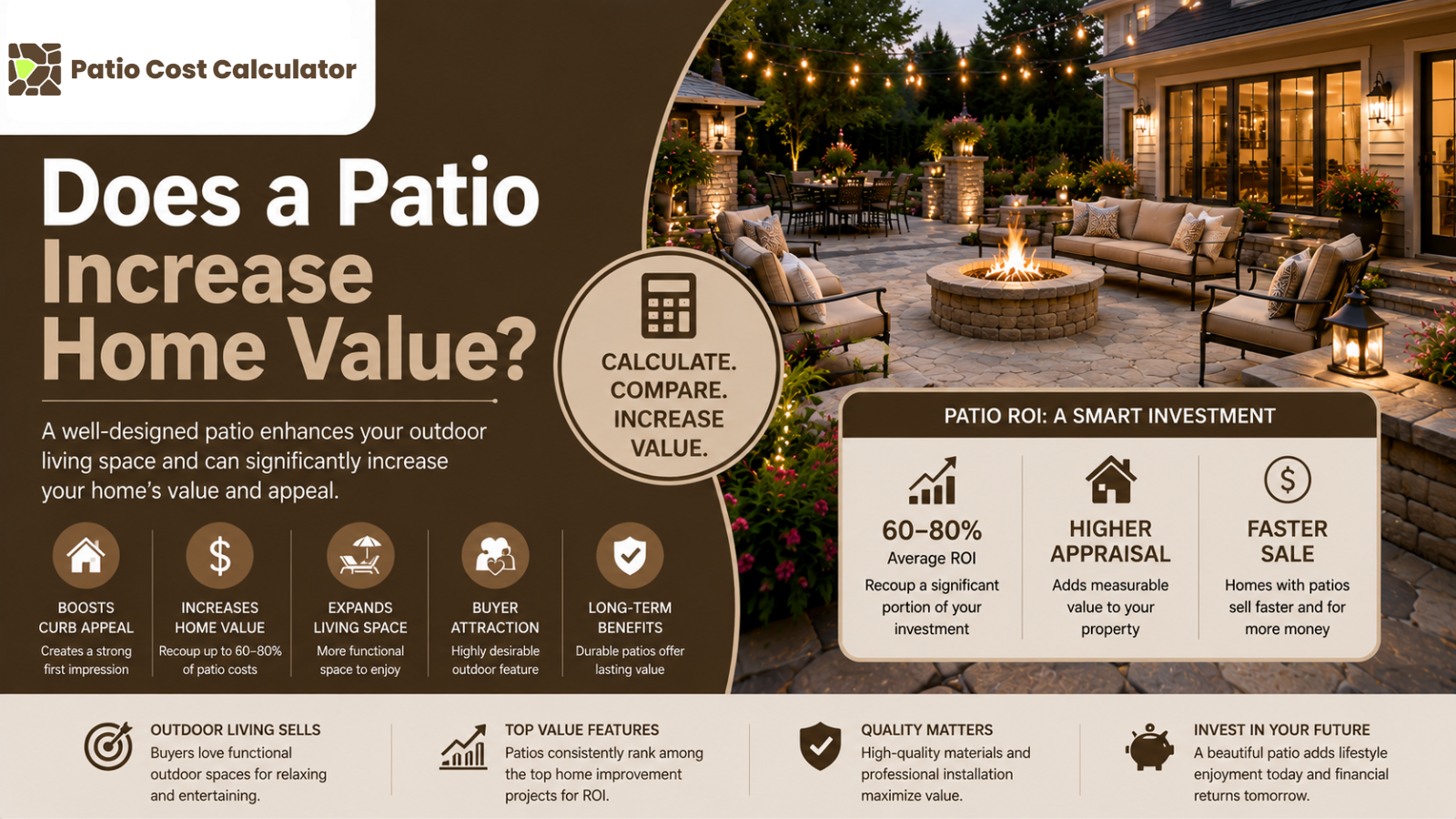
Can a Small Patio Still Increase Home Value?
Yes.
Although a small patio costs less than a larger installation, it can still improve:
- Outdoor living space
- Curb appeal
- Buyer interest
- Backyard functionality
- Overall property presentation
Many buyers appreciate outdoor areas that are attractive, easy to maintain, and immediately usable.
Plan for Future Expansion
If your budget is limited today, consider designing your patio so it can be expanded later.
For example:
- Leave space for a future fire pit.
- Plan electrical access for lighting.
- Allow room for additional seating.
- Consider where a pergola might eventually be installed.
- Design landscaping that can grow with the patio.
Planning ahead often reduces future construction costs and helps ensure new additions blend seamlessly with the original design.
Getting the Most Value From Your Budget
The most successful small patios aren't always the most expensive.
Instead, focus on:
- Quality installation
- Durable materials
- Functional layout
- Comfortable furniture
- Attractive landscaping
- Proper drainage
A thoughtfully designed 180-square-foot patio often provides more enjoyment than a poorly planned patio twice its size.
Small Patio Ideas Comparison
The table below compares the three most popular patio materials for homeowners planning a smaller outdoor living space.
| Feature | Concrete Patio | Paver Patio | Natural Stone Patio |
|---|---|---|---|
| Typical Installed Cost | $8–$22/sq ft | $12–$30/sq ft | $18–$45/sq ft |
| Best For | Budget-friendly projects | Premium appearance and flexibility | Luxury outdoor spaces |
| Lifespan | 25–40 years | 30–50+ years | 50–100+ years |
| Maintenance | Low | Low | Low |
| Repairability | Moderate | Excellent | Good |
| Installation Speed | Fast | Moderate | Slower |
| Design Flexibility | Very Good | Excellent | Excellent |
| Ideal for Small Patios | ✓ | ✓ | ✓ |
| Long-Term Value | Very Good | Excellent | Excellent |
Each material can create an attractive small patio. The best choice depends on your budget, preferred appearance, and long-term plans.
Frequently Asked Questions
How big should a small patio be?
That depends on how you plan to use it.
Typical sizes include:
- 80–120 sq ft for a small seating area.
- 120–180 sq ft for a conversation space.
- 180–250 sq ft for an outdoor dining area.
- 250–300 sq ft for dining and lounge furniture.
A well-designed small patio can comfortably accommodate everyday outdoor activities without requiring a large backyard.
What is the cheapest patio material?
Concrete is generally the most affordable option.
Professionally installed concrete patios typically cost between $8 and $22 per square foot, making them an excellent choice for homeowners looking to maximize value while keeping installation costs manageable.
Can a small patio still increase home value?
Yes.
A professionally installed patio can improve:
- Outdoor living space
- Backyard functionality
- Curb appeal
- Buyer interest
- Overall property presentation
Even a modest patio can make a home more attractive to potential buyers when it is thoughtfully designed and well maintained.
How can I make a small patio feel larger?
Several design techniques help create the illusion of more space.
Consider:
- Light-colored materials
- Simple furniture layouts
- Vertical landscaping
- Folding or multi-purpose furniture
- Consistent color schemes
- Minimal clutter
- Strategic outdoor lighting
Keeping the design open and uncluttered often has the greatest impact.
Is a fire pit worth adding to a small patio?
It can be, provided there is enough room to maintain comfortable seating and safe clearance.
For compact patios, smaller portable fire pits or tabletop models often provide the best balance between functionality and space efficiency.
Should I choose pavers or concrete for a small patio?
Both are excellent options.
Concrete offers lower installation costs and minimal maintenance.
Pavers provide greater design flexibility, decorative patterns, and easier long-term repairs.
The right choice depends on your budget and preferred appearance.
Can I expand my patio later?
Yes.
Many homeowners begin with a smaller patio and expand it over time as their needs or budget change.
Planning for future expansion during the initial design phase can make future additions easier and more cost-effective.
What's the biggest mistake when designing a small patio?
One of the most common mistakes is overcrowding the space.
Using oversized furniture, adding too many decorative features, or choosing an unnecessarily complex layout can make a patio feel cramped.
Keeping the design simple and functional usually produces the best results.
Final Verdict
A small patio can deliver many of the same benefits as a much larger outdoor living space while requiring a smaller investment and less maintenance. By choosing the right material, using space efficiently, and focusing on features you'll actually use, it's possible to create a comfortable and attractive backyard retreat without exceeding your budget.
A concrete patio is ideal for homeowners seeking affordability, durability, and straightforward maintenance.
A paver patio offers excellent design flexibility, premium appearance, and easy long-term repairs.
A natural stone patio is the perfect choice for homeowners who want timeless beauty, exceptional longevity, and a luxurious outdoor setting.
Regardless of the material you choose, thoughtful planning is far more important than the size of the patio itself.
Final Thoughts
A limited budget or a compact backyard doesn't have to limit your outdoor living experience. With smart planning, quality materials, and a simple, functional layout, even a modest patio can become one of the most enjoyable areas of your home. By focusing on durability, efficient use of space, and features that support your lifestyle, you can create an inviting outdoor retreat that provides years of enjoyment without unnecessary expense.
Before requesting contractor estimates, use the Patio Cost Calculator on the homepage to estimate your project's cost based on your patio size, chosen material, and state. A personalized estimate will help you compare material options, establish a realistic budget, and confidently design a small patio that fits your home, your lifestyle, and your long-term goals.