 Patio Cost Calculator
Introduction
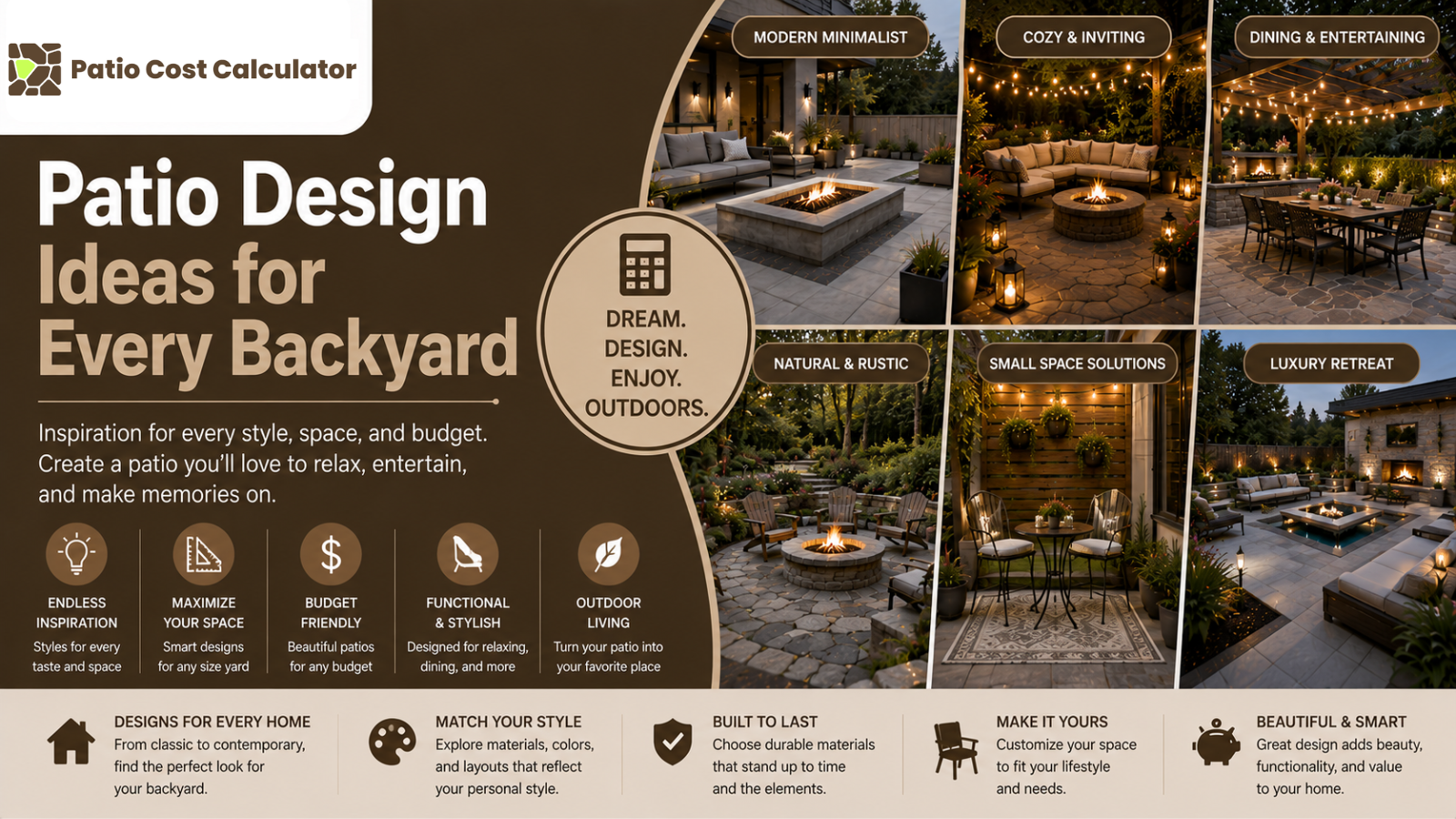
Designing a new patio is about much more than choosing a paving material. A thoughtfully planned patio can transform an ordinary backyard into an outdoor living space that's perfect for relaxing, entertaining, dining, or spending time with family and friends.
Whether you have a compact suburban yard or a spacious property, selecting the right layout, materials, and features can dramatically improve both the appearance and functionality of your outdoor space. The best patio designs balance aesthetics, comfort, durability, and long-term value while complementing the style of your home.
From simple concrete patios to elaborate natural stone outdoor retreats, there are design options available for virtually every budget and lifestyle.
This guide explores popular patio design ideas, layout concepts, material choices, and practical planning tips to help you create an outdoor space you'll enjoy for years to come.
Quick Answer
The best patio design depends on:
- Backyard size
- Budget
- Preferred patio material
- Intended use
- Home architecture
- Local climate
A successful patio should feel like a natural extension of your home while providing comfortable outdoor living space that fits your everyday needs.
Start With Your Lifestyle
Before choosing colors or materials, think about how you'll actually use your patio.
Common uses include:
- Outdoor dining
- Family gatherings
- Entertaining guests
- Relaxing
- Grilling
- Reading
- Children's play area
Designing around your daily lifestyle often produces better results than simply copying a patio design from a magazine or social media.
Choose the Right Patio Size
The size of your patio should match both your property and the number of people who will typically use it.
Typical patio sizes include:
| Patio Size | Typical Use |
|---|---|
| 120–180 sq ft | Small seating area |
| 180–250 sq ft | Outdoor dining |
| 250–350 sq ft | Dining and conversation area |
| 350–500 sq ft | Entertainment space |
| 500+ sq ft | Luxury outdoor living area |
A patio should provide enough room for furniture and comfortable movement without overwhelming the backyard.
Select the Right Material
The material you choose influences cost, appearance, maintenance, and durability.
Concrete Patio
Typical installed cost:
$8–$22 per square foot
Benefits include:
- Affordable installation
- Modern appearance
- Low maintenance
- Excellent durability
- Fast construction
Concrete works well for both contemporary and traditional homes.
Paver Patio
Typical installed cost:
$12–$30 per square foot
Benefits include:
- Decorative patterns
- Excellent repairability
- Premium appearance
- Wide variety of colors
- Long lifespan
Pavers offer exceptional flexibility for custom designs.
Natural Stone Patio
Typical installed cost:
$18–$45 per square foot
Benefits include:
- Timeless elegance
- Unique natural textures
- Outstanding durability
- Luxury appearance
- Exceptional longevity
Natural stone is ideal for homeowners seeking a truly distinctive outdoor space.
Popular Patio Shapes
The shape of your patio affects both appearance and construction cost.
Common options include:
Rectangular
- Most affordable
- Efficient use of space
- Easy furniture placement
- Fast installation
Square
- Excellent for conversation areas
- Balanced appearance
- Works well in smaller yards
Circular
Creates a natural gathering space around:
- Fire pits
- Dining tables
- Decorative landscape features
Circular patios generally require more cutting and labor than rectangular layouts.
Curved Designs
Curved patios offer:
- Softer appearance
- Better integration with landscaping
- Organic flow
- Premium visual appeal
These layouts usually involve additional installation time and higher labor costs.
Divide the Patio Into Zones
Large patios often feel more organized when divided into separate activity areas.
Examples include:
- Outdoor dining
- Lounge seating
- Fire pit
- Grilling station
- Garden seating
Using furniture placement, outdoor rugs, or planters to define each zone helps create a comfortable and functional layout.
Blend the Patio With Landscaping
The best patio designs work together with the surrounding landscape rather than competing with it.
Consider adding:
- Flower beds
- Decorative shrubs
- Ornamental grasses
- Trees for shade
- Container gardens
- Natural stone borders
A balanced combination of hardscape and softscape creates a welcoming outdoor environment.
Plan for Comfortable Traffic Flow
People should be able to move easily throughout the patio without obstacles.
Allow clear walking paths between:
- Seating areas
- Dining tables
- Grills
- Doors
- Walkways
- Garden features
A well-planned layout feels open, functional, and easy to navigate.
Add Features That Match Your Lifestyle
The most successful patios are designed around the way homeowners actually use their outdoor space.
Popular additions include:
- Fire pits
- Outdoor fireplaces
- Pergolas
- Covered seating areas
- Outdoor kitchens
- Built-in benches
- Dining areas
- Conversation spaces
- Decorative planters
Choose features that fit your daily routine rather than trying to include every available upgrade.
Outdoor Lighting Ideas
Lighting extends the amount of time you can comfortably use your patio while creating a warm and inviting atmosphere after sunset.
Popular lighting options include:
- String lights
- Solar pathway lights
- Wall-mounted fixtures
- Landscape spotlights
- LED step lights
- Lanterns
- Recessed lighting
- Decorative garden lighting
Layering several types of lighting creates both ambiance and practical visibility for evening gatherings.
Add Shade for Comfort
Shade is one of the most valuable additions to any patio, particularly in warmer climates.
Common shade solutions include:
Pergolas
Pergolas provide partial shade while adding architectural interest.
They also support:
- Climbing plants
- Hanging lights
- Outdoor curtains
Umbrellas
Large patio umbrellas offer:
- Affordable shade
- Flexibility
- Easy installation
- Seasonal storage
They're ideal for smaller patios or dining areas.
Covered Patios
Permanent patio covers provide:
- Full weather protection
- Comfortable outdoor use
- Reduced sun exposure
- Longer outdoor entertaining seasons
Although they require a larger investment, covered patios significantly increase comfort throughout the year.
Include a Fire Feature
Fire features create a natural gathering place and extend patio use into cooler evenings.
Popular choices include:
- Wood-burning fire pits
- Gas fire pits
- Outdoor fireplaces
- Portable fire tables
Even compact patios can often accommodate a small fire feature with proper planning and safety clearances.
Consider an Outdoor Kitchen
For homeowners who frequently entertain, an outdoor kitchen can become the centerpiece of the patio.
Depending on your budget, an outdoor kitchen may include:
- Built-in grill
- Counter space
- Storage cabinets
- Sink
- Refrigerator
- Pizza oven
- Bar seating
Smaller patios may benefit from a simple grilling station rather than a fully equipped kitchen.
Choose Comfortable Furniture
Furniture should complement both the size and style of the patio.
Popular options include:
- Dining tables
- Lounge seating
- Sectional sofas
- Adirondack chairs
- Bistro sets
- Benches
- Coffee tables
When selecting furniture, leave enough space for comfortable movement between seating areas.
Add Color With Landscaping
Plants soften hard surfaces and create a more inviting outdoor environment.
Consider incorporating:
- Flower beds
- Decorative shrubs
- Ornamental grasses
- Container gardens
- Climbing vines
- Small trees
Repeating similar plant varieties throughout the landscape often creates a cleaner and more cohesive design.
Design for Easy Maintenance
A beautiful patio should also be practical.
Low-maintenance designs often include:
- Durable paving materials
- Simple planting schemes
- Efficient drainage
- Easy-to-clean surfaces
- Minimal lawn edges
Choosing quality materials and avoiding unnecessary complexity reduces maintenance over the life of the patio.
Common Patio Design Mistakes
Thoughtful planning can help avoid expensive changes later.
Common mistakes include:
- Building a patio that's too small for its intended use
- Choosing oversized furniture
- Ignoring drainage requirements
- Overcrowding the space with decorative features
- Failing to plan for shade
- Neglecting outdoor lighting
- Using too many different materials or colors
Keeping the design balanced and functional generally produces the best long-term results.
Create a Timeless Design
Trendy outdoor spaces can quickly feel outdated.
To create a patio that remains attractive for many years:
- Choose neutral paving colors.
- Use classic furniture styles.
- Select durable materials.
- Keep landscaping simple.
- Incorporate natural elements.
- Avoid excessive ornamentation.
A timeless design not only ages gracefully but also appeals to a wider range of future homebuyers.
Plan for Future Upgrades
Your patio doesn't have to include every feature immediately.
Many homeowners build in phases.
For example, you can:
- Install the patio first.
- Add landscape lighting later.
- Build a pergola in the future.
- Install a fire pit when the budget allows.
- Expand planting beds over time.
Planning ahead makes future improvements easier and helps ensure that each addition integrates seamlessly with the original design.
Patio Design Ideas at a Glance
The table below compares the three most popular patio materials to help you choose the best foundation for your backyard design.
| Feature | Concrete Patio | Paver Patio | Natural Stone Patio |
|---|---|---|---|
| Typical Installed Cost | $8–$22/sq ft | $12–$30/sq ft | $18–$45/sq ft |
| Best Design Style | Modern, minimalist | Traditional or contemporary | Luxury, natural landscapes |
| Lifespan | 25–40 years | 30–50+ years | 50–100+ years |
| Maintenance | Low | Low | Low |
| Repairability | Moderate | Excellent | Good |
| Design Flexibility | Very Good | Excellent | Excellent |
| Curb Appeal | Very Good | Excellent | Outstanding |
| Outdoor Living Potential | Excellent | Excellent | Outstanding |
| Long-Term Value | Very Good | Excellent | Excellent |
Each material can create an attractive and functional patio. The ideal choice depends on your budget, preferred design style, maintenance expectations, and long-term plans.
Frequently Asked Questions
What makes a good patio design?
A successful patio design balances:
- Functionality
- Comfort
- Appearance
- Durability
- Proper traffic flow
- Appropriate furniture placement
- Landscaping
- Lighting
The best patios are designed around how homeowners actually use their outdoor space rather than simply following current design trends.
How large should my patio be?
The ideal size depends on its intended use.
Typical recommendations include:
- 120–180 sq ft for a small seating area.
- 180–250 sq ft for outdoor dining.
- 250–350 sq ft for dining and lounge seating.
- 350–500+ sq ft for entertaining and outdoor living.
Leave enough room for furniture and comfortable walking paths.
Which patio material offers the most design flexibility?
Pavers generally provide the greatest design flexibility because they are available in a wide variety of:
- Colors
- Shapes
- Sizes
- Patterns
- Textures
Natural stone also offers exceptional flexibility through its unique shapes and organic appearance, while decorative concrete provides several attractive finish options at a lower cost.
Should I include a fire pit?
If your patio has sufficient space, a fire pit can become a natural gathering area for family and guests.
Before installing one, consider:
- Patio size
- Seating layout
- Local regulations
- Safe clearance distances
- Fuel type
Portable fire pits are often an excellent option for smaller patios.
Is outdoor lighting worth the investment?
Yes.
Lighting improves both safety and atmosphere while extending the amount of time you can comfortably enjoy your patio after sunset.
Many homeowners combine:
- String lights
- Solar pathway lights
- Landscape lighting
- Wall-mounted fixtures
to create layered lighting that is both functional and attractive.
Should my patio match my home's architecture?
In most cases, yes.
Selecting materials, colors, and design elements that complement your home's architectural style helps create a cohesive appearance and may improve long-term curb appeal.
Can I build my patio in phases?
Absolutely.
Many homeowners install the patio first and add features such as:
- Pergolas
- Fire pits
- Outdoor kitchens
- Landscape lighting
- Additional landscaping
as time and budget allow.
Planning for future improvements during the initial design stage makes later additions much easier.
What is the biggest patio design mistake?
One of the most common mistakes is designing a patio based solely on appearance.
Instead, consider:
- How you'll use the space.
- The amount of maintenance you're comfortable with.
- Your long-term budget.
- Future expansion plans.
- Furniture layout.
- Shade and drainage.
A patio that functions well will usually provide greater long-term satisfaction than one designed primarily for aesthetics.
Final Verdict
The best patio designs combine beauty, comfort, and practicality. Whether you're creating a small backyard retreat or a large outdoor entertainment area, careful planning helps ensure that your investment provides lasting enjoyment.
A concrete patio is an excellent choice for homeowners seeking affordability, durability, and a clean, modern appearance.
A paver patio offers exceptional design flexibility, decorative appeal, and easy long-term repairs, making it one of the most versatile options available.
A natural stone patio delivers timeless elegance, unmatched character, and extraordinary longevity, making it ideal for homeowners seeking a premium outdoor living space.
The most successful patio isn't necessarily the largest or most expensive—it's the one that complements your home, suits your lifestyle, and remains enjoyable for years to come.
Final Thoughts
A thoughtfully designed patio can transform the way you use your backyard, creating an inviting space for relaxing, entertaining, dining, and spending time with family and friends. By choosing the right materials, planning an efficient layout, incorporating comfortable furnishings, and allowing room for future improvements, you can create an outdoor living area that enhances both your daily life and your property's long-term value.
Before requesting contractor estimates, use the Patio Cost Calculator on the homepage to estimate your project's cost based on your patio size, chosen material, and state. A personalized estimate will help you compare design options, establish a realistic budget, and confidently plan a patio that reflects your style while providing years of enjoyment.