 Patio Cost Calculator
Introduction
When creating an outdoor living space, one of the biggest decisions homeowners face is whether to build a patio or a deck. Both options provide attractive places for relaxing, entertaining, and enjoying the outdoors, but they differ significantly in cost, construction, maintenance, durability, and long-term value.
Choosing the right option depends on your property's layout, your budget, your lifestyle, and how you plan to use the space. While patios are built directly on the ground using materials such as concrete, pavers, or natural stone, decks are elevated structures typically constructed from wood or composite decking supported by a framing system.
Neither option is universally better. The ideal choice depends on your home's design and your personal priorities.
This guide compares patios and decks across the factors homeowners care about most, helping you decide which outdoor improvement is the better investment for your property.
Quick Answer
Both patios and decks offer valuable outdoor living space, but each has different strengths.
A patio is often the better choice if you want:
- Lower maintenance
- Longer lifespan
- Lower installation costs
- Better durability
- A ground-level outdoor living area
A deck may be a better option if you need:
- An elevated outdoor space
- Construction on a sloped yard
- Direct access from an upper floor
- Better views
Understanding these differences makes it easier to choose the solution that fits both your home and your budget.
What Is a Patio?
A patio is a paved outdoor surface installed directly on the ground.
Common patio materials include:
- Concrete
- Concrete pavers
- Natural stone
Patios are typically built on a compacted gravel base that provides long-term stability and proper drainage.
Because they rest on the ground rather than being elevated, patios generally require less structural construction than decks.
What Is a Deck?
A deck is an elevated outdoor platform supported by posts, beams, and joists.
Decks are commonly built using:
- Pressure-treated lumber
- Cedar
- Redwood
- Composite decking
Depending on local building codes, decks often require structural engineering, permits, railings, stairs, and additional framing.
Installation Cost Comparison
For many homeowners, cost is one of the biggest deciding factors.
Patio
Typical installed cost:
- Concrete: $8–$22 per sq ft
- Pavers: $12–$30 per sq ft
- Natural Stone: $18–$45 per sq ft
Deck
Deck pricing varies depending on:
- Decking material
- Structural design
- Height
- Railings
- Stairs
- Local labor costs
In many situations, a ground-level patio is less expensive to build than a comparable deck.
Installation Process
Patios and decks are constructed very differently.
Patio Installation
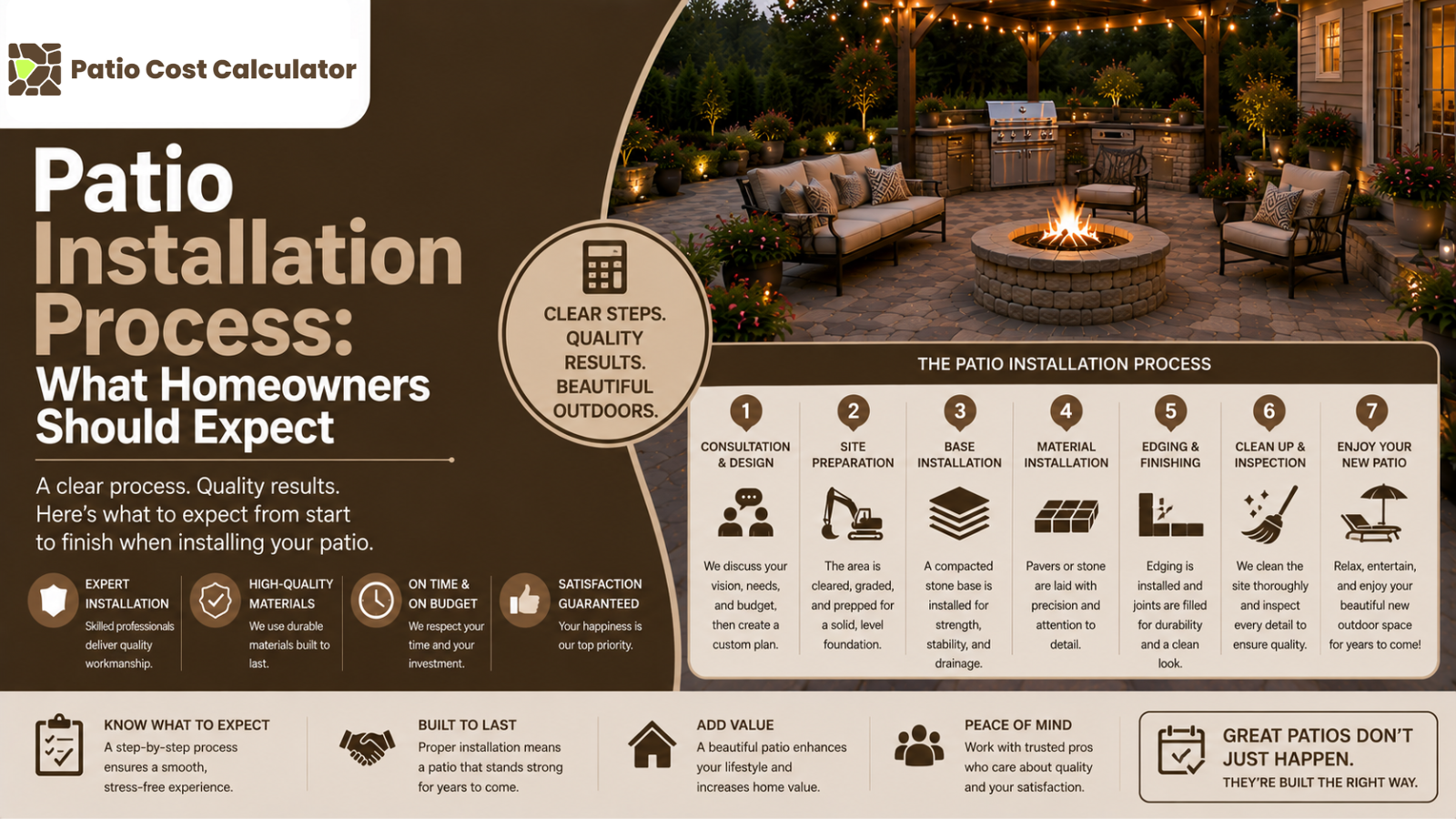
Typical steps include:
- Excavation
- Base preparation
- Grading
- Drainage
- Material installation
- Joint finishing (where applicable)
A well-prepared base is essential for preventing settling and maintaining long-term performance.
Deck Construction
Deck installation generally involves:
- Footings
- Structural framing
- Posts
- Beams
- Joists
- Deck boards
- Railings
- Stairs (if elevated)
Because decks are structural systems, they often require additional planning and inspections.
Maintenance Requirements
One of the biggest differences between patios and decks is long-term maintenance.
Patio Maintenance
Patios generally require:
- Sweeping
- Occasional washing
- Weed control (for pavers)
- Minor repairs if needed
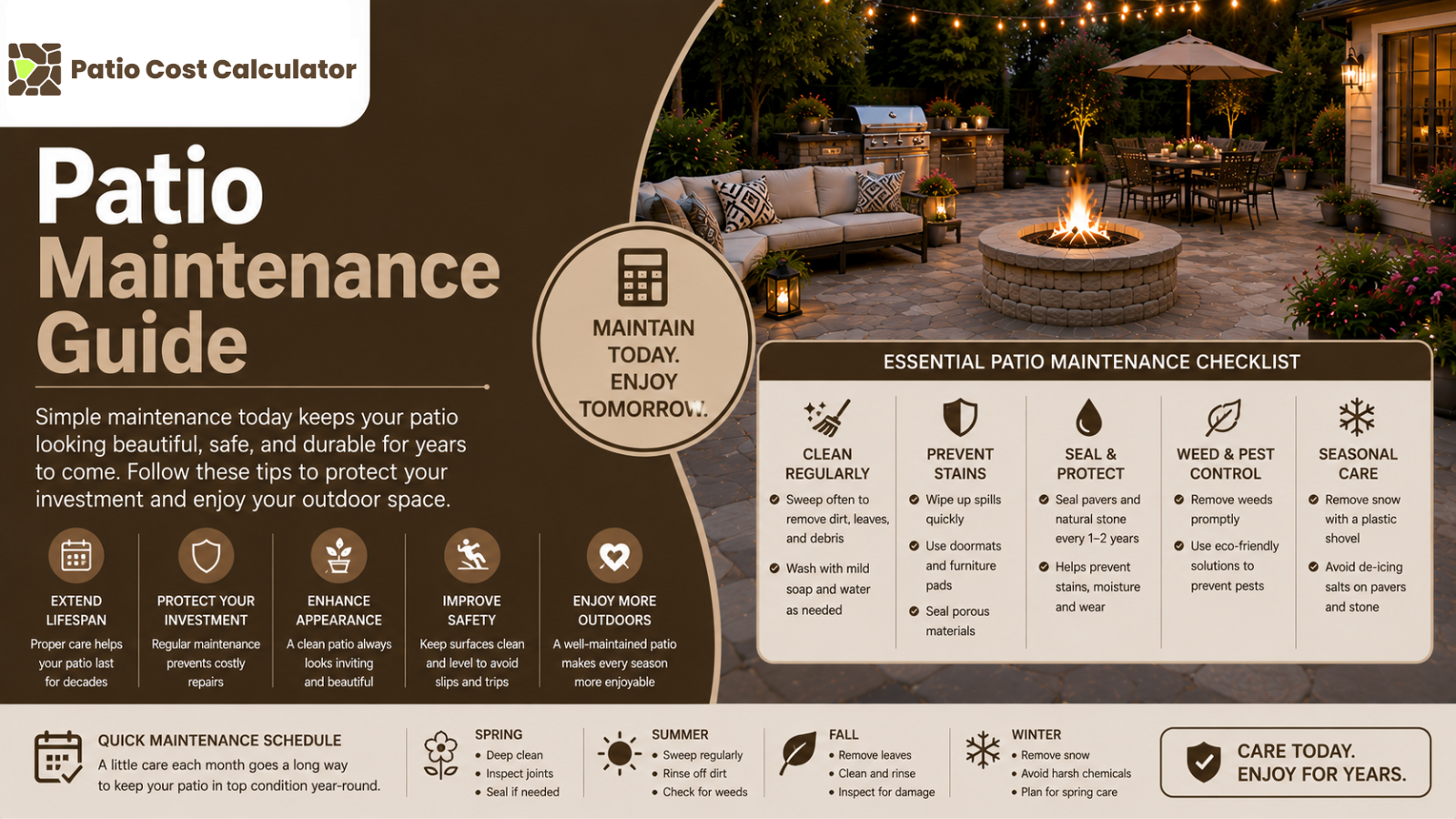
Most patio materials require relatively little ongoing maintenance.
Deck Maintenance
Wood decks often require:
- Regular cleaning
- Staining
- Sealing
- Painting (depending on material)
- Board replacement
- Fastener inspection
Composite decking reduces maintenance but still requires periodic cleaning.
Durability
Patios are known for their long service life.
Typical lifespan:
| Material | Typical Lifespan |
|---|---|
| Concrete | 25–40 years |
| Pavers | 30–50+ years |
| Natural Stone | 50–100+ years |
Wood decks generally require more maintenance throughout their lifespan and may need periodic board replacement depending on weather exposure and material quality.
Best Yard Conditions
The layout of your property often determines which option makes the most sense.
Patios Work Best For
- Flat yards
- Ground-level outdoor living
- Large entertaining spaces
- Low-maintenance landscaping
Decks Work Best For
- Sloped properties
- Elevated homes
- Walk-out basements
- Homes with second-story access
Matching the outdoor structure to your property's layout helps maximize both functionality and long-term value.
Appearance
Both patios and decks can dramatically improve the appearance of a home.
Patios typically create a seamless transition between the home and the surrounding landscape, while decks provide elevated outdoor living with attractive architectural features.
The best visual result often depends on the home's style, surrounding landscaping, and the materials selected.
Lifespan Comparison
One of the biggest differences between patios and decks is how long they typically last.
Patio Lifespan
| Patio Material | Typical Lifespan |
|---|---|
| Concrete | 25–40 years |
| Pavers | 30–50+ years |
| Natural Stone | 50–100+ years |
With proper installation and routine maintenance, many patios remain in excellent condition for decades.
Deck Lifespan
A deck's lifespan depends largely on the material used and the level of maintenance it receives.
Generally:
- Pressure-treated wood decks may last several decades with proper care.
- Cedar and redwood decks require ongoing maintenance to preserve their appearance.
- Composite decking often lasts longer than traditional wood and requires less maintenance.
Regardless of material, decks are exposed to constant weathering and usually require more upkeep than patios.
Home Value Comparison
Both patios and decks can improve a home's appeal.
A patio often increases value by:
- Expanding outdoor living space
- Improving backyard functionality
- Enhancing curb appeal
- Providing long-term durability
- Requiring minimal maintenance
A deck can also attract buyers, particularly when:
- The home is elevated.
- The backyard has significant slopes.
- Scenic views are available.
- Upper-floor outdoor access is important.
The greatest return typically comes from choosing the option that best complements the home and property.
Weather Performance
Outdoor structures must withstand changing weather conditions throughout the year.
Patio Performance
Professionally installed patios perform well in:
- Rain
- Snow
- Heat
- Freeze-thaw cycles
- Wind
Proper drainage and base preparation help patios resist movement and settling over time.
Deck Performance
Decks are exposed on all sides to:
- Moisture
- Sunlight
- Temperature changes
- Humidity
- Wind
Wood components may eventually require:
- Resealing
- Staining
- Board replacement
- Fastener maintenance
Composite materials reduce many of these maintenance needs but still require periodic cleaning.
Safety Considerations
Both patios and decks are safe when properly built and maintained.
Patio Safety
Patios generally offer:
- Stable walking surfaces
- No stairs (for ground-level installations)
- Excellent accessibility
- Minimal fall risk
However, uneven settling or loose pavers should be repaired promptly to reduce tripping hazards.
Deck Safety
Decks often include:
- Railings
- Stairs
- Elevated platforms
Routine inspections help ensure structural components remain safe and secure throughout the deck's lifespan.
Which Option Requires Less Maintenance?
For many homeowners, maintenance is a major deciding factor.
Patio Maintenance
Routine care usually includes:
- Sweeping
- Washing
- Weed removal (for pavers)
- Occasional repairs
- Periodic sealing for some materials
Overall maintenance is relatively low.
Deck Maintenance
Wood decks often require:
- Cleaning
- Staining
- Sealing
- Board inspections
- Fastener replacement
- Occasional structural repairs
Composite decking reduces maintenance but still benefits from regular cleaning.
Which Option Is Better for Entertaining?
Both patios and decks create excellent outdoor gathering spaces.
Patios
Often provide:
- Large dining areas
- Fire pit space
- Outdoor kitchens
- Flexible furniture layouts
- Easy movement between seating areas
Ground-level patios are particularly well suited for larger gatherings.
Decks
Offer:
- Elevated views
- Convenient access from upper floors
- Comfortable outdoor seating
- Excellent grilling areas
The best choice depends on your home's layout and how you plan to use the space.
Common Mistakes When Choosing
Homeowners sometimes make decisions based only on appearance or initial cost.
Other important considerations include:
- Long-term maintenance
- Expected lifespan
- Drainage
- Yard slope
- Future repairs
- Local climate
- Resale goals
Taking all of these factors into account usually leads to a better long-term investment.
Which Homeowners Usually Choose a Patio?
A patio is often the better option if you:
- Have a relatively flat backyard.
- Want lower maintenance.
- Prefer a longer-lasting outdoor surface.
- Plan to install a fire pit or outdoor kitchen.
- Want the lowest long-term ownership costs.
Which Homeowners Usually Choose a Deck?
A deck may be the better solution if you:
- Have a steep or sloped property.
- Need elevated outdoor access.
- Want to take advantage of scenic views.
- Have a walk-out basement or raised home.
- Prefer an elevated entertaining area.
Choosing the option that works with your property's natural layout usually provides the best results.
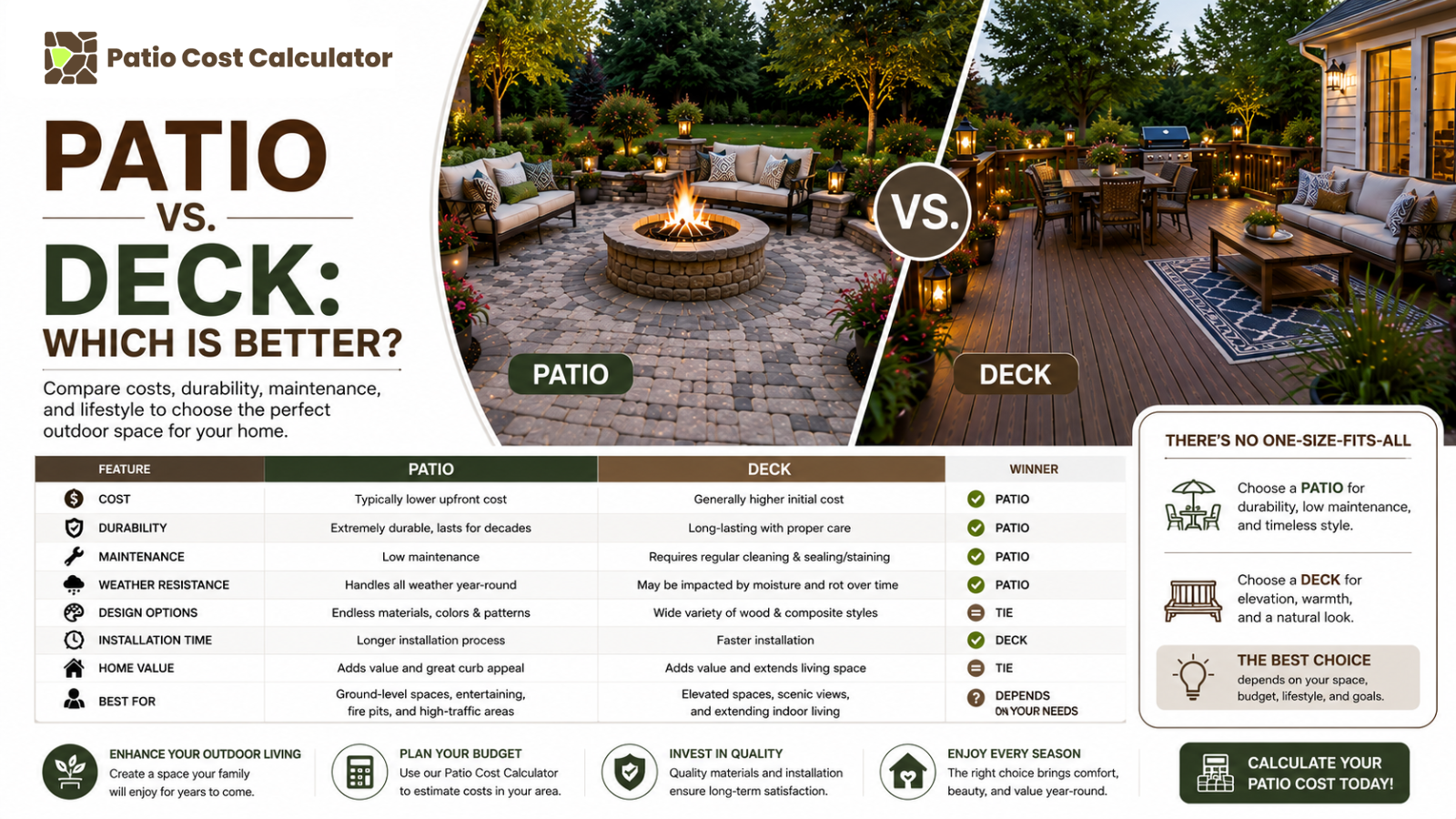
Patio vs. Deck Comparison at a Glance
The table below summarizes the major differences between patios and decks to help homeowners compare the two options.
| Feature | Patio | Deck |
|---|---|---|
| Typical Installation Cost | Lower (in many cases) | Higher (in many cases) |
| Construction | Ground-level | Elevated structure |
| Typical Materials | Concrete, Pavers, Natural Stone | Wood, Composite |
| Lifespan | 25–100+ years (depending on material) | Varies by material and maintenance |
| Maintenance | Low | Moderate to High |
| Repairability | Good to Excellent | Moderate |
| Best for Flat Yards | ✓ | Possible |
| Best for Sloped Yards | Sometimes | ✓ |
| Outdoor Kitchens & Fire Pits | Excellent | Possible (depending on design) |
| Long-Term Value | Excellent | Very Good |
| Accessibility | Excellent | Good |
Both patios and decks can create beautiful outdoor living spaces, but the best choice depends on your home's layout, your budget, and your lifestyle.
Frequently Asked Questions
Is a patio less expensive than a deck?
In many situations, yes.
A ground-level patio often costs less to install than a comparable deck because it doesn't require structural framing, support posts, beams, or railings. However, the total cost depends on the patio material, deck material, project size, and local labor rates.
Which lasts longer: a patio or a deck?
Patios generally have a longer expected lifespan.
Typical lifespans include:
- Concrete Patio: 25–40 years
- Paver Patio: 30–50+ years
- Natural Stone Patio: 50–100+ years
Deck lifespan varies depending on the material used, the quality of construction, weather exposure, and how well it is maintained.
Which requires less maintenance?
A patio typically requires less maintenance than a traditional wood deck.
Most patios only need:
- Routine sweeping
- Occasional washing
- Minor repairs when needed
Wood decks usually require periodic cleaning, staining or sealing, inspections, and occasional board replacement. Composite decks reduce maintenance requirements but still benefit from regular cleaning.
Is a patio better for entertaining?
For many homeowners, yes.
Ground-level patios often provide more flexible space for:
- Outdoor dining
- Fire pits
- Outdoor kitchens
- Large seating areas
- Backyard gatherings
Decks can also be excellent entertainment spaces, particularly when elevated views or upper-floor access are important.
Which option adds more home value?
Both patios and decks can improve buyer appeal.
The greatest return generally comes from choosing the option that best fits the home's design, yard layout, and neighborhood expectations. A professionally built outdoor living space—whether a patio or a deck—is often viewed as a desirable feature by prospective buyers.
Can I build a patio on a sloped yard?
Yes, although significant slopes may require:
- Excavation
- Retaining walls
- Additional grading
- Drainage improvements
In some cases, a deck may be a more practical solution for steeply sloped properties because it can be supported above the ground.
Which option is better for long-term value?
If low maintenance, durability, and longevity are your priorities, a patio is often the stronger long-term investment.
If your property requires an elevated outdoor living space or offers scenic views, a deck may provide greater functionality despite its higher maintenance requirements.
How do I decide between a patio and a deck?
Consider the following questions:
- Is your yard flat or sloped?
- What is your budget?
- How much maintenance are you willing to perform?
- Do you want a ground-level or elevated space?
- How long do you plan to stay in your home?
- Which option best complements your home's design?
Answering these questions will help you identify the outdoor solution that best meets your needs.
Final Verdict
Both patios and decks are excellent investments that can enhance outdoor living, improve curb appeal, and increase the enjoyment of your home.
A patio is usually the better choice for homeowners seeking a durable, low-maintenance outdoor space with a long lifespan and excellent value. Concrete, pavers, and natural stone each offer different advantages, allowing homeowners to choose a solution that fits both their budget and design preferences.
A deck may be the better option for homes built on sloped lots, properties with elevated living areas, or homeowners who want to take advantage of scenic views. Although decks generally require more maintenance, they provide unique design opportunities that may better suit certain properties.
Ultimately, the best choice depends on your home's layout, your budget, your maintenance preferences, and how you plan to use your outdoor living space.
Final Thoughts
Choosing between a patio and a deck is one of the most important decisions you'll make when designing an outdoor living area. By comparing installation costs, maintenance requirements, durability, expected lifespan, and how each option fits your property, you can make a decision that provides lasting value and years of enjoyment. There is no one-size-fits-all answer—the right choice is the one that best matches your home, your lifestyle, and your long-term goals.
If you're leaning toward a patio, use the Patio Cost Calculator on the homepage to estimate your project's cost based on your patio size, preferred material, and state. A personalized estimate will help you establish a realistic budget, compare contractor quotes more confidently, and plan an outdoor space that fits both your needs and your investment goals.